
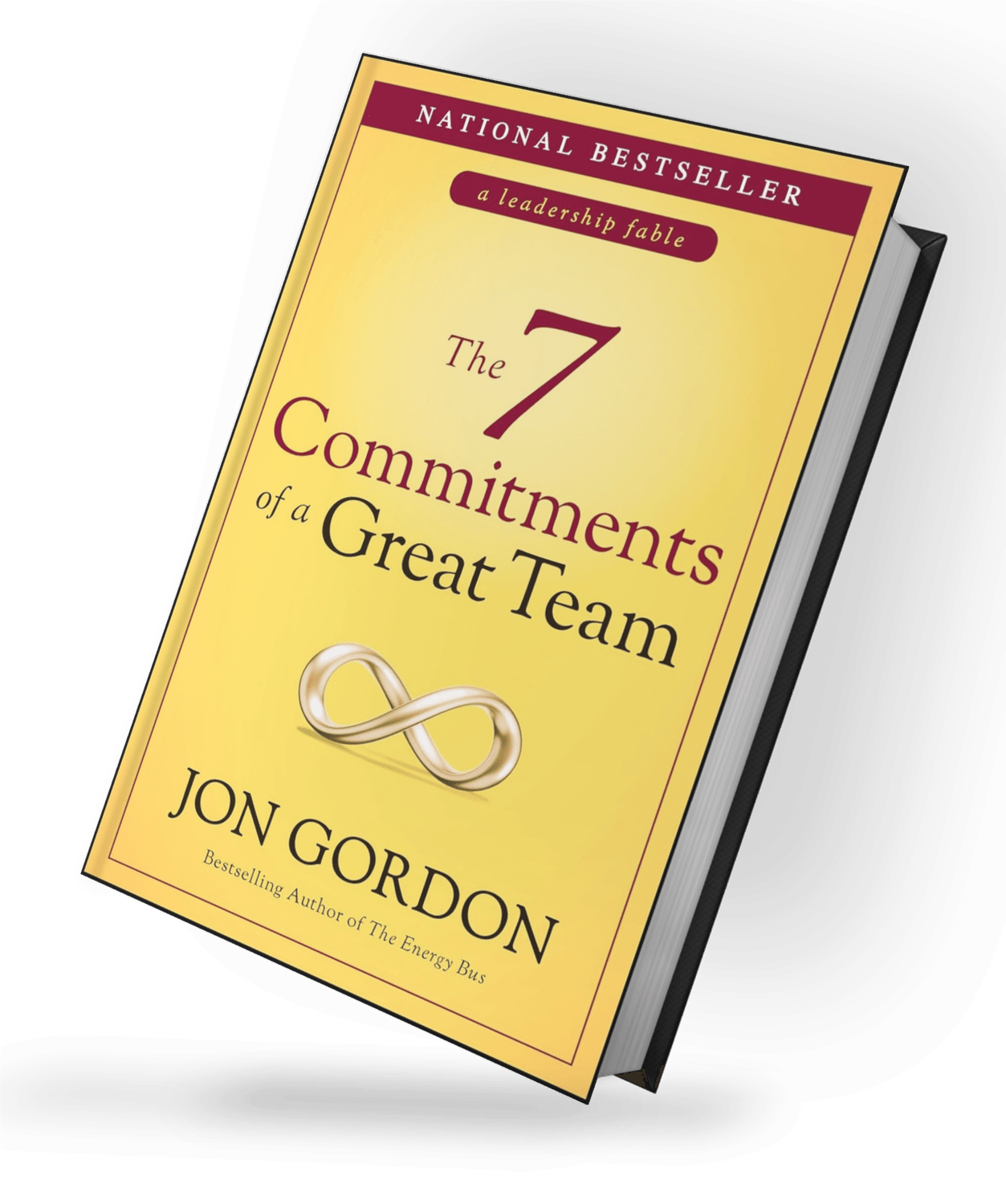
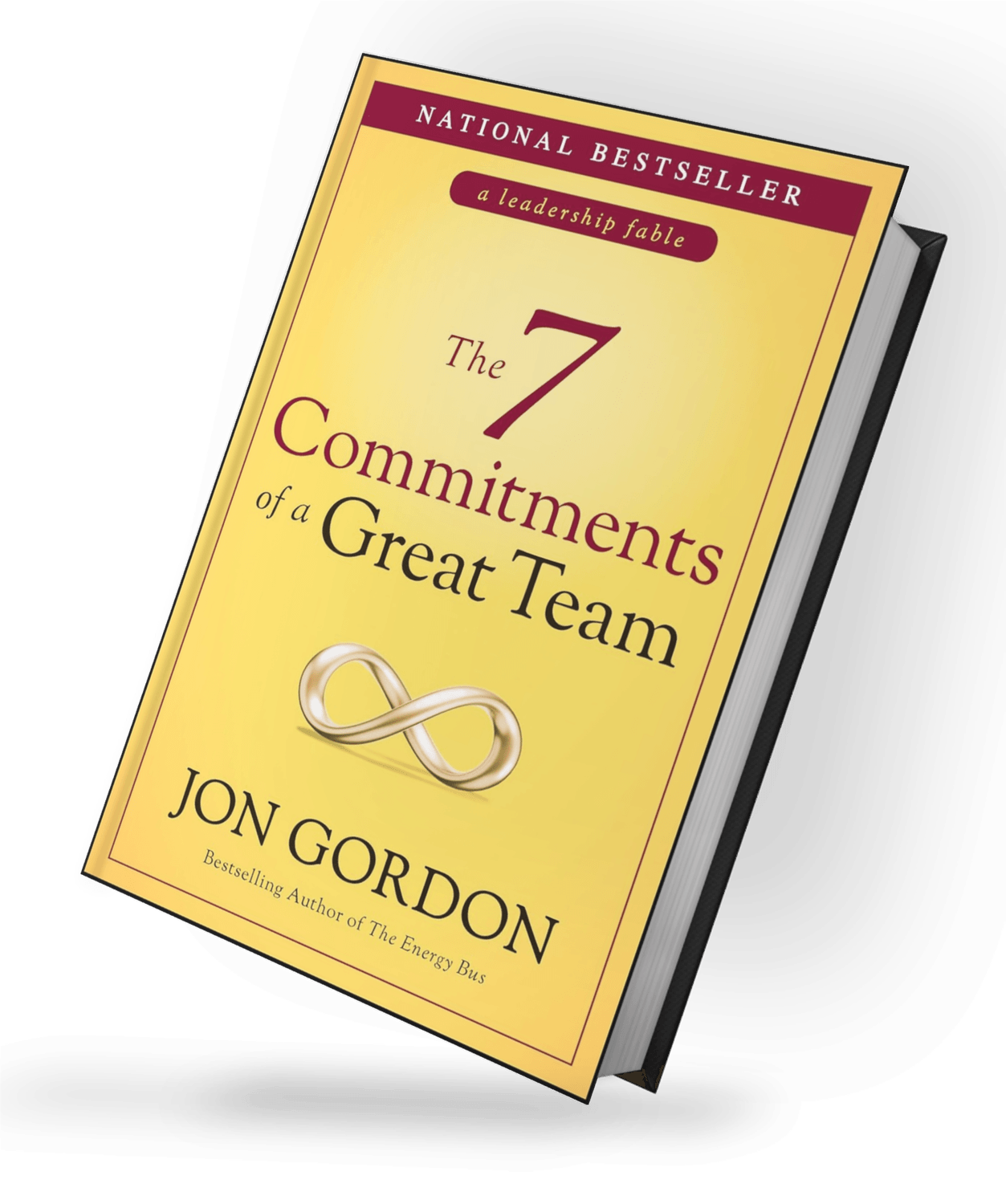
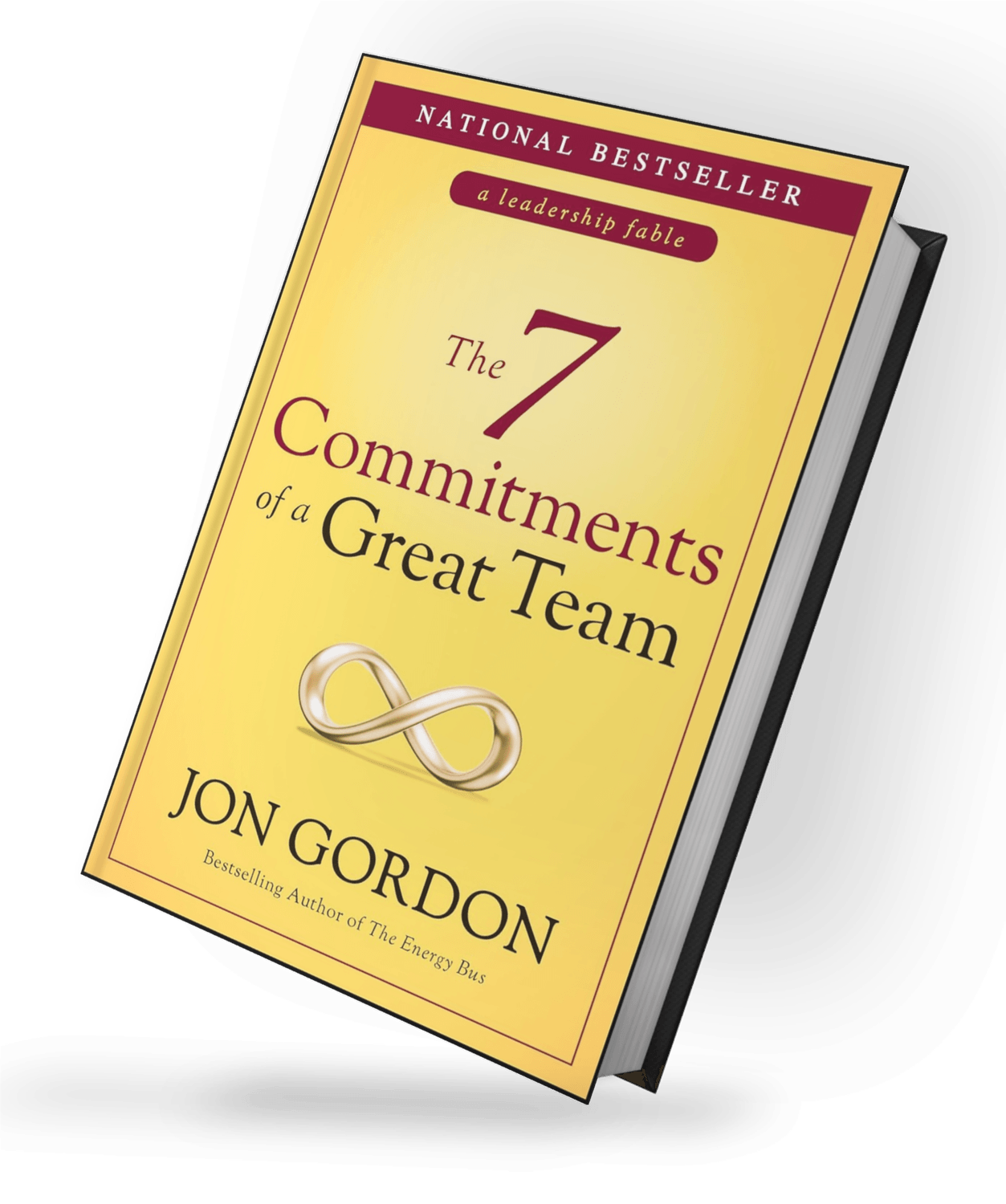
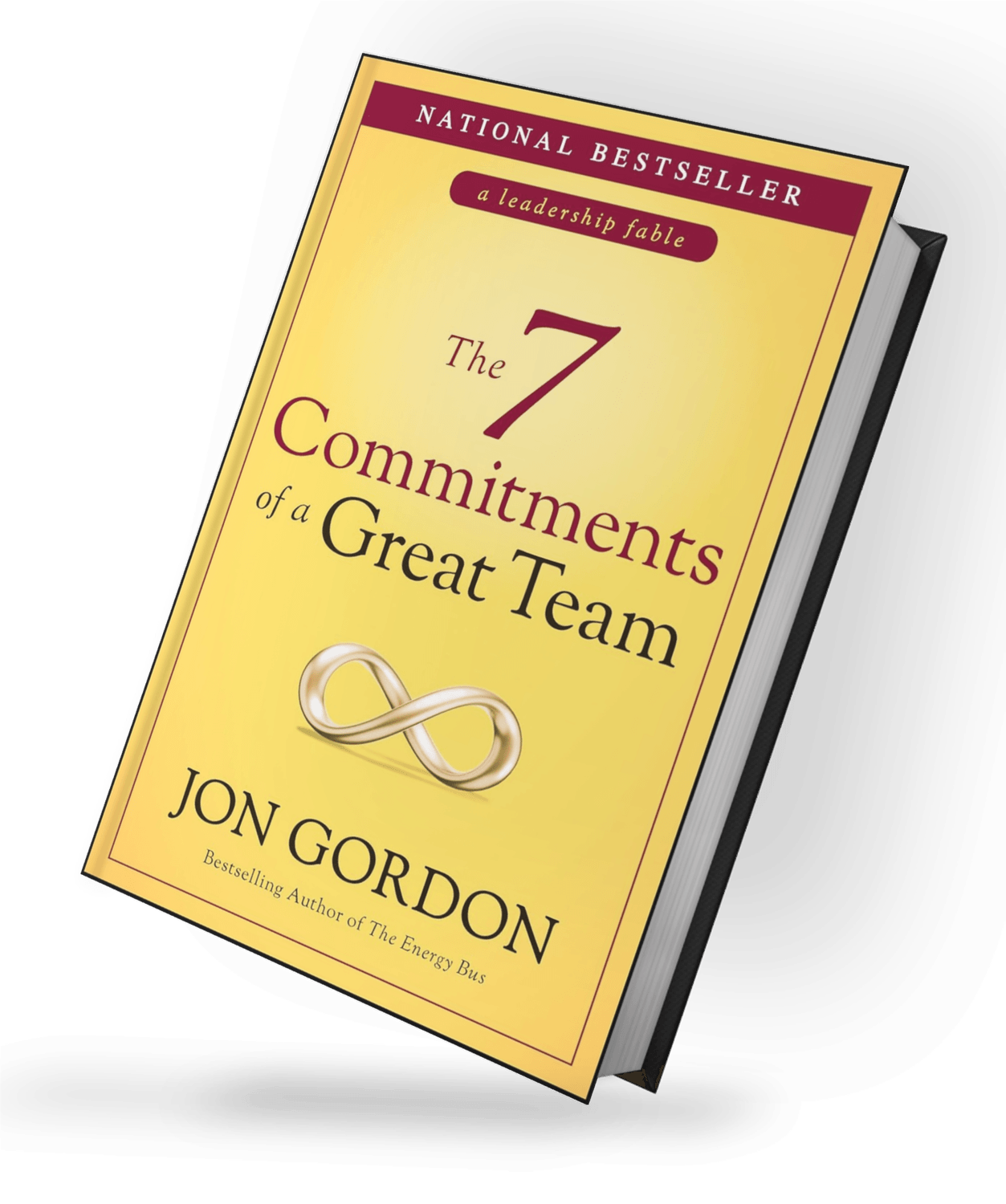
The 7 Commitments of a Great Team by Jon Gordon - Book Summary
"Teammates are forever."
That's the line Coach Richie Moran whispers to Tim from his deathbed at the opening of this book, and it's the line that sets everything in motion. If you've ever led a team that felt disconnected, discouraged, or stuck in a rut of disappointing results, this book was written for you.
The 7 Commitments of a Great Team by Jon Gordon uses story instead of theory to teach one of the most practical leadership lessons out there: goals don't build great teams, commitments do. Grab a coffee. Let's break down why this book might be exactly what your team needs right now.
Why You Should Read This Book
Every leader eventually runs into the same wall. You've got talented people. You've set clear goals. And yet the team still feels like a group of individuals sharing a room instead of a real team pulling in the same direction.
Jon Gordon has spent years working with NFL teams, college programs, Fortune 500 companies, and school districts, and he keeps running into the same root problem everywhere he goes. Teams don't fail because they lack talent or goals. They fail because they never commit to anything beyond themselves.
You should read this book if:
You're leading a team that's going through the motions. Disengaged, apathetic, and complacent are three words nobody wants attached to their team, and this book shows you exactly how to reverse that.
You want practical team-building exercises, not just theory. The Safe Seat, the One Word exercise, and the Tell the Truth routine in this book are tools you can use with your own team this week.
You need to understand the balance between love and accountability. Coach Moran learns the hard way that his team was challenging each other more than they loved each other, and that "love tough" has to come before tough love.
You want your team to outlast the scoreboard. This book isn't really about winning championships. It's about building relationships that hold up long after the trophies are gone.
This is a quick read, but it's dense with wisdom. It's written as a story, which means the lessons land in your heart before they land in your head, and that's exactly why they stick.
Key Takeaways
Here's the big picture before we walk through it commitment by commitment.
Commitments outlast goals. Goals create hope, but hope doesn't wake you up at 6 a.m. Commitments create a standard you live up to when adversity, inconvenience, and distraction show up.
Attack a fresh opportunity instead of defending your reputation. Teams that play to protect status or hype perform worse than teams that play loose and attack every moment as a new chance.
Positivity is a team decision, not a mood. You can't control soreness or setbacks, but you can always choose your response, and negativity spreads just as fast as positivity does.
Discipline is a byproduct of devotion, not willpower. Care more, and discipline follows naturally. Trying to force discipline without devotion is like swimming upstream.
Great teams get stronger from problems weak teams ignore. Bad teams ignore issues. Good teams address them. Great teams grow stronger because of them.
You have to love people before you earn the right to challenge them. Accountability without love first feels like an attack. Love first, and the same challenge feels like care.
Connection turns talented individuals into an unbeatable team. Team beats talent when talent isn't a team. Shared vulnerability is what builds real team grit.
Valuing each other is the commitment that unlocks all the others. Without it, no other commitment holds, because people only give their best to teams that treat them as worth something.
Now let's slow down and walk through each one.
Memorable Quotes from The Gap and the Gain
A few lines from the book worth writing down and pinning to your office wall:
"Teammates are forever."
"A team that is divided is weak. A team that becomes one is powerful and strong."
"Care deeply, but don't carry the burden."
"To work harder, you have to care more."
"Every great team needs a combination of love and accountability. Tough love is essential, but love must come first."
"Team beats talent when talent isn't a team."
"Commitment recognizes commitment. The more you commit, the more it will come back to you."
"Trophies don't last. They break. They get lost. They get thrown out. They lose their significance. It's the love that lasts forever, and that's why you all are forever teammates."
That last quote is the whole book in a nutshell. Championships fade. The way you cared for your people never does.
Introduction and Overview of the Book
The story opens with Tim sitting beside his dying college coach, Richie Moran, the man who recruited him decades earlier and shaped the course of his life. Coach's final words to him are simple: teammates are forever.
Driving home, Tim can't shake those words, mostly because he knows they don't describe his own team at work. His team is disconnected, discouraged, and delivering disappointing results. They're on a team, but they aren't a real team.
That struggle sends Tim back through his memory to his sophomore season under Coach Moran, when the team was coming off a losing record despite having plenty of talent. On the first day of training camp, Coach has every player write down their goals for the season, championships and personal stats included. Then he has them crumple those pages and toss them in the trash.
Everyone writes the same goals, he tells them. A goal alone won't separate you from any other team in the league. So instead, he asks each player to write down three commitments: specific things they are willing to sacrifice to actually reach those goals. One player commits to skipping video games for extra skill work. Another commits to recovery time to stay healthy all season. Another commits to studying film.
Goals create hope. Commitments create results. That single reframe becomes the foundation for what grows into seven commitments any leader can use to turn a group of talented individuals into a genuinely connected, resilient team.
Commitment 1: Commit to the Vision and Mission of the Team
Coach Moran tells his players that last season they let too many things divide them. This season, his job is to unite them around one shared vision and mission.
Vision: Become one gritty team that competes like champions.
Mission: Define and elevate this program, set the standard, and inspire the teams that come after.
After a rough scrimmage, he adds a second layer to this commitment. Research shows that teams playing to defend their reputation, their hype, or other people's expectations actually perform worse than teams attacking a fresh opportunity. His own talent-heavy roster had spent all of last season defending something instead of chasing anything, and it made them timid and tight.
So he gives them a new phrase to hold onto: care deeply, but don't carry the burden. They will defend nothing but their goal, and they will attack every game as a brand new chance, not a referendum on last season.
Reflection Questions:
Does your team have a shared vision and mission that everyone could recite, or does each person carry their own private version of what "winning" looks like?
Is your team playing to defend its reputation right now, or to attack a fresh opportunity? What would change if you shifted that language?
Commitment 2: Commit to Staying Positive Together
As training camp wears the team down physically and mentally, tension boils over into a locker room fight. Coach Moran reframes it on the spot: you can't control soreness or bad breaks, but you can always control your response, and negativity is contagious enough to infect an entire team.
He teaches the team a mnemonic to carry with them called LIGHT: Love instead of fear, Inside out (the power within you is greater than any outside force), Get to instead of have to, Have faith, and Talk to yourself rather than just listen to yourself.
Coach Amy adds one more tool that anyone can use immediately: appreciate where you are, what you have, and what you get to do. Research shows you cannot feel stressed and grateful at the same time. Gratitude is what shifts a team from entitlement and frustration toward abundance.
Reflection Questions:
Whose positivity are you feeding right now, and who is feeding yours?
What's one thing you're taking for granted on your team right now that, with a little appreciation, could shift how everyone feels?
Commitment 3: Commit to Giving Your Best
With effort starting to flag, Coach Moran rejects the usual coaching cliché of just being more disciplined. Instead, he lays out a chain of cause and effect: devotion fuels caring more, caring more drives discipline, discipline produces consistency, and consistency plus effort equals giving your best.
To work harder, he tells them, you have to care more. Nobody forces the greatest athletes, musicians, or artists in the world to put in the reps. They're devoted, and the devotion is what drives the discipline, not the other way around. Consistency is doing the right things, sleep, nutrition, showing up on time, day after day. Discipline is the will to do them on the days you don't feel like it.
Reflection Questions:
Where have you been going through the motions instead of giving your best, and what would it look like to care more in that area?
What are you devoted to right now that no one has to force you to show up for?
Commitment 4: Commit to Getting Better
After a hot start turns into complacency, Coach Moran installs a routine he calls Tell the Truth, run after every practice and every game, built on three simple questions: what went well, what could be better, and what did we learn that makes us better.
He draws a clear line between three tiers of teams: bad teams ignore their problems, good teams address them, and great teams actually grow stronger because of them. Coach Amy names the mindset behind this "positive discontent," feeling genuinely good about a win while staying hungry to improve. She quotes football coaching legend John Madden, who once said winning is a great deodorant, meaning it can mask problems that are still very much there if you're not honest with yourself.
Reflection Questions:
Does your team have a regular rhythm for asking what went well, what could improve, and what you learned?
Is a recent win covering up a problem your team hasn't actually solved yet?
Commitment 5: Commit to Connect
After two gut-wrenching overtime losses, Coach Moran realizes the real problem isn't talent or effort. His team has been challenging each other more than they've been loving each other. He coins a phrase to fix it: love tough, the inverse of tough love. You love your teammates first, and that's what earns you the right to hold them accountable. Without that foundation, criticism just feels like an attack.
He also names what was really happening underneath all the shouting and intensity in the huddle. His players feared losing more than they loved competing, and fear was masquerading as fire. So instead of running another hard practice, he cancels it and prioritizes connection over drills, because a team that only pushes each other eventually fractures under pressure.
Reflection Questions:
Are you leading with love first, or with accountability first? What would it look like to reverse that order this week?
Where on your team is fear disguising itself as intensity or drive?
Commitment 6: Commit to Each Other
This is the most vulnerable commitment in the entire book, and it happens in two parts. First, Coach Amy runs an exercise called One Word, where each player picks a single word to guide his season and explains why, revealing what actually matters most to each person on the team.
Then comes the Safe Seat, where every player shares their 5 Hs: their Hero, a Hardship that shaped them, a Highlight they're proud of, what they Hope for, and something Hilarious that makes them laugh. When Tim shares that his father abandoned his family, and a teammate shares that he wears his number to honor a friend he lost, the walls of pride and ego in that room come down. Not every story shared in the book is an easy one to hear, and the team leans on each other and on trusted support to carry the heavier moments.
Coach's mantra crystallizes what happens next: team beats talent when talent isn't a team. This less talented but deeply connected group starts beating opponents with far more raw skill.
Reflection Questions:
How well do you actually know the stories behind the people on your team?
What would happen if you created a Safe Seat moment for your own team this month?
Commitment 7: Commit to Valuing Each Other
Years later, as a struggling CEO, Tim brings Coach Amy in to teach the six commitments to his own leadership team. Somewhere in that process, he realizes something is missing: a seventh commitment that has to come before all the others.
A speaker named Damon West shares a story that anchors this commitment. He describes watching volunteers wash prisoners' feet, an act so foreign in a place where touch usually means violence that hardened men wept and asked to return the favor. People who feel valued transform how they see themselves and how they treat others.
Tim builds this commitment into a daily practice with the acronym VALUE: Validate their contribution, Appreciate who they are, Listen fully, Understand their perspective, and Empathize with their emotions. He also swaps generic praise like "good job" for specific recognition, naming exactly what someone did well and why it mattered.
If you don't value your teammates, none of the other commitments hold together. Value your team, and you'll naturally give your best, get better together, connect, and sacrifice for one another. Skip that step, and none of it sticks.
Reflection Questions:
Do the people on your team know, without a doubt, that you value them as people and not just as producers?
Which piece of VALUE (validate, appreciate, listen, understand, empathize) is weakest in how you currently lead?
Conclusion (And Your Next Step)
Here's what stays with me most after reading this book. Great teams aren't built on talent or even on goals. They're built on commitments that hold up when things get hard. Coach Moran's team didn't win it all in the story, and that's the point. They still walked away as forever teammates, because trophies fade but the way you cared for each other never does.
Years after that season, Coach Moran mails each of his former players a championship ring he received much later in his career, crediting that team as the foundation everything else was built on. His parting instruction is the simplest one in the whole book: be a doer, not a talker. Don't just talk about being a forever teammate. Do it.
You don't need a more talented roster to build a great team. You need people who are willing to commit to a shared vision, to staying positive together, to giving their best, to getting better, to connecting with each other, and to valuing one another above the scoreboard.
So here's your call to action. Pick one commitment from this list, just one, and bring it to your team this week. Maybe it's a Safe Seat conversation. Maybe it's simply asking what went well, what could be better, and what you learned. Maybe it's one specific piece of VALUE. Start there.
Because the teams you lead, the people you coach, and the relationships you build along the way, those are the ones that last forever.
Other Books by Jon Gordon
If The 7 Commitments of a Great Team resonated with you, here's where to go next in Jon Gordon's body of work:
The Energy Bus: Jon Gordon's signature bestseller and the book that started it all. It follows a frustrated leader who learns ten rules for turning negative energy into positive energy and fuel for his life, work, and team.
The Power of Positive Leadership: A practical framework built from Gordon's research into positive leaders throughout history. This one pulls together the lessons from his other fables into a definitive guide for leading with positivity on purpose.
The Power of a Positive Team: The natural companion to this book. Where The 7 Commitments tells the story through Tim and Coach Moran, this one lays out the proven principles and practices that make great teams great in a more direct, teachable format.
You Win in the Locker Room First: Co-written with former NFL coach Mike Smith, this book explores how leaders build a winning culture before they ever step onto the field
, court, or sales floor.
Training Camp: A short parable about the difference between a good athlete and an elite one, and the mindset shifts required to go from talented to truly great.
The Carpenter: One of Gordon's most personal fables, this story follows a frustrated entrepreneur who learns timeless principles of excellence, hard work, and serving others from an unlikely mentor.
Enjoyed this breakdown? Subscribe to the Learning to Lead Newsletter for more book summaries, leadership frameworks, and practical encouragement delivered weekly.

Join over 4,000 Growth-Minded Leaders reading The Learning To Lead Newsletter each week!
Latest Blog Post
Join over 4,000 Fellow Leaders reading The Learning To Lead Newsletter each week!
©2025 Learning To Lead | Helping Good Leaders Become Great Leaders