
7 Great Business Leadership Books You Might Not Have Read
When was the last time a book actually changed how you lead?
Not just gave you a new phrase to drop in a meeting, but actually shifted something in you. That's the kind of book I want to talk about today.
Over 30 years of leading teams, from a small plant floor in north Mississippi to organizations with hundreds of people across multiple operations, I've read more leadership books than I can count.
Jim Collins's Good to Great still sits near the top of that stack, and it probably always will. But some of the books that shaped me most aren't the ones everyone's already read. They're the ones that get passed over, overlooked, or filed under "not really my industry."
That's a mistake. The best leadership wisdom doesn't care what industry it came from.
So here are seven books that didn't just add to my leadership library. They rewired how I think about character, trust, decisions, and people. My hope is that at least one of these is new to you, and that it becomes the book someone else says changed their leadership.
Ready? Let's dig in.
1. Integrity By Henry Cloud

Integrity has held a permanent spot on my favorites list for decades, and yet it rarely shows up on anyone else's "best leadership books" roundup. That's a shame, because Dr. Henry Cloud gets at something most leadership books skip entirely: character isn't just a moral checkbox. It's the engine behind sustainable performance.
The first time I read it, it changed how I thought about leadership completely.
Here's the line that resonates deeply with me:
"A person's identity determines whether their brains, talents, and efforts will succeed."
Cloud lays out six character traits that separate leaders who get real, lasting results from those who don't.
A leader with true integration:
Builds trust through connection, capturing the hearts and minds of the people they lead.
Sees and faces reality, including the uncomfortable facts about themselves, their team, and their market.
Produces results, matched to the actual resources and abilities of the organization.
Embraces and solves negative realities, handling loss and hard people with real emotional intelligence.
Causes growth and increase in their people, their profits, and their impact.
Achieves transcendence and meaning, connecting the team to a mission bigger than any one goal.
We tend to think of character as a safeguard, the thing that keeps us from doing something wrong.
Cloud reframes it as something far more powerful: the foundation everything else is built on. If you want a leadership book that goes past tactics and into the bedrock of who you are, start here.
Grab Your Copy of Integrity
2. The Contrarian's Guide to Leadership by Steven B. Sample
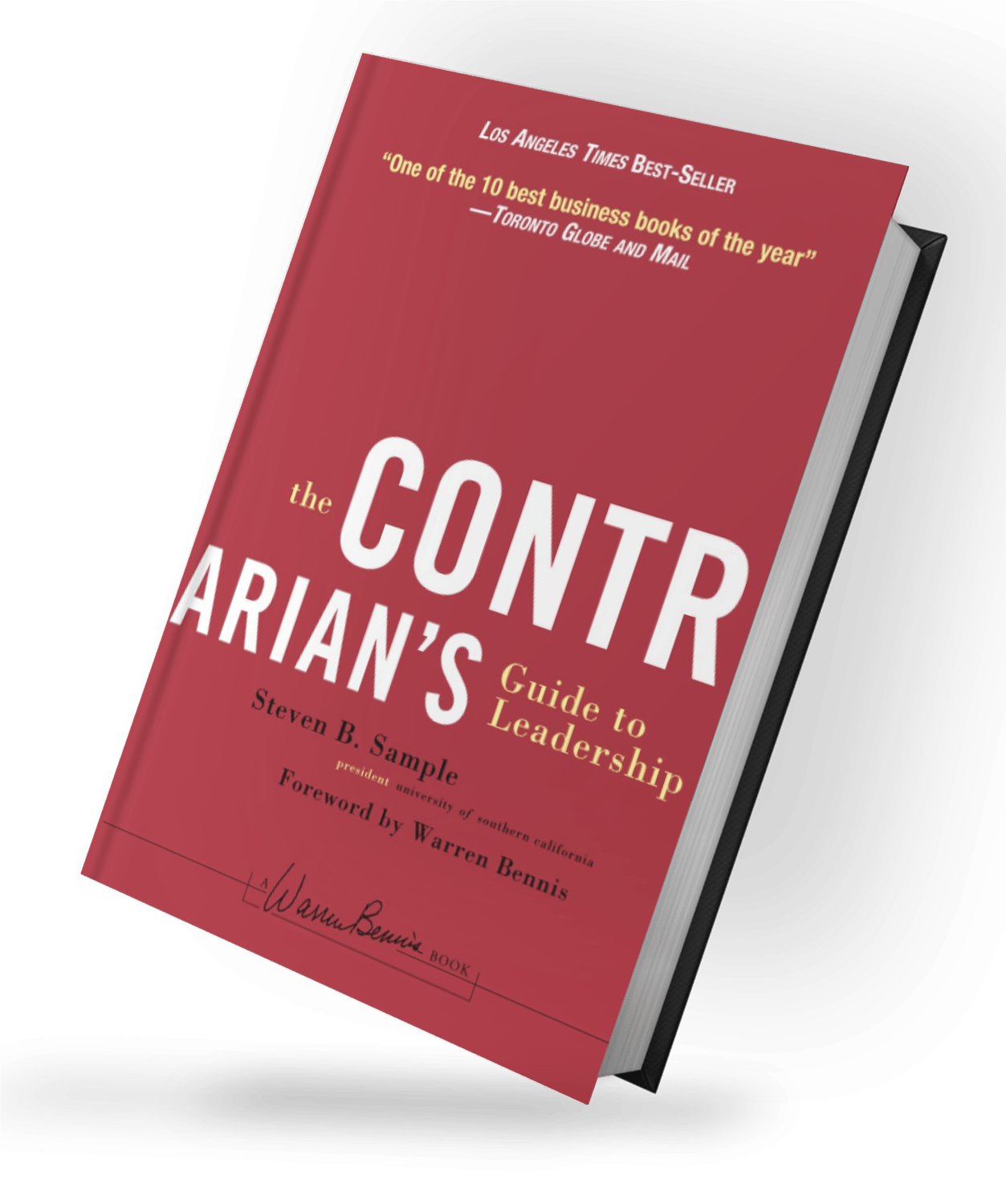
You won't learn this way of thinking in most business schools, and that's exactly why it's worth your time.
Sample's central idea in The Contrarian's Guide to Leadership is "thinking gray," which reshaped how I approach decisions: resist the urge to form an opinion too quickly. Sit in the tension. Consider more angles than you feel comfortable. The best decisions rarely come from the fastest ones.
Six things this book will teach you:
How to think gray: delaying judgment long enough to actually weigh the evidence.
How to choose expert advisors: knowing when you need help and when you don't.
Why great leaders keep reading the classics: returning to timeless works to understand people.
How to make sound decisions: after reflection, not instead of it.
Knowing which hill you're willing to die on, so tough moral calls don't paralyze you.
How to pick the right people, and rely on strong lieutenants instead of doing it all yourself.
One reader described this book as a roadmap for navigating the complexity of modern leadership, and I think that's exactly right.
Sample doesn't just ask you to challenge the status quo. He asks you to get comfortable being uncomfortable, because that's where growth actually happens.
Grab Your Copy of The Contrarian's Guide to Leadership
3. Unreasonable Hospitality by Will Guidara

Don't let the restaurant setting fool you: Unreasonable Hospitality might be the most transferable leadership book on this entire list.
Guidara built his career in fine dining, and yes, the stories come from that world. But the principle underneath them applies to every business, every team, every leader trying to build something people remember: exceeding expectations, on purpose, is a leadership skill.
This isn't a book about good customer service. It's a book about what happens when you decide that "good enough" isn't good enough, that every interaction is a chance to make someone feel seen.
Guidara's core lesson stuck with me: success isn't about delivering a service. It's about creating a connection.
If you lead people who touch customers, clients, or teammates in any capacity (and who doesn't?), this book will change how you think about the small moments that build loyalty and trust.
Grab Your Copy of Unreasonable Hospitality
4. Thinking For a Change by John C. Maxwell

Everything starts with how you think. Maxwell makes that case better than almost anyone I've read in Thinking for a Change.
This book is a practical, almost step-by-step guide to becoming a more intentional thinker, because, as Maxwell shows, your results are downstream of your thinking, not the other way around.
Key takeaways:
It all starts with thinking. Change your thinking, and you change your results.
Be humble. Study other great thinkers, their lives, failures, and lessons learned, and apply what you find to your own circumstances.
Successful leaders think differently. That difference is learnable.
You can develop good thinking skills. Maxwell outlines 11 of them.
Surround yourself with sharp thinkers. Proximity shapes your own focus and positivity.
Learn to think for yourself. Question popular thinking instead of absorbing it automatically.
Treat problems as opportunities. Use challenges as a catalyst for new methods and new ideas.
Value how other people think. Collaboration multiplies creativity and possibility.
If you want a leadership book that hands you tools, not just inspiration, this is the one.
Grab Your Copy of Thinking for a Change
5. The Speed of Trust: The One Thing that Changes Everything by Stephen M. R. Covey
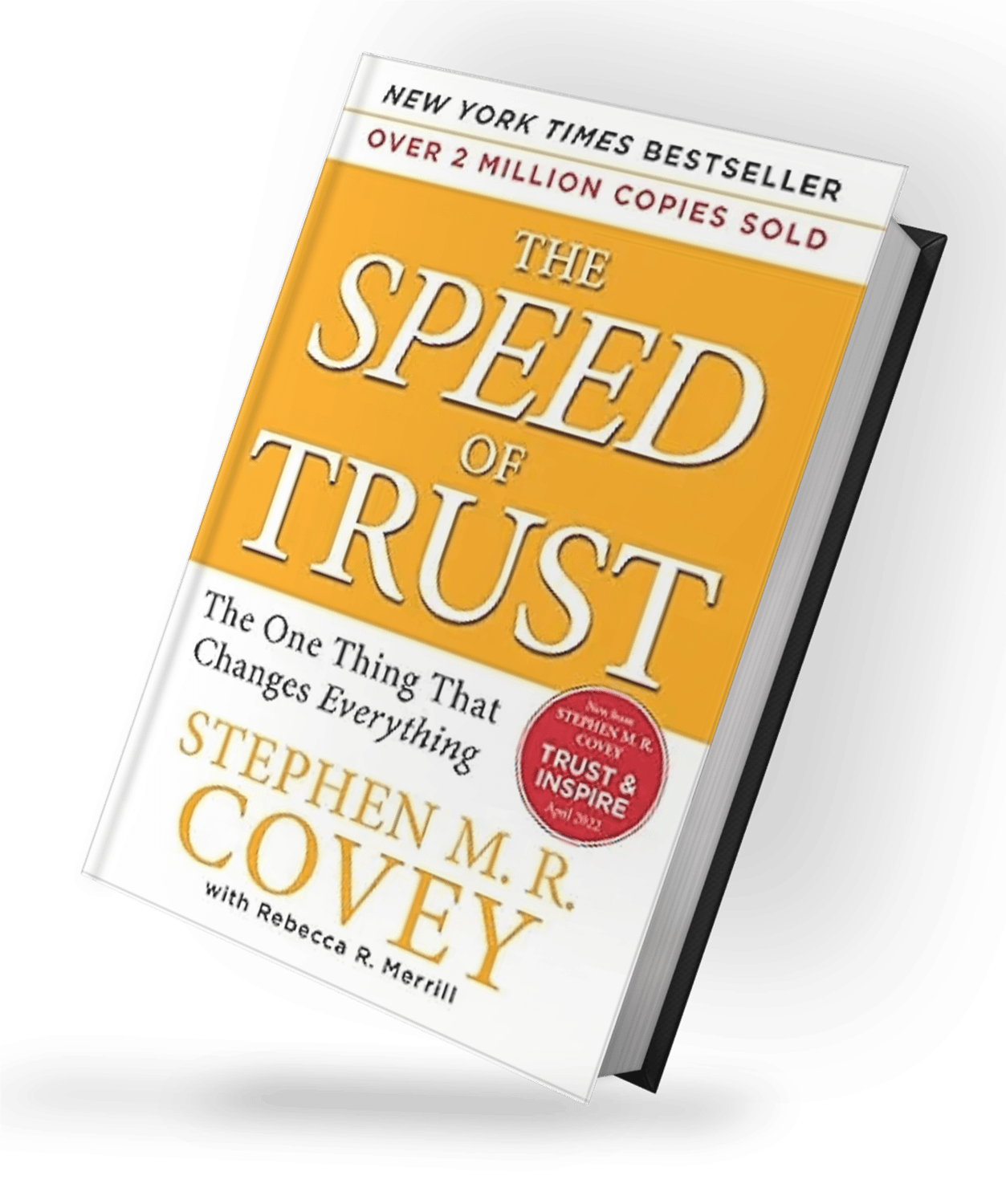
Trust isn't a soft skill. It's an economic force, and Covey proves it in The Speed of Trust.
He opens the book with a statement that's stayed with me ever since I first read it:
"There is one thing that is common to every individual, relationship, team, family, organization, nation, economy, and civilization throughout the world, one thing which, if removed, will destroy the most powerful government, the most successful business... That one thing is trust."
Covey's framework, the Five Waves of Trust, moves from the inside out:
Self Trust
Relationship Trust
Organizational Trust
Market Trust
Societal Trust
The idea is simple but profound: you can't build trust with others until you've built it with yourself. From there, trust ripples outward through relationships, into your organization, and eventually into how the market and society see you.
Covey also introduces the "economics of trust": how trust speeds up (or slows down) everything an organization does, and how it directly affects your bottom line.
He gives you 13 concrete behaviors for building high-trust relationships. This is one of those rare books that's both deeply philosophical and immediately practical.
Grab Your Copy of The Speed of Trust
6. Read To Lead by Jeff Brown & Jesse Wisnewski

Reading is what took me from running a small plant in north Mississippi to leading organizations with hundreds of people across multiple operations. I mean that literally: it was the single habit that compounded faster than any other.
Brown and Wisnewski make the case in Read to Lead that great leaders are, almost without exception, great readers. Reading reduces stress, sharpens decision-making, and unlocks a kind of creativity you can't manufacture any other way.
What you'll learn:
Why you need to read like your career depends on it
Eight research-backed reasons reading accelerates your career
How to actually absorb a book, not just finish it
Techniques to double, or even triple, your reading speed
How to build a reading habit that lasts a lifetime
Four takeaways worth acting on today:
Curate your reading list. Choose books that challenge your current views, not ones that confirm them.
Use what you learn. Insight without application is just entertainment.
Share knowledge. Passing on what you learn builds a culture of growth on your team.
Build reading rituals. Small, daily habits compound into real leadership growth over time.
If you've ever wondered how to start building the habit that changes everything else, this is your starting point.
Grab Your Copy of Read to Lead
7. First, Break All The Rules by Marcus Buckingham and Curt Coffman

This one's built on data, not opinion, and that's what makes it so hard to argue with.
Buckingham and Coffman interviewed over 80,000 managers across 400+ companies, the largest study of its kind, to answer one question:
What actually makes a great manager?
First, Break All The Rules reveals that the answer came down to 12 questions, and I've used them as a personal checklist for years to gauge the health of my own teams.
Ask your people:
Do they know what's expected of them at work?
Do they have the materials and equipment they need?
Do they get to do what they do best every day?
Have they received recognition or praise in the last week?
Does someone at work care about them as a person?
Is there someone who encourages their development?
Do their opinions count at work?
Does the company's mission make them feel their job matters?
Are their coworkers committed to quality work?
Do they have a best friend at work?
Has someone talked to them about their progress in the last six months?
Have they had opportunities to grow in the last year?
Sit with those for a second. Which one would be hardest for you to ask your team right now? That discomfort is exactly where the insight lives.
Grab Your Copy of First, Break All The Rules
Conclusion
Leadership never stops evolving, and the leaders who keep growing are the ones willing to look past the bestseller list and into the books that push them somewhere new.
Each book on this list challenged something I thought I already understood. Character. Trust. Decision-making. People. Together, they didn't just add to my leadership toolkit. They reshaped it.
So here's my challenge to you: pick one. Not all seven, just one. Start there, apply what you learn, and see what shifts.
Which of these seven is new to you, and which one are you going to read first? I'd love to hear your answer.

Join over 4,000 Growth-Minded Leaders reading The Learning To Lead Newsletter each week!
Latest Blog Post
Join over 4,000 Fellow Leaders reading The Learning To Lead Newsletter each week!
©2025 Learning To Lead | Helping Good Leaders Become Great Leaders