
Bring Calm to Chaos: 7 Leadership Lessons from Tim Harmon
Bring Calm to Chaos: 7 Leadership Lessons from Tim Harmon
Voices of Leadership Series
How an Army Ranger turned reliability leader built a career proving that influence, presence, and follow-through beat rank every single time.
Who taught you what kind of leader you wanted to be, and who taught you what kind you didn’t?
Sit with that for a second. Because most of us, if we’re honest, can point to both. The leader whose calm under pressure we’re still trying to replicate. And the one whose volume, ego, or fear-driven control left a mark we’ve spent years trying to unlearn.
Here’s what I’ve learned: the leaders we become are almost always shaped less by training and more by the moments where we watched real leadership play out under real pressure, and chose a side. Chose who we wanted to be. Chose who we refused to become.
That’s why I wanted to share what I learned from my conversation with Tim Harmon, a U.S. Army Ranger veteran, reliability and maintenance leader at AK Steel, Black & Decker, Stanley, and Cooper Tire, and currently Senior Manager of Facilities and Reliability at Liebherr Logistics USA, where he’s building a maintenance culture from scratch in a startup operation in Mississippi.
Tim has led in two of the most demanding environments on earth: combat deployments and industrial plant floors, and his leadership model has barely changed between them. Because the principles don’t change. The pressure does. Here are seven of his most powerful lessons.
Meet Tim Harmon
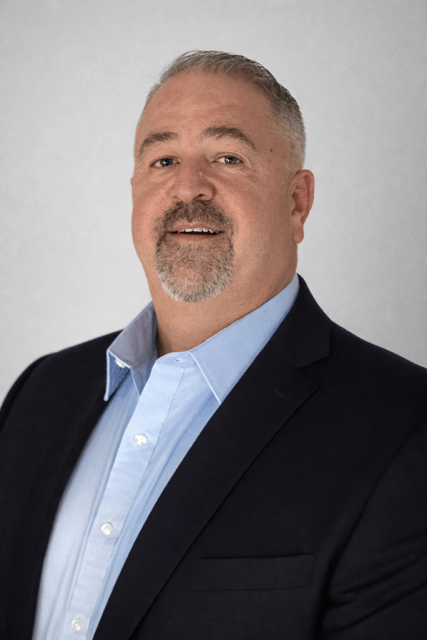
Tim’s leadership education started before he ever put on a uniform. JROTC in high school gave him his first look at team cohesion. His father’s 30-year Navy career gave him a front-row seat to long-form commitment. And by the time he enlisted in the U.S. Army straight out of high school, he already had a framework, even if he didn’t have words for it yet.
What the Army added was the crucible. Multiple deployments, Guantanamo Bay, Bosnia, and the Global War on Terrorism gave Tim the chance to see who people actually were under pressure. He earned his stripes, served as a team leader in combat environments, and learned from leaders on both ends of the spectrum.
One moment stuck with him. Tim was getting ready to deploy to Guantanamo Bay, watching how different leaders responded to the pressure of an imminent deployment. Some went authoritarian, loud, controlling, my-way-or-the-highway, driven by rank and fear. He watched the energy drain from rooms when they walked in.
And then there was Staff Sergeant Lopez. Calm. Respectful. Engaged with every person on his team. He didn’t bark. He didn’t threaten. He didn’t use his rank as a weapon. He led like he trusted the people around him, because he did.
“I consciously make an effort not to be like the others. I know who I wanted to be like. I’ve indoctrinated a lot of what I saw in Staff Sergeant Lopez into how I am today.”
That moment became the lens through which Tim has made every leadership decision since. And it’s the foundation underneath every principle that follows.
1. Leadership Is Lived on the Floor — Know Every Name
Tim manages maintenance and reliability operations in some of the most demanding industrial environments in the country. Equipment fails. Timelines compress. Production pressure is constant. And in the middle of all of it, Tim does something that surprises a lot of people: he stops to talk.
Not just to his direct reports. To everyone.
The mechanics. The electricians. The operators. The people in departments unrelated to his chain of command. He believes, with the conviction of someone who has tested it over two decades and across multiple organizations, that the single most important thing a leader can do day-to-day is to know the names of the people they work alongside and to take the time to actually engage them.
“My schedule should never be so busy that I can’t engage somebody on a personal level. I try to demonstrate that through leadership.”
This isn’t casual. It’s intentional. When a call comes in to get a machine back online, Tim doesn’t just dispatch someone; he shows up with them. And while the work is happening, he creates space for a conversation.
He stands next to the person working the line and just checks in.
How are things going?
How’s the team holding up?
What that communicates is profound:
The pressure to produce doesn’t mean we stop being human beings.
The relationship matters even when the machine is down. And what you model, your people replicate. An organization where every leader knows every name is one that moves faster, shares information more freely, and handles crises with far less friction.
Reflect:
When was the last time you walked your floor, physical or digital, with no agenda other than to know the people you lead?
Whose name have you been meaning to learn?
This week, learn it. Then use it.
2. Be the Filter — Absorb Chaos, Deliver Clarity
When Tim transitioned from the military to a corporate role overseeing global reliability implementation, one of the most important things he had to learn was what he calls "being the filter."
In the military, the structure is clear: you receive commander’s intent, you figure out how to execute it, and you deliver. In the corporate world, information from above is often less structured, more chaotic, and laced with pressures, politics, and priorities that people on the shop floor don’t need to carry. Tim’s job, as the leader between the executive level and the front line, was to receive all of that, process it, and deliver only what his team could actually use.
“I take all that information from that level and understand the intent or the delivery they want. But I also have to know my people. I know my audience, and I know what they can handle and what they can’t handle.”
This is one of the most underappreciated skills in leadership. The ability to absorb organizational pressure, to keep it from rolling downhill and crushing the people doing the actual work, is what separates leaders who protect their teams from leaders who inadvertently weaponize them.
Tim executes this systematically. He delivers information incrementally, tied to milestones and visible wins. He keeps the people above him informed of progress without overpromising. He advocates for his team’s pace. And he comes back with receipts, facts, data, and demonstrated results that build credibility at both levels simultaneously.
At the top, that credibility sounds like:
Tim’s team delivers.
On the floor, it sounds like:
Tim’s got our back.
Both are essential.
Reflect:
What pressure are you currently passing through to your team that you should be absorbing?
What chaos are you delivering that you should be translating into clarity?
3. Listening Is Not Hearing — It’s Digesting
Ask Tim what the single most important skill in his leadership toolkit is, and he doesn’t hesitate: listening. Not as a soft skill or a nice-to-have. As a competitive advantage most leaders leave on the table every single day.
He teaches it as a framework with three parts:
Never talk over someone. Never interrupt. Let them finish completely.
Don’t respond in haste. Digest what you’ve heard. Make sure you understand it before you speak to it.
Recap at the end. Say back what you heard — a summary that shows you understood the substance.
Sounds obvious. It is almost never practiced. Most people are already formulating their response while the other person is still talking. A response delivered too quickly signals that you heard words, not meaning. A response that comes after a thoughtful pause signals that you actually listened.
“I like to digest it and think about it and make sure it’s framed appropriately. That builds a lot of trust. They know you’re not just hearing what I’m saying — you’re listening and digesting what I’m saying.”
There’s a fourth element Tim adds that most leadership books miss:
Manage the power dynamic in the room.
If there’s a dominant voice drowning everyone else out, it’s the leader’s job to interject, not to shut the dominant voice down, but to open the floor to others. Because what the loudest voice says is almost never the full truth. The quiet people in the room know things. They have answers. And they’ll stop sharing them the moment they conclude nobody is really listening.
Tim has walked the floor after meetings and heard the same thing repeatedly: I don’t really feel that way. That’s when he knows the room wasn’t actually heard. His job is to even the playing field so the real information surfaces.
Reflect:
In your last team meeting, who didn’t speak?
Who got talked over?
This week, slow the room down. Pause before you respond. Recap what you hear. And open the door for the quiet voice.
4. Trust Is Built Straight From the Hip — Never Promise What You Can’t Deliver
Tim establishes his approach to trust the same way in every new environment: straight from the hip. No sugar coating. No corporate hedging. Frank, open, and honest, from the first conversation.
He tells his teams this explicitly. He tells the mechanics, electricians, and e-techs who are still deciding whether to believe him.
This is how it’s going to be. We’re going to tell each other the truth.
But honesty without follow-through is just talk. The deeper trust principle Tim lives by is this: deliver on what you say you’ll do. Every time. Without exception.
“I’ve seen a lot of people say, ‘Yeah, I’m gonna get you that training,’ and that training never happens. Don’t say something that you’re not going to follow through with. Leaders have to do what they say they’re going to do.”
This is one of the most consistent sources of leadership erosion Tim has observed across organizations: the promise made casually that gets forgotten just as casually. The training that was coming. The opportunity that was going to open up. The recognition that was going to happen.
When those things don’t materialize, people don’t just note it and move on. They file it. And after two or three unfulfilled commitments, the leader’s word becomes background noise.
Tim’s solution is direct: if you’re not 100% sure you can deliver, don’t make the commitment. Say “I’m going to look into that” instead of “I’m going to make that happen.” Be precise. Be honest about uncertainty. People will respect you more for that honesty than for false confidence. And when you do make a commitment, treat it like an order you gave yourself.
Reflect:
What’s one promise you made to a team member that’s still outstanding?
Close it this week! Either by delivering it, renegotiating it honestly, or owning that you can’t.
Your credibility is the most important tool you carry.
5. Give People a Voice, Get Their Vested Interest in the Win
Tim has driven change in some of the most resistant environments imaginable: aging industrial facilities, high-turnover operations, plants where maintenance and production have been at war with each other for years. And the thing he has learned, over and over, in organization after organization, is that sustainable change doesn’t happen because a leader mandates it. It happens because people choose to own it.
And to get there, they have to believe they have a place in it.
Tim calls this the feedback loop. It’s not a suggestion box. It’s an active, ongoing cycle of input and response that says: your voice shaped what we’re doing here. When people see their ideas reflected in the organization's direction, something shifts. The change is no longer something being done to them. It’s something they are doing.
“You have to make sure that people have a voice. Constantly going back and keeping people informed and engaged, constantly making people feel like they have a space in how things transpire — that’s the marshaling effect that brings people to a common goal.”
This is especially important in high-turnover environments. If you’re constantly onboarding new people into a change initiative, the veterans become your most powerful asset. They carry the culture. They model the belief. They tell the new person, "This place actually listens." And that word-of-mouth is worth more than any communication plan you can build.
Tim is also honest about the timeline. This doesn’t happen fast. Culture doesn’t turn on a dime. But if you keep the door open, keep giving feedback, keep making people feel like their input matters, you’ll watch the organization slowly become a more well-oiled machine. Not because you commanded it. Because the people in it decided they wanted it too.
Reflect:
Where in your team has someone offered an idea you didn’t adopt — and never circled back on?
Go back. Tell them what you did with it, even if the answer is “We couldn’t use it this time, but here’s why I’m grateful you brought it.” Close the loop.
What did your leadership produce in the people around you, not just in the numbers?
6. Influence Beats Authority in Every Durable Organization
One of the defining features of Tim’s career is how often he has led without positional authority. As a consultant. As a global program implementer going into independent plants. As a maintenance manager who needs the production manager, the safety director, and the finance team all moving in the same direction.
In those contexts, you can’t order people to follow you. You have to earn it. And Tim has spent two decades learning exactly how. Three methods, used in combination:
Demonstrate shared purpose. When an operations leader is tied up, Tim jumps in and covers. He helps without keeping score. That breaks down barriers.
Celebrate shared wins. When something goes right, Tim brags about his team, loudly, specifically, to the people above him. Credit reaches the people who earned it.
Know your audience. Some people are analytical; give them the numbers. Some need case studies. Some need direction and then trust. Tim reads people and adjusts.
“That breaks down a lot of barriers. It also demonstrates that when I say, ‘Help me out, I’ll help you out’ — I mean it. I want you to be a great leader. Your people matter to me. My people should matter to you.”
The result is an organization that moves not because Tim has authority over it, but because people across it respect him, trust him, and genuinely want to be part of what he’s building.
Influence is what holds an organization together when the org chart can’t.
Reflect:
Where in your organization are you trying to push change through authority that you should be earning through influence?
Who could you help this week with no expectation of anything in return?
7. Don’t Pocket the Tools — Apply What You’ve Learned
Tim closed our conversation with a charge that is deceptively simple and practically urgent.
He has watched people go through leadership training, read the books, absorb the mentorship, and then nothing happens. The wisdom goes into their back pocket. They know what to do. They just don’t do it. They’re waiting for the right moment, the right role, the right level of certainty before they take the step.
Tim says,
"That’s not how this works."
“Don’t be afraid to apply what you’ve learned. Too many people put things in their back pocket as a tool. But just use it. Don’t be afraid to take that step to that supervisor role, to that manager role.”
This extends to his own development. Tim is a devoted student of Jocko Willink, a fellow veteran whose book Extreme Ownership gave him a leadership framework that translates directly from combat to the corporate world.
He listens to motivational content. He reads actively. He deliberately surrounds himself with people who challenge him, mentors like Steve Robber at AK Steel, who pushed both his leadership and his technical competency, and Bobby Allen, who walked with him through his years at Cooper Tire and Allied Reliability.
He carries what he learned from both of them, not as theory, but as daily practice.
The model Tim advocates is simple and circular: listen, learn, absorb — then go apply it.
Don’t collect tools. Use them. Build the team. Get in the room. Make it work. Because leadership isn’t a credential you earn and store. It’s a practice you repeat until it becomes who you are.
Reflect:
What leadership tool have you been carrying in your back pocket — something you learned from a book, a podcast, a mentor, a conversation — that you haven’t actually used yet?
Use it this week. The step you’re afraid to take is the only way to find out what you’ve actually internalized.
Bringing It All Together
Tim Harmon’s career has spanned two of the most demanding environments on earth — combat deployments and industrial plant floors — and the leadership model he uses in both is essentially the same one he started building as a young soldier at Fort Hood, watching Staff Sergeant Lopez lead with calm respect under real pressure.
What strikes me most, looking back at our conversation, is how little of his leadership philosophy is about him. It’s about the people. Knowing their names. Listening past their words. Keeping the chaos off their backs. Honoring their voice. Keeping your word to them. Helping them across departmental lines without keeping score. And then, most importantly, trusting them enough to actually use what you’ve learned, instead of holding it back for a moment that never comes.
Tim didn’t inherit any of that. He chose it. He watched the other kind of leadership and decided who he wasn’t going to be. And then he spent decades becoming who he wanted to be instead.
That’s the whole game, really.
Decide who you want to be as a leader. Find the models. Reject the counterexamples. And then go apply what you’ve learned, not someday, not when the time is right. Now. On the floor. With the people in front of you.
Your Move This Week
Pick one principle from this list, just one, and put it into practice this week. Not all seven. Just the one your gut already knew you needed when you read it.
Maybe it’s walking your floor and learning the name of someone you should already know.
Maybe it’s closing the loop on a promise you’ve been letting slide.
Maybe it’s slowing the next meeting down so the quietest voice in the room gets heard.
Maybe it’s taking a tool out of your back pocket and finally using it.
Whatever it is, take the step. Then come back next week and take another one. That’s how durable leaders are built. One intentional decision at a time.
Don’t pocket the tools. You can do this.
Enjoyed this breakdown? Subscribe to the Learning to Lead Newsletter for more book summaries, leadership frameworks, and practical encouragement delivered weekly.
Resources Tim Recommends
Extreme Ownership — Jocko Willink and Leif Babin
The Jocko Podcast — long-form leadership and discipline conversations from Jocko Willink
The Non-Commissioned Officer Creed — a daily operating principle around people, communication, and mission
Motivational content from diverse voices on YouTube — Tim intentionally diversifies his inputs to sharpen character and perspective
Connect with Dr. Matt Willmington
Enjoyed this breakdown? Subscribe to the Learning to Lead Newsletter for more book summaries, leadership frameworks, and practical encouragement delivered weekly.

Join over 4,000 Growth-Minded Leaders reading The Learning To Lead Newsletter each week!
Latest Blog Post
Join over 4,000 Fellow Leaders reading The Learning To Lead Newsletter each week!
©2025 Learning To Lead | Helping Good Leaders Become Great Leaders