
Integrity by Dr. Henry Cloud - Book Summary
A deep dive into Dr. Henry Cloud's Integrity: The Courage to Meet the Demands of Reality
I have read a lot of leadership books over the years. Hundreds of leadership books. And if you asked me to choose just one that has shaped my thinking more than any other, it would be this one. Integrity: The Courage to Meet the Demands of Reality by Dr. Henry Cloud is my favorite leadership book.
Not because it's the flashiest or the most tactical, but because it goes to the very core of who leaders are. It doesn't start with what you do - it starts with who you are.
And it makes a case I believe with everything in me: if you don't build genuine trust with your organization, with your team, with the people who are counting on you, you will never be the highly effective, truly great leader you have the potential to be.
Skill will only take you so far. Character is what carries you the rest of the way.
What if the biggest obstacle between you and the results you want isn't your strategy, your resources, or even your team - but your character?
That's the tough but freeing truth in Cloud's great work, Integrity. And once you see it, you can't unsee it.
We spend enormous energy developing our skills, building our networks, refining our processes, and chasing the next competitive advantage. We invest in coaching, conferences, certifications, and systems. We read the books, listen to the podcasts, and show up early. And yet, many talented, hardworking leaders still hit invisible ceilings they can't seem to break through. Their results plateau. Their relationships fracture. Their influence stalls - not because they lack skill, but because something deeper is getting in the way.
Cloud's argument is both simple and profound: all of your effort, talent, and ability runs through a filter - your character - and if that filter has gaps, your best efforts will only take you so far.
Who you are on the inside will ultimately determine whether your gifts on the outside get to flourish.
Here's the good news: character isn't fixed. It can be built, strengthened, and developed - just like any other skill. And that changes everything.

Trust is the price of admission
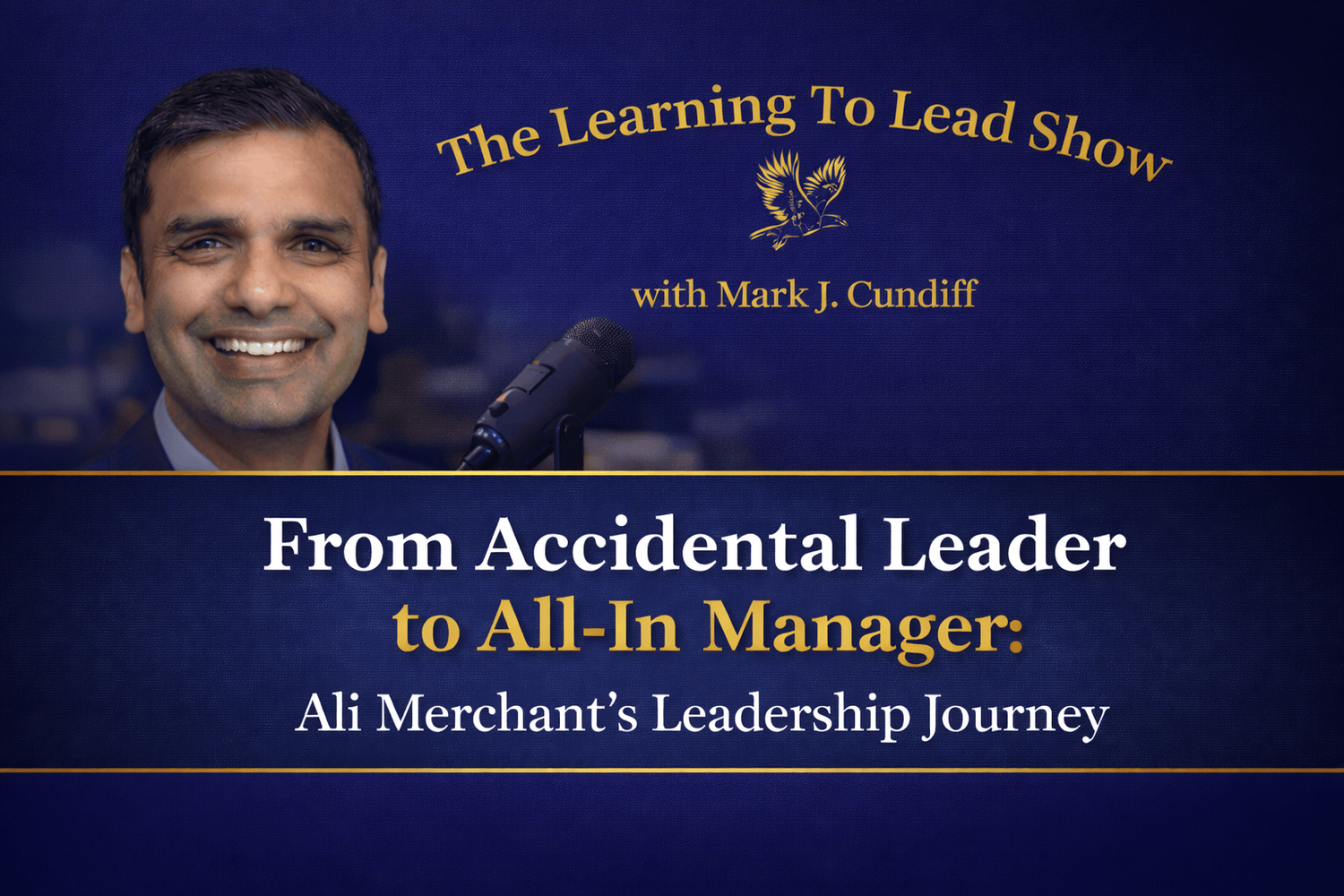
I was reminded of this in a powerful way during a recent conversation on The Learning to Lead Show with Ali Merchant, author of The All-In Manager. Before we got into strategy, frameworks, or any of the tools leaders love to talk about, Ali brought it back to the one thing that has to come first.
Before strategy. Before frameworks. Before new tools. Before you run another meeting or launch another initiative, there is one question every person on your team is silently asking:
Do I trust you?
Ali didn't dance around it. He said it plainly: if people don't trust you, nothing else matters. Not the book. Not the frameworks. Not the tools or the templates or the well-crafted vision statement. None of it.
That is not a motivational quote. That is a leadership reality check - and it lines up precisely with what Cloud builds his entire framework around.
When trust is low, everything in your organization gets distorted. Feedback turns into suspicion. Direction turns into doubt. Even your best intentions can start to look like control. Culture gets cautious. People stay polite. They stay quiet. They do just enough to keep their heads down and stay out of trouble.
Performance might hold together for a while. Commitment won't.
That is why Cloud spends so much of Integrity on the mechanics of trust - not as a soft leadership concept, but as the hard foundation that every result, every relationship, and every initiative is built on. You can't outwork low trust. You can't out-strategy it. You have to build it, deliberately and consistently, from the inside out.
What "Integrity" Actually Means - And Why You've Been Thinking About It Too Small
When most of us hear the word "integrity," we think honesty. Don't lie. Keep your promises. Do what you say you'll do. Those things matter enormously - but Cloud expands the definition significantly, and that expansion is where this book gets genuinely transformative.
The word integrity shares its root with integrate and integer - whole numbers, complete things. Cloud says that true integrity is about wholeness: the seamless integration of who you are on the inside with how you show up on the outside.
It's not just about avoiding bad behavior. It's about having all the pieces of your character working together in a way that can actually handle the real-world pressures of leadership, relationships, and results.
Think about it this way. When engineers build a bridge, they don't just ask whether it looks solid. They ask whether every component, every joint, every material can handle the pressure it will actually face - the weight, the weather, the vibration, the years of use. That's structural integrity.
Cloud applies that same standard to people. Can you handle the real-world demands that life and leadership put on you? Not just on a good day, but when the project goes sideways, when a key relationship breaks down, when the team is struggling, when the numbers aren't adding up?
A person with integrity of character can handle those pressures and come out the other side - not unscathed, but intact. And here's what makes this so hopeful: that capacity is not a matter of personality type or natural gifting. It is a matter of character development. It is something you can choose to build, starting today.
The Wake You're Leaving Behind - Are You Willing to Look?
Before we get into the six character traits Cloud identifies, I want to invite you into one of the most powerful diagnostic tools in the book: the concept of your wake.
Just as a boat moving through water leaves a trail behind it, you are constantly leaving a wake as you move through your work, your relationships, and your life. That wake has two distinct sides, and both of them tell you something crucial about your character.
The task side of your wake asks: What are you actually getting done? Are you hitting your goals? Are projects moving forward with clarity and momentum? Are you producing results that match your resources and abilities - or are there consistent patterns of falling short?
The relationship side of your wake asks:
How are people left after interacting with you?
Do the people on your team feel more energized, more valued, more capable after spending time with you - or do they feel drained, demoralized, or unseen?
Are your relationships growing deeper over time, or are they quietly eroding?
Here's what Cloud makes clear: you need both sides of your wake to be healthy. Some leaders get incredible results but leave a trail of wounded people behind them. Others are beloved by everyone but can't seem to move the needle on anything that matters.
Neither of those is genuine success. A truly healthy wake produces results and leaves people better than it found them.
The courage to look at your wake honestly - to ask trusted people what it's really like to be on the receiving end of your leadership - is one of the most important investments you can make in your own growth.
Most of us have blind spots we aren't even aware of. The wake reveals them, if we're willing to look.
So before we go further, here's a reflective question worth sitting with:
What is the wake you are leaving behind you right now?
The 6 Character Traits That Determine Whether Your Gifts Get to Flourish
Cloud identifies six essential character traits that, when integrated, enable leaders to consistently meet the demands of reality. Think of these not as personality types you either have or you don't, but as muscles - they can all be developed with intention, practice, and the right kind of support.
1. Building Trust: The Foundation Everything Else Rests On
Trust isn't just about honesty - it goes much deeper than that. Cloud breaks trust-building down into three distinct components, and understanding all three will fundamentally shift how you approach your relationships.
Connection is the first building block. People need to feel genuinely understood - not managed, not handled, not processed - understood. This requires the kind of empathy that says, "I see your reality, and it matters to me." A leader can be competent, kind, and well-intentioned, and still lose people if those people don't feel truly seen and heard.
Real connection requires being fully present - not half-listening while thinking about your next point, not invalidating someone's concern with a quick "just push through it," but truly entering into another person's experience long enough to understand it from the inside.
That kind of presence takes depth of character. And when leaders fail to connect this way, followers eventually find someone who will. The human heart, Cloud writes, will always seek to be known, understood, and connected. If you're not providing that, someone else will fill the gap.
Extending Favor is the second building block. At a baseline level, trustworthy people do what they say they'll do. But leaders who build deep, lasting trust go further - they actively look out for the interests of the people they lead, even when it isn't required.
They don't reserve their care and investment for high performers only. They extend grace broadly, because they understand that real trust is built when people know you're in their corner even on their worst day - not just when they've earned it.
Cloud puts it memorably: leaders who show up for people only when they are performing are building conditional relationships. And in a conditional relationship, everyone lives in quiet anxiety about the day they'll inevitably fall short. That is not trust - that is a performance contract with an expiration date.
Vulnerability is the third building block, and it's one that many leaders seriously underestimate. People trust leaders who are both strong and human.
When you share honestly about a time you faced an obstacle similar to the one your team is facing now - and you show them how you navigated it - you don't lose credibility. You build it. You instill courage in people by showing that the hard thing they're facing is survivable, because you've survived something similar too.
Cloud reminds us that the word "encourage" literally means to put courage into someone. Vulnerability, practiced well, is one of the most powerful ways to do exactly that.
2. Oriented Toward Truth: Facing Reality with Clear Eyes
The second character trait Cloud explores is a commitment to truth - not just the surface-level "don't lie" variety, but the deeper, more demanding kind of truth-seeking that extends to how we see ourselves, how we see others, and how accurately we perceive the situations we're actually in.
Here's the uncomfortable reality: many leaders live with significantly distorted views of what is actually true. They avoid feedback because it stings. They surround themselves with people who affirm their existing perspective. They interpret challenges through an emotional lens that magnifies some things and minimizes others. And then they wonder why their decisions keep producing the same frustrating patterns of results.
People who are genuinely oriented toward truth share three distinct qualities.
First, they seek truth actively - about their industry, their market, the people they lead, and most courageous of all, about themselves. They ask questions like, What is it like to be on the other end of me?
And they genuinely want an honest answer. Not flattery, not reassurance, but the real picture - even when it's uncomfortable.
Second, they manage their emotional response to the truth. Cloud calls this emotional valence - the tendency to let one piece of difficult feedback color everything, or to swing between "everything is great" and "everything is terrible."
Leaders who face reality well have learned to neutralize hard truths. They can receive difficult information without either dismissing it defensively or being completely overwhelmed by it.
Third, they can incorporate new information that challenges what they already believe. This is genuinely hard. We all have frameworks, assumptions, and paradigms that feel solid and true.
A leader with developed character can update those frameworks when reality demands it - assimilating new information and then accommodating it, making room in their mental model for a more accurate picture.
Admiral Jim Stockdale, a Vietnam POW and Congressional Medal of Honor recipient, said it best in Jim Collins' Good to Great: you must never confuse faith that you will prevail in the end - which you can never afford to lose - with the discipline to confront the most brutal facts of your current reality. That tension is what Cloud calls the mark of a truly grounded, courageous leader.
3. Achieving Results: Why Character Produces What Talent Alone Cannot
Here's something that might genuinely surprise you: Cloud argues that the reason many talented, hardworking people don't get the results they're capable of is almost never a skill issue. It's a character issue.
The gap is not in what they know - it's in who they are.
High achievers share specific character traits that consistently drive their output, and these traits are learnable.
The first is self-knowledge.
High performers know their strengths, their values, and what genuinely energizes them - and they build their work around those realities. They don't chase other people's definitions of success. They operate from the inside out. True humility, Cloud notes, doesn't mean denying your gifts or downplaying your strengths. It means honest self-evaluation - seeing yourself clearly enough to know where to invest fully and where to ask for help without shame.
The second is what Cloud calls the Ready, Aim, Fire process.
Ready means doing the preparation - the unglamorous, patient work of equipping yourself before you launch. Aim means focusing your energy with genuine purpose, knowing what you're going after and why, resisting the constant pull to scatter your attention across too many initiatives at once. Fire means actually pulling the trigger - committing to action even when the outcome isn't fully guaranteed.
Most people get stuck at one of these three stages. Some fire before they're ready, launching half-prepared efforts that fail not because the idea was bad but because the foundation was never built.
Others aim endlessly - always planning, researching, and preparing, but never quite committing to move. Great leaders move through all three stages in order, and they've done the character work that makes each stage genuinely possible.
The third trait of high achievers is the willingness to make hard calls quickly and decisively.
Nothing erodes respect faster than a leader who cannot bring themselves to make a difficult decision when one is needed. Whether it's a personnel issue, a failed strategy, a loss that needs to be acknowledged and released, or a direction that needs to change - effective leaders face it, decide, and move forward.
And finally, high achievers know how to lose well. They face the loss squarely, examine what went wrong, extract the lesson, and then they let it go. They don't carry the same pattern of failure forward into the next season.
Cloud uses a powerful metaphor: people metabolize experience like food, breaking it down and eliminating what isn't useful. If you skip that process - if you jump straight from failure into the next project without processing what happened - the waste becomes toxic. It shows up again in the next setback, and the one after that.
4. Eating Problems for Breakfast: Embracing Negative Realities Head-On
One key trait that separates growing leaders from stagnant ones over time is their ability to engage with problems rather than avoid them.
Life is largely about solving problems. That reality is not going to change. And if you cannot orient yourself toward finding solutions, you will stagnate - no matter how talented you are or how hard you work.
The leaders who thrive over decades are the ones who have developed a genuine appetite for problems. They've shifted from seeing obstacles as threats to seeing them as invitations to show what they're made of.
Cloud identifies several key traits of effective problem-solvers. They don't avoid the elephant in the room - they name it and engage it. They've learned that avoiding pain rarely makes it disappear; almost always, it makes it worse and more prolonged.
And often, the leader who drags out a problem by avoiding confrontation ends up bearing just as much blame as the person who initially caused it.
They have the capacity to recover - to regain their footing after a negative emotional event and re-engage with full presence. Many people withdraw when things get genuinely hard. They go quiet, check out, pull back emotionally. But only engaged people can solve problems. Withdrawal is never a neutral act in leadership.
They practice productive confrontation - going hard on the issue while staying consistently soft on the person. The goal of confrontation, done well, is never to blow off steam or win a point. The goal is to get results.
Cloud frames it as "you and I versus the problem" rather than "me versus you." That single reframe changes everything about how a difficult conversation is received.
They own their mistakes without collapsing into shame or retreating into defensiveness. Acknowledging responsibility is scary because it means admitting we are not as in control as we'd like to be.
But not owning mistakes puts a ceiling on performance - it hides the very areas where the most growth is available.
And they know how to forgive and release.
Not as a way of avoiding the wound, but as the only genuine path through it. Problem-solvers face what happened fully - and then they let it go, because they understand that carrying resentment costs them more than it costs the person they resent.
5. Causing Growth and Increase: Becoming Someone Who Never Stops Getting Better
Cloud is refreshingly direct about this: if you are not actively growing, you are leaning toward decline. There is no neutral gear.
Growing and dying are always both happening simultaneously - the question is simply which one is currently winning.
What distinguishes people who keep growing throughout their lives and careers from those who plateau early and coast? A few things stand out consistently.
First, they invest real resources in their own development - not someday, when things slow down, but now. Successful people in every field understand that there will never be a perfectly convenient time to grow, so they make time sacred and protect it fiercely.
Their calendars include retreats, coaching engagements, mentorship relationships, non-required continuing education, and intentional Sabbath rest - periods of regeneration, not just production.
Cloud compares this to a farmer who sets aside a portion of this year's harvest to plant next year's crop. You cannot grow what you've already consumed.
Second, they think of themselves as open systems. The second law of thermodynamics tells us that closed systems - systems that don't allow new energy or information in - descend into chaos and entropy over time. But open systems can become more organized and effective through their connection to external sources of energy and input.
The question for any leader is:
Am I a closed system? Is new information genuinely able to get in? Am I surrounded by people who will tell me the truth, or only people who tell me what I want to hear?
Third, they teach what they know.
One of the most powerful and underutilized paths to growth is teaching others. It forces you to articulate what you actually understand, confront the gaps in your own knowledge, and see familiar concepts through a completely fresh lens.
And the relational dimension matters too - pulling others forward while you're moving ahead creates the kind of legacy that outlasts any individual accomplishment.
Fourth, they subject themselves to their own inability - they deliberately attempt things they are not yet good at. They try the thing that intimidates them. They take on the assignment that stretches them past their current capacity.
Comfort is the enemy of growth, and the leaders who keep getting better are the ones who keep voluntarily stepping outside their comfort zone in service of something worth growing toward.
6. Transcendence: The Paradox That Changes Everything
The sixth and final character trait may be the most counterintuitive of all, but in many ways it is the most important: the leaders who become truly great are the ones who have moved beyond making everything primarily about themselves.
When a leader makes their own success, status, reputation, or security the central objective, something quietly shrinks in them. Their world gets small. Their decisions get distorted by self-interest, even when they're dressed up in the language of vision and strategy.
And the people around them can feel it - even when it's subtle. People have an instinct for being used as a means to someone else's end, and it erodes trust in ways that are hard to name but impossible to ignore.
But when a leader genuinely attaches themselves to something larger - a mission they believe in, a community they're serving, a set of values they're willing to sacrifice for - something expands in them.
Their influence grows. Their decisions get cleaner and bolder. Their people don't just work for them - they want to go somewhere with them.
Thomas Merton called extreme self-centeredness "the doorstep of hell" - not because it's dramatic, but because it cuts you off from the very things that make life and leadership meaningful.
Cloud points to powerful real-world examples: companies like Johnson & Johnson, which pulled Tylenol from shelves nationwide at enormous financial cost after bottles were tampered with in Chicago.
That kind of decision doesn't emerge from a cost-benefit spreadsheet. It comes from a character that has genuinely committed to something more important than short-term self-interest.
The leaders whose legacies actually last aren't the ones who accumulated the most. They are the ones who gave themselves most fully to something genuinely worth giving themselves to.
The Practical Takeaway: A 5-Step Path Forward
Reading about these six traits is one thing. Actually developing them is another.
Here is a framework to help you move from insight to genuine, measurable action.
Step 1: Look at your wake honestly.
Set aside dedicated time to examine both sides - task and relationship. Ask two or three people you genuinely trust to give you honest, specific feedback about what it's like to be on your team or in a relationship with you.
Listen without defending. What you hear may be uncomfortable. It will also be some of the most valuable information you'll ever receive.
Step 2: Identify your primary gap.
Of the six traits, which one - if strengthened significantly - would have the biggest positive impact on your leadership in this particular season?
Don't try to work on all six simultaneously. That's a recipe for working on none of them deeply. Pick the one that matters most right now, and go after it with focus.
Step 3: Pursue structured, honest feedback.
Find a mentor, a coach, or an accountability group who will give you regular, honest input - not encouragement for its own sake, but real perspective on where you're growing and where you're still stuck.
The people who grow fastest are those who have intentionally built systems to receive the truth about themselves.
Step 4: Invest in growth intentionally and immediately.
Block time on your calendar right now - not someday, today - for a retreat, a course, a coaching engagement, or a mentorship relationship. Don't wait for a less busy season.
It will not come. Treat that time with the same gravity you give to your most important obligations.
Step 5: Start with connection.
Whatever else you take away from Cloud's framework, start here: before you can lead people anywhere meaningful, they have to feel genuinely known by you. This week, slow down enough to truly listen to someone on your team.
Not to fix them, not to assess them, not to manage their expectations. Just to understand them. That single, consistent practice builds more trust than almost anything else a leader can do - and it costs nothing but your full attention.
The Bottom Line
Dr. Henry Cloud's Integrity is one of those rare books that doesn't just add to your leadership toolkit - it challenges you to grow at the root level, where lasting change actually happens. Skills get you in the room. Character determines what happens once you're there, and whether you're invited back.
Your gifts, your talent, your intelligence, your experience, your strategy - all of it eventually runs through the filter of who you are. The six character traits Cloud lays out are not supplemental add-ons to effective leadership.
They are the foundation on which every other part of your influence is built. Neglect them, and even your greatest strengths will eventually hit a ceiling. Develop them, and there's almost no limit to what those strengths can produce.
The courage to meet the demands of reality isn't something you either have or you don't. It's a daily decision. A daily practice. A daily act of choosing to build the kind of character that makes everything else you're working toward actually possible and sustainable.
You don't have to be perfect to start. You just have to be honest about where you are, willing to grow into something more, and courageous enough to take one meaningful step forward.
The wake you leave is worth the effort. The people you lead are worth the investment. And so are you.
Ready to go deeper? Pick up a copy of Integrity by Dr. Henry Cloud. Read it slowly, with a journal nearby.
The questions it raises are worth sitting with - and the growth it points toward is worth every bit of the courage it takes to pursue.

Join over 4,000 Growth-Minded Leaders reading The Learning To Lead Newsletter each week!
Latest Blog Post
Join over 4,000 Fellow Leaders reading The Learning To Lead Newsletter each week!
©2025 Learning To Lead | Helping Good Leaders Become Great Leaders