
The Law of E.F. Hutton: Why the Real Leader Is the One People Actually Listen To
The Law of E.F. Hutton: Why the Real Leader Is the One People Actually Listen To
Have you ever sat in a meeting where the person running it kept talking, and everyone quietly kept glancing at someone else in the room, waiting to hear what they thought before anyone truly reacted?
If you have, you've watched the Law of E.F. Hutton play out in real time, whether or not anyone in the room could have named it.
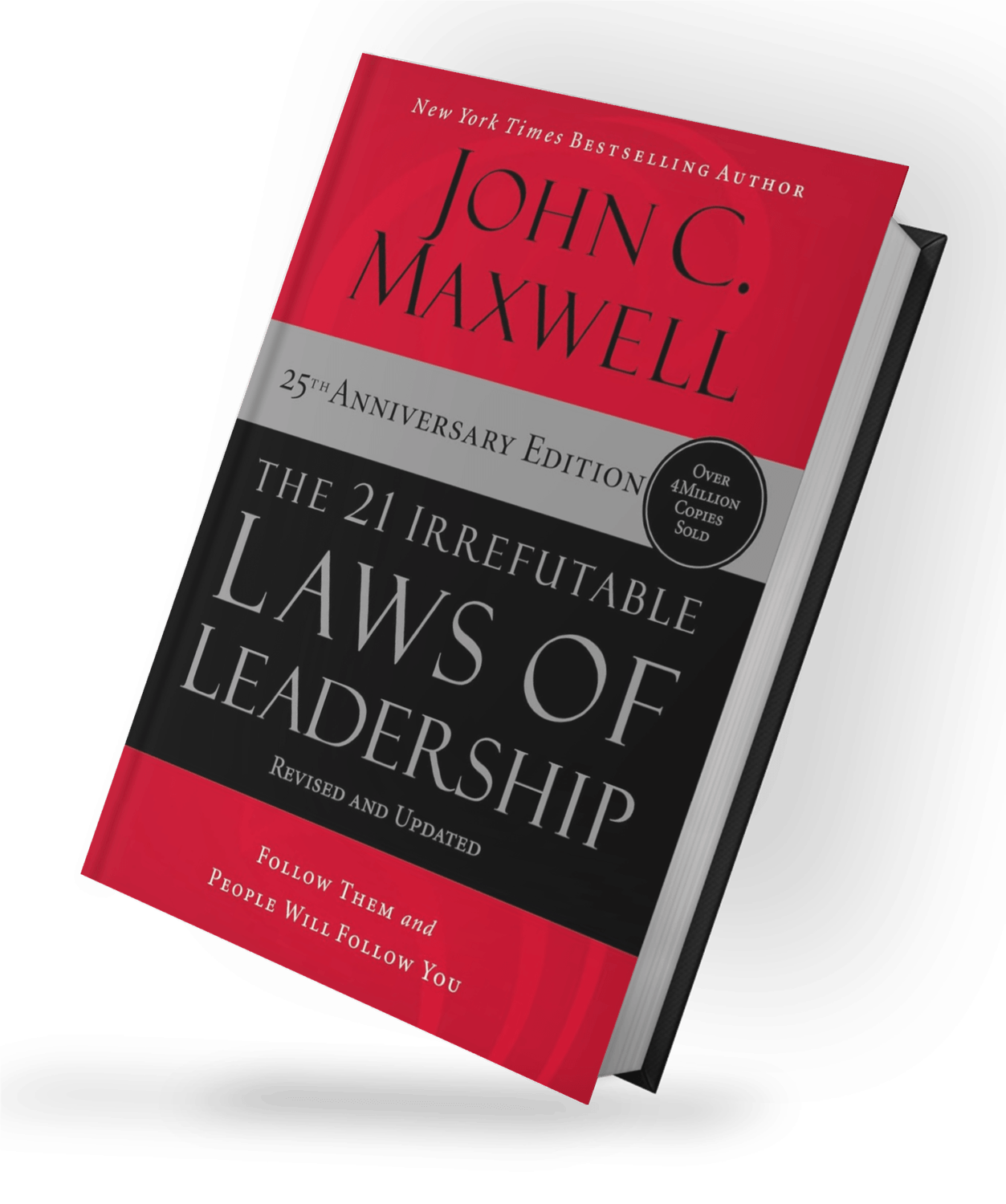
This is Law #5 of John C. Maxwell's 21 Irrefutable Laws of Leadership, and it might be the most immediately recognizable law in the whole book once you know what to look for, because you've almost certainly witnessed it in nearly every organization you've ever been part of. If you haven't read the full framework yet, start with my complete summary of the 21 Irrefutable Laws of Leadership, which walks through all 21 laws chapter by chapter. This post goes deeper into Law #5 alone, because the gap between "in charge" and "actually leading" deserves a closer look.
Let's get into it.
What Is the Law of E.F. Hutton?
Maxwell states it clearly: when the real leader speaks, people listen.
The name comes from a famous 1970s ad campaign for the brokerage firm E.F. Hutton, where the tagline was simply: "When E.F. Hutton talks, people listen." The commercials showed a crowded, noisy room instantly going silent the moment someone mentioned they had advice from E.F. Hutton.
Maxwell borrows that image to make a sharp point about leadership: the person with the title, the one technically running the meeting, is not always the person the room is actually listening to.
True leadership, Maxwell insists, depends entirely on influence, not on the seat someone occupies at the head of the table. The man or woman other people genuinely turn to, whose opinion shifts the room's mood, whose agreement or disagreement actually moves the decision, that person is the real leader in that moment, regardless of what their business card says.
What Actually Earns This Kind of Attention
This law naturally raises an uncomfortable question: if title doesn't determine who the room listens to, what does? Maxwell points to a specific combination of traits that consistently show up in the people rooms instinctively defer to.
1. Strength of character. People trust those whose integrity has been tested and proven over time. A room doesn't quiet down for someone whose word has been unreliable in the past.
2. Strong relationships. The real leader in the room has usually invested in people individually, long before this particular meeting. Influence built in private conversations shows up publicly.
3. Deep knowledge of the work. Competence earns attention. People listen more closely to someone who has demonstrably done the work well, not just someone who talks about it confidently.
4. Sharp intuition. The real leader often has a track record of accurately reading situations, anticipating problems, and being right more often than not. That track record buys them the room's attention the next time.
5. Plain, raw talent. Sometimes it really is that simple. Some people are simply gifted at reading a room, communicating clearly, and moving people to action, and that talent, sharpened over time, earns real followership.
Notice what's absent from this list: seniority, job title, and formal authority. Those things can amplify the influence you've already built, but on their own, they don't create it.
A Gut Check for New Leaders
Maxwell offers a specific piece of encouragement here that I think deserves its own spotlight, because it addresses a very real and very common fear.
If you've just stepped into a new leadership role, and you can sense that someone else in the room, someone without your title, is the person people are actually listening to, Maxwell's advice is: don't let it bother you. That's not a verdict on your leadership. It's simply where things stand today.
Here's the reassurance worth holding onto: the real test of leadership isn't where you start out. It's where you end up. Influence isn't handed out at the start of a role. It's built over the course of it. The leader who quietly resents the person the room currently listens to will struggle to earn that same trust themselves. The leader who studies what that person does right and patiently works to build the same kind of character, relationships, and competence has a real shot at becoming that person over time.
This matters enormously for anyone stepping into a role where a predecessor, a senior peer, or even a subordinate already holds significant informal influence. The instinct to compete for attention or assert authority through the title alone almost never works. The patient path, earning trust the same way the current "real leader" did, is slower, but it's the only path that actually works.
Why Positional Leaders Sometimes Get Sidelined
It's worth understanding why this gap between title and actual influence happens in the first place, because it's rarely due to bad intentions.
1. Sometimes the positional leader hasn't built relationships. They may have earned the role through tenure, expertise in a narrow function, or simply being available at the right time, without ever investing in the kind of individual connection that earns a room's trust.
2. Sometimes the positional leader lacks demonstrated competence in the actual work. A title given based on organizational structure doesn't automatically confer credibility if the people in the room have watched someone else consistently make better calls.
3. Sometimes the positional leader hasn't been tested yet. Trust often gets built in moments of pressure, difficult decisions, honest admissions of mistakes, and follow-through when it would have been easier to quit. A new leader simply hasn't accumulated those moments yet, while someone else in the room has.
None of these are permanent conditions. They're starting points, and Maxwell's entire framework rests on the belief that every one of them can change with intentional effort.
How to Become the Person the Room Actually Listens To
If you recognize that you're currently the positional leader, but not yet the "real" leader in Maxwell's sense, here's where to focus.
Build character that holds up under pressure, not just in easy moments. Trust is disproportionately built or destroyed in the hard conversations, the mistakes you own, and the promises you keep when it's inconvenient.
Invest in relationships individually, not just collectively. A room doesn't start listening to you because of a single strong presentation. It starts listening because enough individuals in that room have already had one-on-one experiences that have earned your credibility.
Get demonstrably good at the actual work. Competence is not optional. People extend attention to those who've proven they know what they're talking about, and that proof has to be earned through results, not claimed through a title.
Sharpen your judgment, and let your track record speak. Every decision you make, and are later proven right or wrong about, either builds or erodes the intuition-based trust Maxwell describes. Pay attention to your own decision-making patterns and keep refining them.
Study the person the room currently listens to, without resentment. Whatever they've built, character, relationships, competence, was built the same way you're capable of building it. Learn from it rather than compete against it.
Reflection Questions
In your organization right now, who is the "real" leader in the room, the one people actually listen to? Is that person you?
What specifically has that person built, character, relationships, competence, that earns them the room's attention?
If you're not currently that person, what's one concrete step you could take this month to start earning that kind of trust?
Think of a recent moment when your title gave you the floor, but not necessarily the room's genuine attention. What would it have taken to earn both?
How This Law Connects to the Rest of Maxwell's Framework
The Law of E.F. Hutton is really the Law of Influence (Law #2) showing up in a specific, visible moment: a room, a meeting, a decision, where it becomes obvious whether influence has actually been earned or is merely assumed because of a title. It also previews several laws yet to come. The Law of Solid Ground (Law #6) explains how trust, the foundation of this kind of influence, is actually built. The Law of Connection (Law #10) explains why individual relationships matter so much to earning a room's attention. And the Law of Respect (Law #7) explains why people are drawn to leaders who are demonstrably strong in exactly the ways this law describes.
If you haven't already, I'd encourage you to read the full book summary post on The 21 Irrefutable Laws of Leadership, where I walk through all 21 laws in depth, with stories, quotes, and reflection questions for each one. The Law of E.F. Hutton is a reminder that a title gets you the floor. It doesn't get you the room.
Your Next Step
Here's the encouragement I want to leave you with: if you're not yet the person your room instinctively listens to, that's not a permanent diagnosis. It's simply today's starting point, and every leader who ever earned that kind of trust started exactly where you are now.
So don't spend energy resenting the gap. Spend it closing it. Pick one area, character, relationships, competence, or judgment, and go to work on it deliberately this week. Then come back to the full book summary and keep building, one law at a time.
The title gets you in the room. Influence gets you heard. Start earning it.
Enjoyed this breakdown? Subscribe to the Learning to Lead Newsletter for more book summaries, leadership frameworks, and practical encouragement delivered weekly.
If The 21 Irrefutable Laws of Leadership resonated with you, here's where to go next in Maxwell's extensive body of work:
How to Get a Return on Failure (His Most Recent): Maxwell's newest book reframes failure not as a dead end but as an investment. He lays out actionable principles, including "See Failure as an Investment in Your Future" and "Practice the Cycle of Improvement," for turning losses into gains rather than letting setbacks define you.
High Road Leadership: A response to our divided world, this book exposes the low and middle roads people default to when interacting with others and teaches what it actually looks like to value people, take accountability, and do the right thing for the right reasons.
Thinking for a Change: Maxwell breaks down eleven specific types of thinking skills, from big-picture thinking to shared thinking, that separate leaders who consistently make good decisions from those who don't.
Great Leaders Ask Great Questions: A case for curiosity as a core leadership skill, exploring why the best leaders lead with questions rather than answers, and how the right question at the right time can unlock a team's best thinking.
The 15 Invaluable Laws of Growth: A companion to this book's law-based structure, focused entirely on personal growth, the mindset, environment, and daily practices that determine whether you ever reach your full potential.
The 16 Undeniable Laws of Communication: Another entry in Maxwell's laws series, this one zeroing in on what makes a message actually land, because influence collapses fast when a leader can't communicate clearly and connect while doing it.
Leadership Gold: Written after Maxwell promised himself he wouldn't publish it until he turned sixty, this book distills forty years of leading into twenty-six "gold nuggets," each with application exercises designed to feel like a one-on-one mentorship session.
The 17 Indisputable Laws of Teamwork: A natural companion to this book, shifting the lens from individual leadership to what makes a team of leaders actually function together at a high level.
Developing the Leader Within You: One of Maxwell's earliest and most foundational works, focused on the internal shifts required before you can lead others well.
Winning with People: Explores the relational side of leadership, including the specific people skills that determine whether your influence grows or stalls.
The 5 Levels of Leadership: Maxwell's framework for understanding leadership as a progression, from position, to permission, to production, to people development, to the pinnacle of leadership defined by legacy.
Leadershift: A more recent work examining the mindset shifts today's leaders need to stay effective in a constantly changing world.
Everyone Communicates, Few Connect: A deep dive specifically into the Law of Connection, exploring what it actually takes to reach people on an emotional level, not just an informational one.
Each of these builds on the same foundation Maxwell laid in The 21 Irrefutable Laws of Leadership: leadership is influence, influence is earned, and it's a lifelong process of daily growth. Read them in whatever order serves you best right now; each one will sharpen a different piece of the leader you're becoming.
Enjoyed this breakdown? Subscribe to the Learning to Lead Newsletter for more book summaries, leadership frameworks, and practical encouragement delivered weekly.

Join over 4,000 Growth-Minded Leaders reading The Learning To Lead Newsletter each week!
Latest Blog Post
Join over 4,000 Fellow Leaders reading The Learning To Lead Newsletter each week!
©2025 Learning To Lead | Helping Good Leaders Become Great Leaders