
The Law of Magnetism: Why Who You Are Is Who You Attract
The Law of Magnetism: Why Who You Are Is Who You Attract
Have you ever looked around at the team you've built, or the people who tend to gravitate toward you, and noticed a pattern you weren't entirely comfortable naming?
That pattern isn't random, and it isn't really about the people you're attracting. According to John C. Maxwell's ninth law, it's mostly about you.
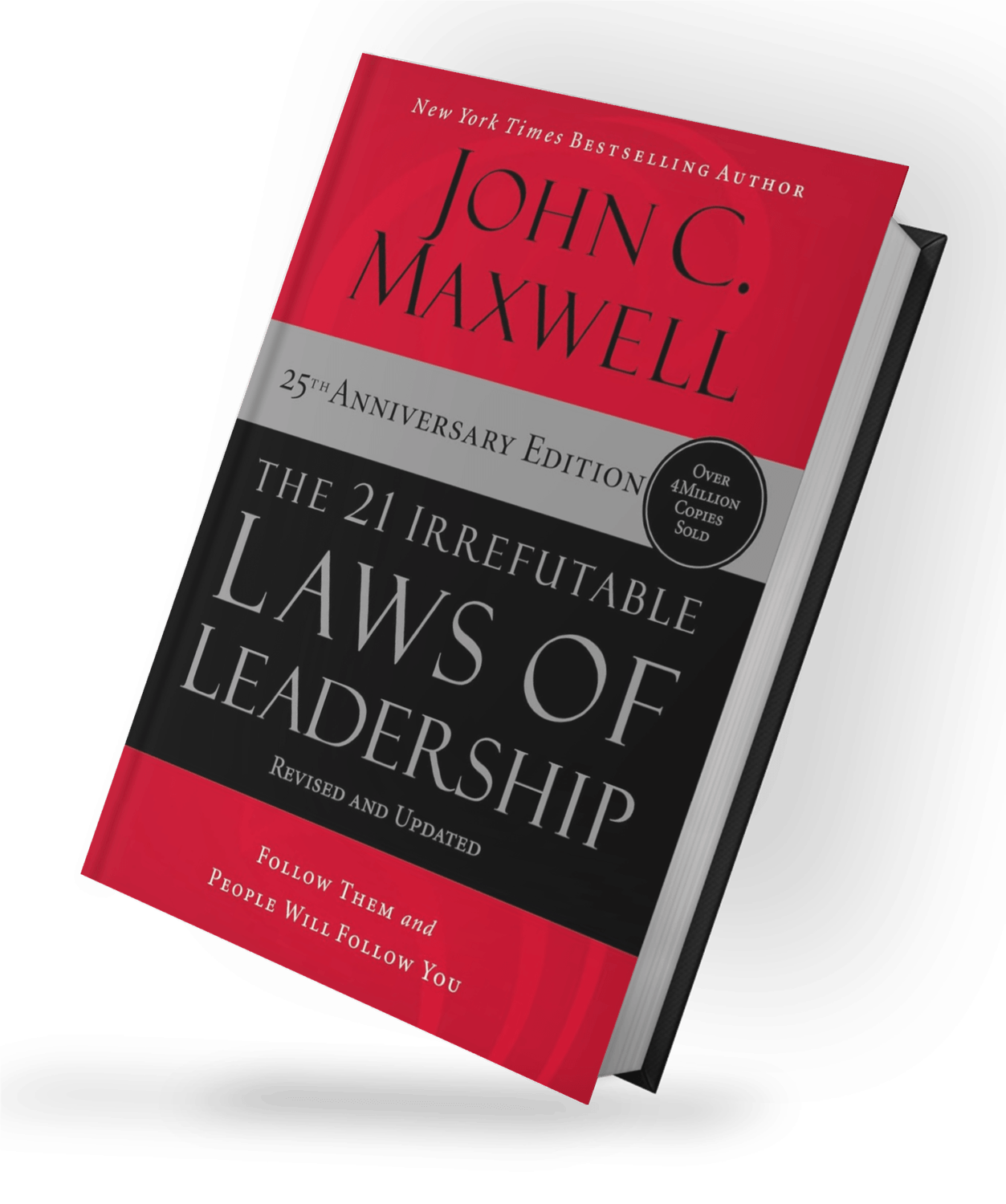
This is Law #9 of Maxwell's 21 Irrefutable Laws of Leadership, and I think it's one of the more uncomfortable laws in the book, precisely because it puts the mirror squarely on the leader instead of the team. If you haven't read the full framework yet, start with my complete 21 Irrefutable Laws of Leadership summary, which walks through all 21 laws chapter by chapter. This post goes deeper into Law #9 alone, because it's a law that rewards honest self-examination more than most.
Let's take a deeper look!
What Is the Law of Magnetism?
Maxwell states it simply: who you are is who you attract.
The people drawn to your leadership, your team, your organization, your circle of influence, generally share qualities similar to your own: your attitudes, your values, your abilities, and even your life experiences. This isn't a hard rule without exception, but it's a consistent enough pattern that Maxwell elevates it to one of his 21 laws.
Here's the part that makes this law so useful, and so uncomfortable: if you're not attracting the kind of people you actually want on your team, the problem usually isn't the talent pool, the market, or bad luck. It's you.
Specifically, it's some combination of your own attitudes, values, work ethic, or leadership ability that's either drawing in or filtering out the caliber of people you're hoping to build alongside.
The Story Maxwell Uses to Illustrate It: Theodore Roosevelt
Maxwell's chosen example for this law comes from an unusual moment in American military history. During the Spanish-American War, Theodore Roosevelt recruited an all-volunteer cavalry company that became famously known as the Rough Riders. What made the unit so distinctive wasn't just its combat record. It was its composition: the company was made up of two strikingly different groups of men, wealthy Eastern aristocrats and rugged Western cowboys.
On the surface, these two groups had almost nothing in common. Different backgrounds, different social classes, different life experiences entirely. And yet Roosevelt attracted both groups naturally, because he had genuinely lived in both worlds himself. He was born into wealth and privilege on the East Coast, and later in life, he immersed himself in ranch life in the Dakota Badlands, living and working alongside cowboys as one of their own.
Roosevelt didn't have to strategize about how to recruit two seemingly incompatible groups. His own identity, genuinely straddling both worlds, naturally drew people from each of them. That's the Law of Magnetism in its clearest form: the range and character of the people you attract are a direct reflection of the range and character of who you actually are.
The Specific Areas Where Magnetism Shows Up
Maxwell's broader framework identifies several specific dimensions along which this pattern tends to play out. It's worth examining each one because the pattern rarely shows up in just one area.
1. Work ethic and dedication. Leaders who work with genuine intensity and discipline tend to attract people with similar standards. Leaders who cut corners often, without realizing it, attract people who are comfortable cutting corners too.
2. Vision and ambition. The scale of what you believe is possible tends to filter who's drawn to follow you. Leaders with modest ambitions attract people content with modest outcomes. Leaders who genuinely believe in something larger tend to draw people willing to reach for it alongside them.
3. Character and integrity. This one cuts especially deep. People with strong character are, generally, drawn to and comfortable around others with strong character. If integrity is inconsistent in your own leadership, it tends to either repel people of strong character or, more concerningly, attract people equally comfortable with inconsistency.
4. Skills and competencies. Talented people are generally drawn toward leaders and environments where they'll be genuinely challenged and surrounded by other talented people. A leader whose own skill development has stalled often struggles to attract or retain the most capable people on their team because there's a ceiling effect at play.
5. Attitude and energy level. Energy is contagious in both directions. Leaders with genuine enthusiasm and a constructive outlook tend to draw people with similar energy. Leaders operating from cynicism or low energy tend to attract, or simply retain, people who match that same tone.
Why This Law Is Uncomfortable, and Why That's the Point
Most leadership diagnoses feel more comfortable when the problem lives somewhere outside of us: the market's tough, good talent is hard to find, the industry attracts a certain kind of person. The Law of Magnetism removes that exit. If your team isn't performing at the level you want, or if you keep attracting people who don't share your values, ambition, or work ethic, Maxwell's framework asks you to look inward first, not outward.
This isn't meant to be discouraging. It's meant to be genuinely useful, because it points you toward the one variable you actually have direct control over: yourself. You can't control the labor market. You can't force talented people to want to work with you. But you can absolutely control your own attitudes, your own standards, your own vision, and your own character, and Maxwell's law suggests that doing the work on those fronts is the most reliable lever you have for changing who you attract.
A Practical Way to Apply This Law
If you're not currently attracting the people you want, here's a structured way to work through this law rather than just feeling uneasy about it.
Step one: honestly audit who you're currently attracting. Look at your current team, your closest collaborators, the people who've stuck around. What patterns do you notice in their work ethic, ambition, character, and energy? Resist the urge to immediately explain away uncomfortable patterns.
Step two: compare that pattern honestly to your own qualities. Where does the pattern in your team mirror something true about you, your own work ethic, your own standards, your own energy? This step requires real honesty, because it's tempting to see the team's shortcomings clearly while missing your own contribution to them.
Step three: identify the specific gap. If you want to attract people with higher ambition, ask yourself honestly whether your own vision is genuinely ambitious or has been quietly shrinking to match your comfort level. If you want to attract people with a stronger work ethic, examine your own standards and consistency first.
Step four: work on yourself before you work on recruiting. Maxwell's implicit advice here is that changing who you attract starts with changing who you are, not with a better job posting or a more aggressive recruiting strategy. As your own character, ambition, and skill grow, the caliber of people drawn to you tends to rise with it.
What This Law Means for Building a Diverse, Complementary Team
It's worth noting an important nuance here, because taken too literally, the Law of Magnetism could sound like it's arguing for a team of clones. That's not quite Maxwell's point, and Roosevelt's Rough Riders actually illustrate the more accurate reading. Roosevelt didn't attract people who were identical to him in every way. He attracted people who shared his underlying values and energy, while representing genuinely different backgrounds and skill sets.
This connects directly to the Law of the Inner Circle (Law #11), where Maxwell explicitly encourages building a team with complementary strengths rather than uniform ones. The Law of Magnetism isn't in tension with that idea. It simply suggests that the shared thread running through a genuinely strong and diverse team, whatever their individual backgrounds or skill sets, is usually a common core of values, ambition, and character that traces back to the leader who assembled them.
Reflection Questions
Look honestly at your current team or inner circle. What does it tell you about who you are as a leader right now?
If you're not attracting the kind of people you want, what specifically about your own attitude, ambition, work ethic, or character might need to change first?
Think of a leader whose team you admire. What do you think that leader's own character and energy reveal about why their team looks the way it does?
Is there a gap between the vision you say you're pursuing and the vision your own daily habits actually reflect? What might that gap be quietly attracting or repelling?
How This Law Connects to the Rest of Maxwell's Framework
The Law of Magnetism connects directly to the Law of the Lid (Law #1) and the Law of Process (Law #3). If your own leadership ability, character, and ambition are still developing, the Law of Magnetism explains why the caliber of people you attract will develop right alongside them. It also sets up the Law of the Inner Circle (Law #11), since the people this law naturally draws toward you become the raw material for the team you eventually build around yourself.
If you haven't already, I'd encourage you to read the full book summary post on The 21 Irrefutable Laws of Leadership, where I walk through all 21 laws in depth, with stories, quotes, and reflection questions for each one. The Law of Magnetism is a reminder that the team around you is often less a reflection of who's available and more a reflection of who you've become.
Your Next Step
Here's the encouragement I want to leave you with: you don't need to wait for a title to start leading. You need to start earning influence today, wherever you currently sit. That's genuinely good news, because it means your leadership growth isn't gated behind someone else's decision to promote you. It's available to you the moment you decide to start building it.
So don't just file this away as an interesting distinction. Pick one specific relationship or habit from the list above and put it into practice this week. Then come back to the full book summary post and keep building, one law at a time.
Influence isn't given. It's earned. Start earning it today.
Enjoyed this breakdown? Subscribe to the Learning to Lead Newsletter for more book summaries, leadership frameworks, and practical encouragement delivered weekly.
More Books By John C. Maxwell
If The 21 Irrefutable Laws of Leadership resonated with you, here's where to go next in Maxwell's extensive body of work:
How to Get a Return on Failure (His Most Recent): Maxwell's newest book reframes failure not as a dead end but as an investment. He lays out actionable principles, including "See Failure as an Investment in Your Future" and "Practice the Cycle of Improvement," for turning losses into gains rather than letting setbacks define you.
High Road Leadership: A response to our divided world, this book exposes the low and middle roads people default to when interacting with others and teaches what it actually looks like to value people, take accountability, and do the right thing for the right reasons.
Thinking for a Change: Maxwell breaks down eleven specific types of thinking skills, from big-picture thinking to shared thinking, that separate leaders who consistently make good decisions from those who don't.
Great Leaders Ask Great Questions: A case for curiosity as a core leadership skill, exploring why the best leaders lead with questions rather than answers, and how the right question at the right time can unlock a team's best thinking.
The 15 Invaluable Laws of Growth: A companion to this book's law-based structure, focused entirely on personal growth, the mindset, environment, and daily practices that determine whether you ever reach your full potential.
The 16 Undeniable Laws of Communication: Another entry in Maxwell's laws series, this one zeroing in on what makes a message actually land, because influence collapses fast when a leader can't communicate clearly and connect while doing it.
Leadership Gold: Written after Maxwell promised himself he wouldn't publish it until he turned sixty, this book distills forty years of leading into twenty-six "gold nuggets," each with application exercises designed to feel like a one-on-one mentorship session.
The 17 Indisputable Laws of Teamwork: A natural companion to this book, shifting the lens from individual leadership to what makes a team of leaders actually function together at a high level.
Developing the Leader Within You: One of Maxwell's earliest and most foundational works, focused on the internal shifts required before you can lead others well.
Winning with People: Explores the relational side of leadership, including the specific people skills that determine whether your influence grows or stalls.
The 5 Levels of Leadership: Maxwell's framework for understanding leadership as a progression, from position, to permission, to production, to people development, to the pinnacle of leadership defined by legacy.
Leadershift: A more recent work examining the mindset shifts today's leaders need to stay effective in a constantly changing world.
Everyone Communicates, Few Connect: A deep dive specifically into the Law of Connection, exploring what it actually takes to reach people on an emotional level, not just an informational one.
Each of these builds on the same foundation Maxwell laid in The 21 Irrefutable Laws of Leadership: leadership is influence, influence is earned, and it's a lifelong process of daily growth. Read them in whatever order serves you best right now; each one will sharpen a different piece of the leader you're becoming.
Enjoyed this breakdown? Subscribe to the Learning to Lead Newsletter for more book summaries, leadership frameworks, and practical encouragement delivered weekly.

Join over 4,000 Growth-Minded Leaders reading The Learning To Lead Newsletter each week!
Latest Blog Post
Join over 4,000 Fellow Leaders reading The Learning To Lead Newsletter each week!
©2025 Learning To Lead | Helping Good Leaders Become Great Leaders