
The Law of Navigation: Why Anyone Can Steer, But It Takes a Leader to Chart the Course
The Law of Navigation: Why Anyone Can Steer, But It Takes a Leader to Chart the Course
Have you ever been part of a team that was technically moving, busy, active, full of motion, and still somehow ended up nowhere useful?
That's the difference between steering and navigating, and it's exactly what John C. Maxwell's fourth law is built to explain.
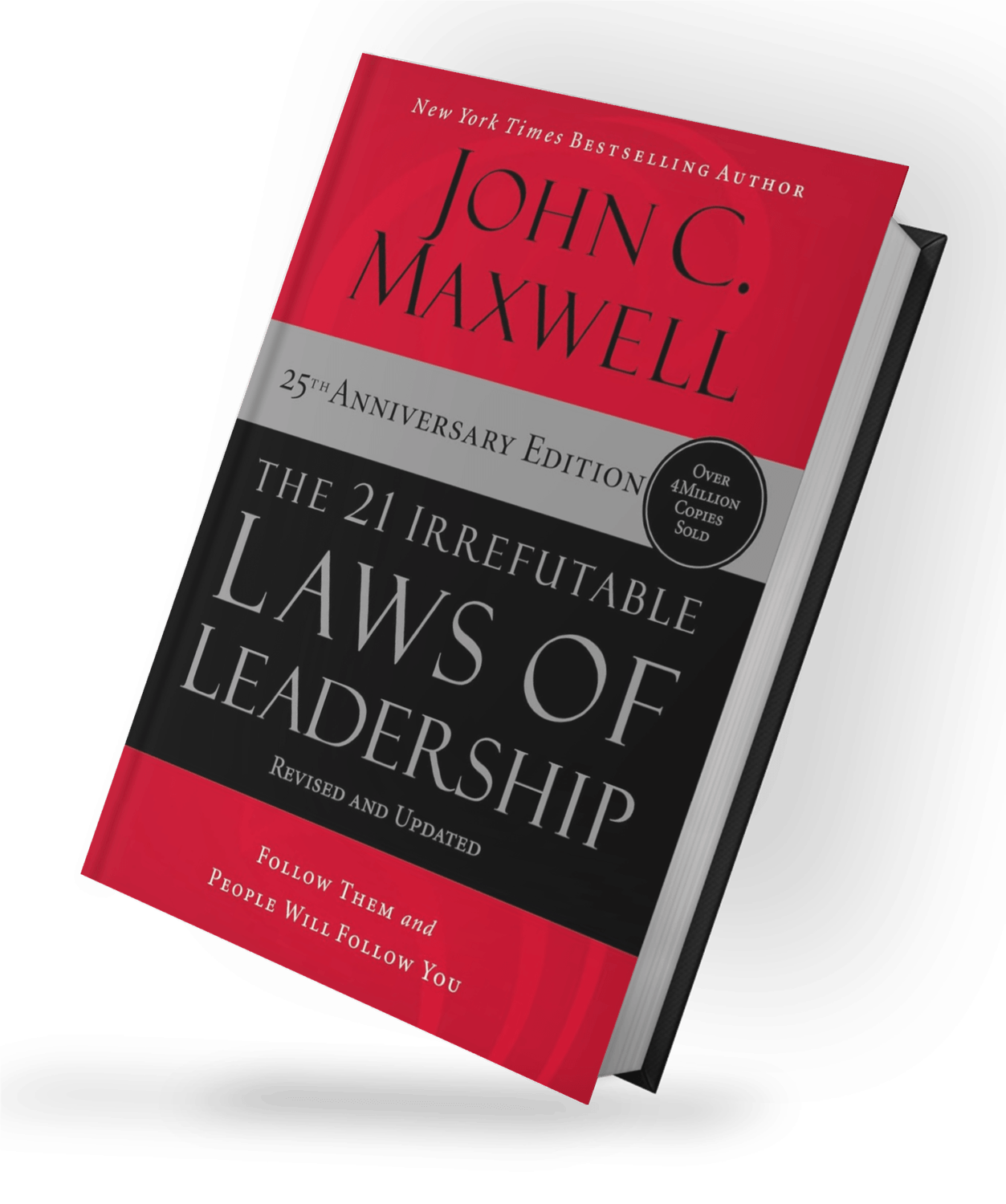
This is Law #4 of Maxwell's 21 Irrefutable Laws of Leadership, and I think it's one of the most practically useful laws in the entire book, because it separates two things people constantly confuse: activity and direction. If you haven't read the full framework yet, start with my complete 21 Irrefutable Laws of Leadership summary, which walks through all 21 laws chapter by chapter.
This post goes deeper into Law #4 alone, because charting a course is a skill worth understanding fully, not just skimming past.
Let's explore how the Law of Navigation can guide our leadership!
What Is the Law of Navigation?
Maxwell states it memorably: anyone can steer the ship, but it takes a leader to chart the course.
Steering is reactive. It's keeping the wheel steady, responding to whatever wave or obstacle shows up next, and technically staying "in motion." Almost anyone on the crew can do that with a little training. Navigating is something else entirely. It's deciding where the ship is actually going before it ever leaves the harbor, anticipating the storms it's likely to hit along the way, and making sure the entire crew understands and believes in the destination.
This is the distinction Maxwell wants you to internalize: plenty of people can keep an organization moving. Far fewer can tell you, with any real confidence, where it's headed and why. A team can be exhausted from constant motion and still be no closer to anything meaningful, because motion was never the same thing as direction.
Preparedness: The Real Secret Behind This Law
Maxwell is direct about what separates a navigator from someone who merely steers: preparedness. Leaders who navigate well don't wing it and hope momentum carries them somewhere good. They plan, in detail, often well before anyone else on the team has even started thinking about the challenge ahead.
This preparedness shows up in a specific sequence, and it's worth walking through each piece.
1. Decide what you're actually going to do.
This sounds obvious, but a surprising number of teams operate without real clarity here. Vague direction like "grow the business" or "improve results" isn't navigation. It's a wish. Real navigation requires specificity: what exactly are we doing, by when, and what does success concretely look like when we get there?
2. Tell key staff members your goals.
A course charted only in the leader's head isn't a course at all; it's a secret. Maxwell's insistence here is that navigation is a communicated act, not a private one. The people who need to execute the plan need to actually understand it, not just receive instructions piece by piece as they come up.
3. Allow time for people to accept the course you've proposed.
This is the step leaders most often skip, usually out of impatience. Maxwell's point is that people don't adopt a new direction the instant it's announced, even a good one. They need time to process it, ask questions, raise concerns, and genuinely buy in, not just comply. Leaders who rush this step often find themselves technically "leading" a course that half their team is quietly resisting.
4. Be prepared for problems, but always highlight the successes.
Good navigators don't pretend the voyage will be smooth. They anticipate specific obstacles in advance, so when those obstacles arrive, the team isn't blindsided or demoralized. At the same time, Maxwell notes, effective navigators are deliberate about calling out progress along the way. A crew that only ever hears about the next obstacle loses heart. A crew that sees its wins acknowledged stays motivated through the harder stretches.
5. Each day, review the course you've set.
Navigation isn't a one-time act. Maxwell is clear that the course needs regular review, not a "set it and forget it" mentality. Conditions change. New information surfaces. A course charted six months ago may need real adjustment today, and the leader who never revisits the plan is the one most likely to run the ship aground without noticing.
Why This Law Requires a Genuinely Positive Attitude
There's a piece of this law that's easy to overlook: navigating well requires a leader who actually believes the destination is reachable. Maxwell frames it this way: being able to navigate for others requires a leader to possess a positive attitude. You've got to have faith that you can take your people all the way.
This isn't naive optimism. It's a specific kind of conviction that shows up in how a leader communicates during hard stretches. A navigator who secretly doubts the plan will leak that doubt into every difficult conversation, whether they mean to or not, and a crew can sense uncertainty in a leader faster than almost anything else. The leaders who navigate well aren't the ones who never doubt. They're the ones who've done the preparation thoroughly enough
Steering vs. Navigating: A Practical Test
If you're not sure whether you're currently steering or genuinely navigating, here's a simple way to check.
You're probably steering if:
Your team is busy, but couldn't tell you, in one clear sentence, exactly where the organization is headed this year.
Decisions are mostly reactive, responding to whatever crisis or opportunity showed up most recently.
Plans mostly exist in your head and are communicated piecemeal as questions arise.
You revisit the plan only when something goes wrong, not on a regular rhythm.
You're probably navigating if:
You could describe the destination and the reasoning behind it clearly, without hesitation, to anyone on the team.
Your team has had genuine time to process and buy into the direction, not just hear it announced.
You've already anticipated the most likely obstacles and have a rough sense of how you'll respond to them.
You review and adjust the course on a set rhythm, not just in reaction to a crisis.
Most leaders, honestly, live somewhere between the two. The goal isn't perfection. It's noticing which side you default to under pressure, because that's usually where the real work is.
Why Anticipating Problems Isn't Pessimism
One thing worth clarifying: charting a course that accounts for future problems isn't the same as being negative or doubtful about the mission. Maxwell's framing is closer to a ship captain studying weather patterns before setting sail. It's not pessimism to acknowledge that a storm is statistically likely in a certain season. It's preparation. The captain who refuses to plan for rough weather isn't more optimistic; they're just less ready when it inevitably arrives.
Leaders who skip this step often mistake unpreparedness for positivity. They avoid naming risks because it feels like it might dampen morale, and then morale takes a much bigger hit when an unanticipated problem blindsides the whole team. Naming the likely obstacle in advance, calmly and without alarm, is actually one of the most reassuring things a leader can do, because it signals the leader has already thought this through.
Reflection Questions
Have you actually charted a course for your team this year, or are you mostly steering in reaction to whatever comes up next?
If you asked three people on your team to describe your organization's direction in one sentence, would their answers match yours?
Who on your team needs more time to genuinely buy into the direction you've set, rather than simply comply with it?
What's one obstacle you can already see coming that you haven't yet prepared your team for?
When was the last time you deliberately revisited and reviewed the course you've charted, rather than just continuing on the current path by default?
How This Law Connects to the Rest of Maxwell's Framework
The Law of Navigation builds naturally on the first three laws. The Law of the Lid establishes that your leadership ability is your ceiling. The Law of Influence establishes that real leadership is earned trust, not positional authority. The Law of Process establishes that this ability is built daily. The Law of Navigation is where all of that starts to show up in action: it's the practical skill of pointing a team toward a specific destination and getting them there together, rather than just keeping everyone busy. It also sets up the Law of Priorities (Law #17) later in the book, because you can't meaningfully prioritize your time until you know exactly what course you're navigating toward in the first place.
If you haven't already, I'd encourage you to read the post where I walk through all 21 laws in depth, a full book summary of The 21 Irrefutable Laws of Leadership, with stories, quotes, and reflection questions for each one. The Law of Navigation is where vision begins to take shape as an actual plan.
Your Next Step
Here's the encouragement I want to leave you with: motion feels productive, but it isn't the same thing as progress. A team can be exhausted from constant activity and still be no closer to anything that matters, and that's not a talent problem. It's a navigation problem, and navigation is a skill you can build starting today.
So don't just nod along and move on. Pick one piece of preparedness from this post, deciding, communicating, allowing time for buy-in, anticipating problems, or reviewing regularly, and apply it to whatever course you're currently charting. Then come back to the full book summary post and keep building, one law at a time.
Anyone can steer. Leaders chart the course. Start charting yours today.
Enjoyed this breakdown? Subscribe to the Learning to Lead Newsletter for more book summaries, leadership frameworks, and practical encouragement delivered weekly.
If The 21 Irrefutable Laws of Leadership resonated with you, here's where to go next in Maxwell's extensive body of work:
How to Get a Return on Failure (His Most Recent): Maxwell's newest book reframes failure not as a dead end but as an investment. He lays out actionable principles, including "See Failure as an Investment in Your Future" and "Practice the Cycle of Improvement," for turning losses into gains rather than letting setbacks define you.
High Road Leadership: A response to our divided world, this book exposes the low and middle roads people default to when interacting with others and teaches what it actually looks like to value people, take accountability, and do the right thing for the right reasons.
Thinking for a Change: Maxwell breaks down eleven specific types of thinking skills, from big-picture thinking to shared thinking, that separate leaders who consistently make good decisions from those who don't.
Great Leaders Ask Great Questions: A case for curiosity as a core leadership skill, exploring why the best leaders lead with questions rather than answers, and how the right question at the right time can unlock a team's best thinking.
The 15 Invaluable Laws of Growth: A companion to this book's law-based structure, focused entirely on personal growth, the mindset, environment, and daily practices that determine whether you ever reach your full potential.
The 16 Undeniable Laws of Communication: Another entry in Maxwell's laws series, this one zeroing in on what makes a message actually land, because influence collapses fast when a leader can't communicate clearly and connect while doing it.
Leadership Gold: Written after Maxwell promised himself he wouldn't publish it until he turned sixty, this book distills forty years of leading into twenty-six "gold nuggets," each with application exercises designed to feel like a one-on-one mentorship session.
The 17 Indisputable Laws of Teamwork: A natural companion to this book, shifting the lens from individual leadership to what makes a team of leaders actually function together at a high level.
Developing the Leader Within You: One of Maxwell's earliest and most foundational works, focused on the internal shifts required before you can lead others well.
Winning with People: Explores the relational side of leadership, including the specific people skills that determine whether your influence grows or stalls.
The 5 Levels of Leadership: Maxwell's framework for understanding leadership as a progression, from position, to permission, to production, to people development, to the pinnacle of leadership defined by legacy.
Leadershift: A more recent work examining the mindset shifts today's leaders need to stay effective in a constantly changing world.
Everyone Communicates, Few Connect: A deep dive specifically into the Law of Connection, exploring what it actually takes to reach people on an emotional level, not just an informational one.
Each of these builds on the same foundation Maxwell laid in The 21 Irrefutable Laws of Leadership: leadership is influence, influence is earned, and it's a lifelong process of daily growth. Read them in whatever order serves you best right now; each one will sharpen a different piece of the leader you're becoming.
Enjoyed this breakdown? Subscribe to the Learning to Lead Newsletter for more book summaries, leadership frameworks, and practical encouragement delivered weekly.

Join over 4,000 Growth-Minded Leaders reading The Learning To Lead Newsletter each week!
Latest Blog Post
Join over 4,000 Fellow Leaders reading The Learning To Lead Newsletter each week!
©2025 Learning To Lead | Helping Good Leaders Become Great Leaders