
The Law of Respect: Why People Naturally Follow Leaders Stronger Than Themselves
The Law of Respect: Why People Naturally Follow Leaders Stronger Than Themselves
Have you ever watched a room full of capable, strong-willed people all quietly defer to one particular person, not because that person outranked them, but because something about them commanded genuine respect?
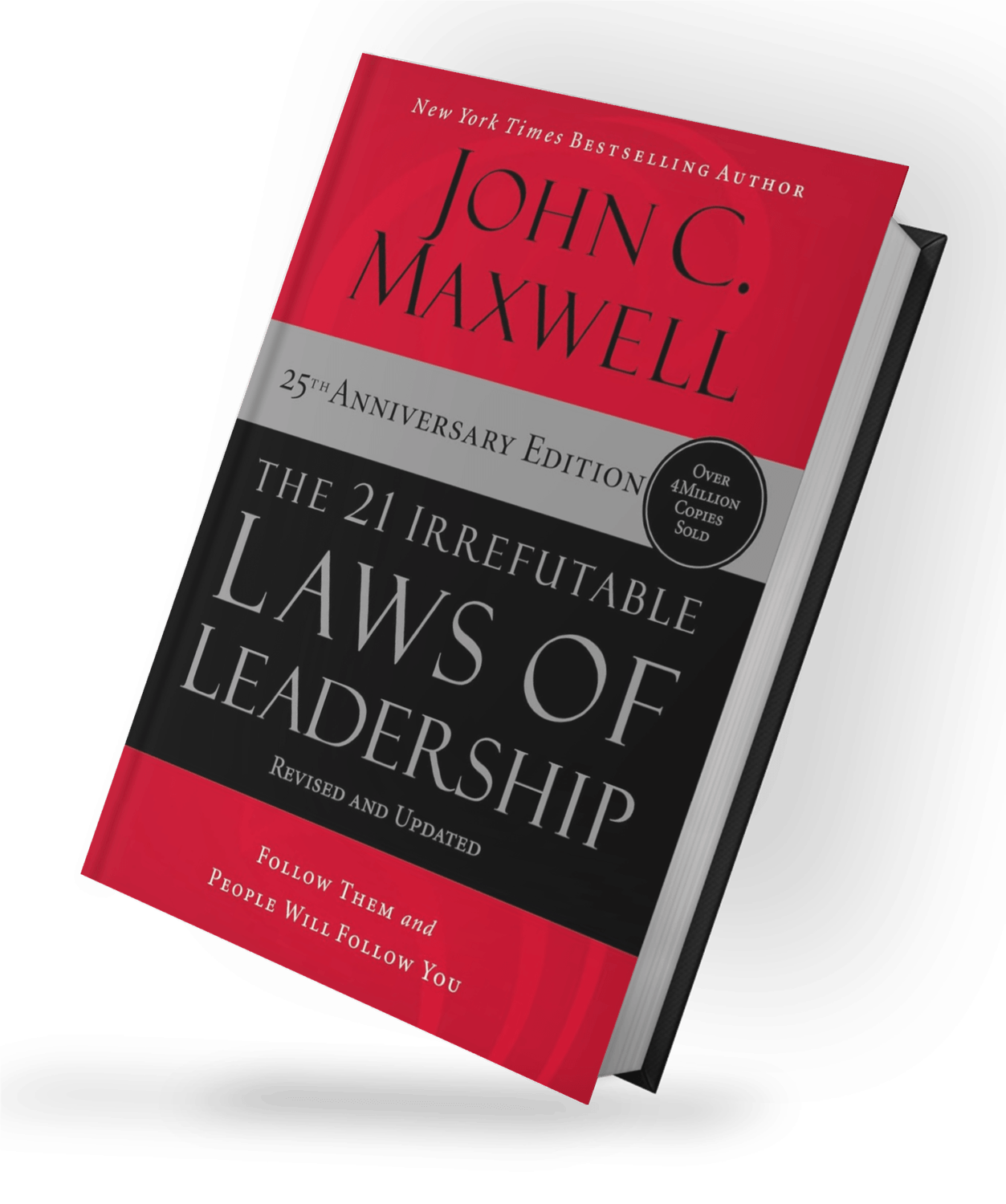
That instinct, the pull toward strength, is exactly what John C. Maxwell's seventh law is built around.
This is Law #7 of Maxwell's 21 Irrefutable Laws of Leadership, and I think it's one of the more misunderstood laws in the book, because "strength" doesn't mean what most people assume it means. If you haven't read the full framework yet, start with my complete 21 Irrefutable Laws of Leadership summary, which walks through all 21 laws chapter by chapter. This post goes deeper into Law #7 alone, because the real definition of "stronger" here is worth unpacking carefully.
Let's go deeper!
What Is the Law of Respect?
Maxwell states it directly: people naturally follow leaders who are stronger than themselves.
This is a universal pattern of human nature, not a strategy or a technique. Whether or not anyone is consciously aware of it, people instinctively gravitate toward those they perceive as more capable of leading them somewhere worth going. And when more than one leader is present in a group, competing for the same followers, people don't split evenly. They tend to flock to whichever leader they respect the most and perceive as the strongest.
But here's where Maxwell wants you to slow down: "stronger" in this law has almost nothing to do with size, volume, charisma, or physical presence. It's a description of depth of character and demonstrated capability, and some of history's most respected leaders looked nothing like what we typically picture when we hear the word "strong."
The Story Maxwell Uses to Illustrate It: Harriet Tubman
Maxwell's chosen example for this law is deliberately counterintuitive, and that's the point. Harriet Tubman was very short. She was missing two front teeth. She never dressed in a way that would turn heads or signal status or authority. By nearly every superficial measure our culture associates with "strength," she didn't fit the mold.
And yet, Tubman commanded a level of respect that few leaders in American history have matched. As a conductor on the Underground Railroad, she personally led dozens of enslaved people to freedom, at extraordinary personal risk, over and over, refusing to lose a single passenger along the way. In time, some of the country's most influential and powerful people, abolitionists, statesmen, and reformers, sought her out and invited her into their homes specifically to seek her counsel.
What made Tubman "stronger" in Maxwell's sense wasn't her appearance or her volume in a room. It was her depth of conviction, her demonstrated courage under extreme risk, her unmatched competence at an almost impossibly difficult task, and a character so evidently trustworthy that peo
Redefining "Strength" in Leadership
Maxwell's broader body of work identifies a specific set of attributes that actually attract followers, and it's worth listing them clearly, because none of them require the kind of dominant personality our culture often mistakes for leadership strength.
1. Clear vision and direction. People are drawn to those who seem to genuinely know where they're going, even in uncertain circumstances.
2. Confidence and decisiveness. Not bravado, but a settled, earned sense of conviction that shows up especially in difficult moments.
3. A proven track record of success. Strength, in this sense, is demonstrated, not claimed. People trust results more than promises.
4. Strong character and integrity. This shows up repeatedly across Maxwell's laws, and for good reason. Character is the quiet, consistent foundation that makes every other form of strength credible.
5. The ability to overcome challenges. People are drawn to leaders who have visibly weathered real adversity and come through it, because it signals that they can be trusted to lead others through adversity as well.
Notice what's absent: height, volume, social dominance, or force of personality. Those traits can sometimes accompany genuine strength, but in Maxwell's framework, they are not what actually earns respect. Tubman is proof that every item on this list can be present in someone the world would never expect to call "strong" by conventional standards.
Why This Law Matters for Leaders Who Don't Fit the Mold
I think this is the most encouraging part of this law, and it deserves to be said directly: if you've ever felt like you don't "look like" a leader, this law is specifically for you.
A lot of people quietly disqualify themselves from leadership because they don't match a cultural image, the commanding voice, the imposing physical presence, the natural extrovert who fills a room effortlessly. Maxwell's use of Harriet Tubman as the defining example of this law directly rebuts that assumption. The respect that draws followers has almost nothing to do with how a leader looks or sounds in the room, and everything to do with what that leader has demonstrated through conviction, competence, and character over time.
This also means that the path to earning this kind of respect is genuinely open to anyone, regardless of their natural personality type. A quiet, unassuming leader who consistently demonstrates courage, competence, and integrity will, over time, earn the same kind of instinctive followership as the loudest person in the room, often more of it, because that respect is built on substance rather than presence.
What Happens When Multiple Leaders Compete for the Same Followers
Maxwell's law includes an important secondary insight: when more than one leader is vying for the same group's attention, people gravitate toward whichever leader they respect and perceive as strongest. This has real implications for anyone leading within an organization where influence isn't clearly assigned.
If you're the positional leader but someone else in the group has built deeper respect through character and competence, people will lean toward that person's judgment, regardless of the org chart, exactly as we covered in the Law of E.F. Hutton. This isn't a flaw in human nature to fight against. It's simply how respect and followership actually work, and the only real response is to build the kind of demonstrated strength described above, rather than trying to compete on volume or assert authority through title alone.
This also explains why weaker leaders sometimes struggle even when they're technically in charge. If a stronger leader, in Maxwell's sense, is present in the same room or organization, the group's genuine deference will migrate to that leader over time, whether or not it's ever named out loud.
How to Build the Kind of Strength People Respect
If genuine respect is built on demonstrated character and competence rather than presence or position, here's where to focus.
Get demonstrably good at hard things. Competence built through real, difficult experience is one of the fastest ways to earn respect. There's no substitute for actually being capable.
Let your character show up in the moments that test it. Respect is built disproportionately in difficult circumstances, the crisis handled with composure, the mistake owned honestly, the hard decision made with integrity rather than convenience.
Develop genuine conviction, not performed confidence. People can tell the difference. Conviction that's earned through preparation and experience reads very differently than bravado that's manufactured to fill a room.
Face real challenges rather than avoiding them. Every obstacle you visibly overcome adds to your track record, earning respect. Avoiding hard things might feel safer in the short term, but it quietly limits how much genuine strength you're able to demonstrate over time.
Stop trying to look like a leader, and focus on becoming one. Maxwell's use of Tubman is the clearest possible signal that the external markers most people chase, presence, volume, physical stature, are not what actually earn this kind of respect. Character and competence are.
Reflection Questions
Who do you personally respect most as a leader, and what specifically about them earned that respect: their presence or their character and competence?
Have you ever disqualified yourself from a leadership opportunity because you didn't feel like you "looked the part"? What would it look like to challenge that assumption?
In your current organization, is there a mismatch between who holds formal authority and who people actually respect most? What does that tell you?
What's one hard challenge you could face directly, rather than avoid, that would genuinely strengthen the kind of respect-earning track record this law describes?
How This Law Connects to the Rest of Maxwell's Framework
The Law of Respect builds directly on the Law of Solid Ground (Law #6). Trust is the foundation, and respect is, in many ways, what trust looks like once it's been proven over time and across real challenges. This law also anticipates the Law of Magnetism (Law #9), since the kind of strength that earns respect tends to attract people who share and admire those same qualities. And it sets up the Law of E.F. Hutton (Law #5) from the other direction: understanding why people naturally follow strength helps explain why the "real leader" in a room isn't always the one with the title.
If you haven't already, I'd encourage you to read the full book summary post on The 21 Irrefutable Laws of Leadership, where I walk through all 21 laws in depth, with stories, quotes, and reflection questions for each one. The Law of Respect is a reminder that the strength people actually follow has very little to do with how you look and everything to do with who you've proven yourself to be.
Your Next Step
Here's the encouragement I want to leave you with: if you've ever counted yourself out of leadership because you didn't match some cultural image of what a strong leader looks like, let Harriet Tubman's example put that idea to rest. The respect that draws genuine followers is built through character, conviction, and competence, none of which require a particular height, voice, or personality type.
So don't wait to "look" like a leader before you start acting like one. Pick one hard thing you've been avoiding, and face it directly this week. Then come back to the full book summary post and keep building, one law at a time.
People don't follow the loudest voice in the room. They follow the strongest character in it. Start building yours.
Enjoyed this breakdown? Subscribe to the Learning to Lead Newsletter for more book summaries, leadership frameworks, and practical encouragement delivered weekly.
More Books By John C. Maxwell
If The 21 Irrefutable Laws of Leadership resonated with you, here's where to go next in Maxwell's extensive body of work:
How to Get a Return on Failure (His Most Recent): Maxwell's newest book reframes failure not as a dead end but as an investment. He lays out actionable principles, including "See Failure as an Investment in Your Future" and "Practice the Cycle of Improvement," for turning losses into gains rather than letting setbacks define you.
High Road Leadership: A response to our divided world, this book exposes the low and middle roads people default to when interacting with others and teaches what it actually looks like to value people, take accountability, and do the right thing for the right reasons.
Thinking for a Change: Maxwell breaks down eleven specific types of thinking skills, from big-picture thinking to shared thinking, that separate leaders who consistently make good decisions from those who don't.
Great Leaders Ask Great Questions: A case for curiosity as a core leadership skill, exploring why the best leaders lead with questions rather than answers, and how the right question at the right time can unlock a team's best thinking.
The 15 Invaluable Laws of Growth: A companion to this book's law-based structure, focused entirely on personal growth, the mindset, environment, and daily practices that determine whether you ever reach your full potential.
The 16 Undeniable Laws of Communication: Another entry in Maxwell's laws series, this one zeroing in on what makes a message actually land, because influence collapses fast when a leader can't communicate clearly and connect while doing it.
Leadership Gold: Written after Maxwell promised himself he wouldn't publish it until he turned sixty, this book distills forty years of leading into twenty-six "gold nuggets," each with application exercises designed to feel like a one-on-one mentorship session.
The 17 Indisputable Laws of Teamwork: A natural companion to this book, shifting the lens from individual leadership to what makes a team of leaders actually function together at a high level.
Developing the Leader Within You: One of Maxwell's earliest and most foundational works, focused on the internal shifts required before you can lead others well.
Winning with People: Explores the relational side of leadership, including the specific people skills that determine whether your influence grows or stalls.
The 5 Levels of Leadership: Maxwell's framework for understanding leadership as a progression, from position, to permission, to production, to people development, to the pinnacle of leadership defined by legacy.
Leadershift: A more recent work examining the mindset shifts today's leaders need to stay effective in a constantly changing world.
Everyone Communicates, Few Connect: A deep dive specifically into the Law of Connection, exploring what it actually takes to reach people on an emotional level, not just an informational one.
Each of these builds on the same foundation Maxwell laid in The 21 Irrefutable Laws of Leadership: leadership is influence, influence is earned, and it's a lifelong process of daily growth. Read them in whatever order serves you best right now; each one will sharpen a different piece of the leader you're becoming.
Enjoyed this breakdown? Subscribe to the Learning to Lead Newsletter for more book summaries, leadership frameworks, and practical encouragement delivered weekly.

Join over 4,000 Growth-Minded Leaders reading The Learning To Lead Newsletter each week!
Latest Blog Post
Join over 4,000 Fellow Leaders reading The Learning To Lead Newsletter each week!
©2025 Learning To Lead | Helping Good Leaders Become Great Leaders