
The Law of Solid Ground: Why Trust Is the Foundation of Leadership
The Law of Solid Ground: Why Trust Is the Foundation of Leadership
Have you ever had someone's word turn out not to mean anything, and felt something in the relationship shift permanently, even after they apologized?
That's trust-breaking, and once you've felt it happen, you understand exactly why John C. Maxwell built an entire law around it.
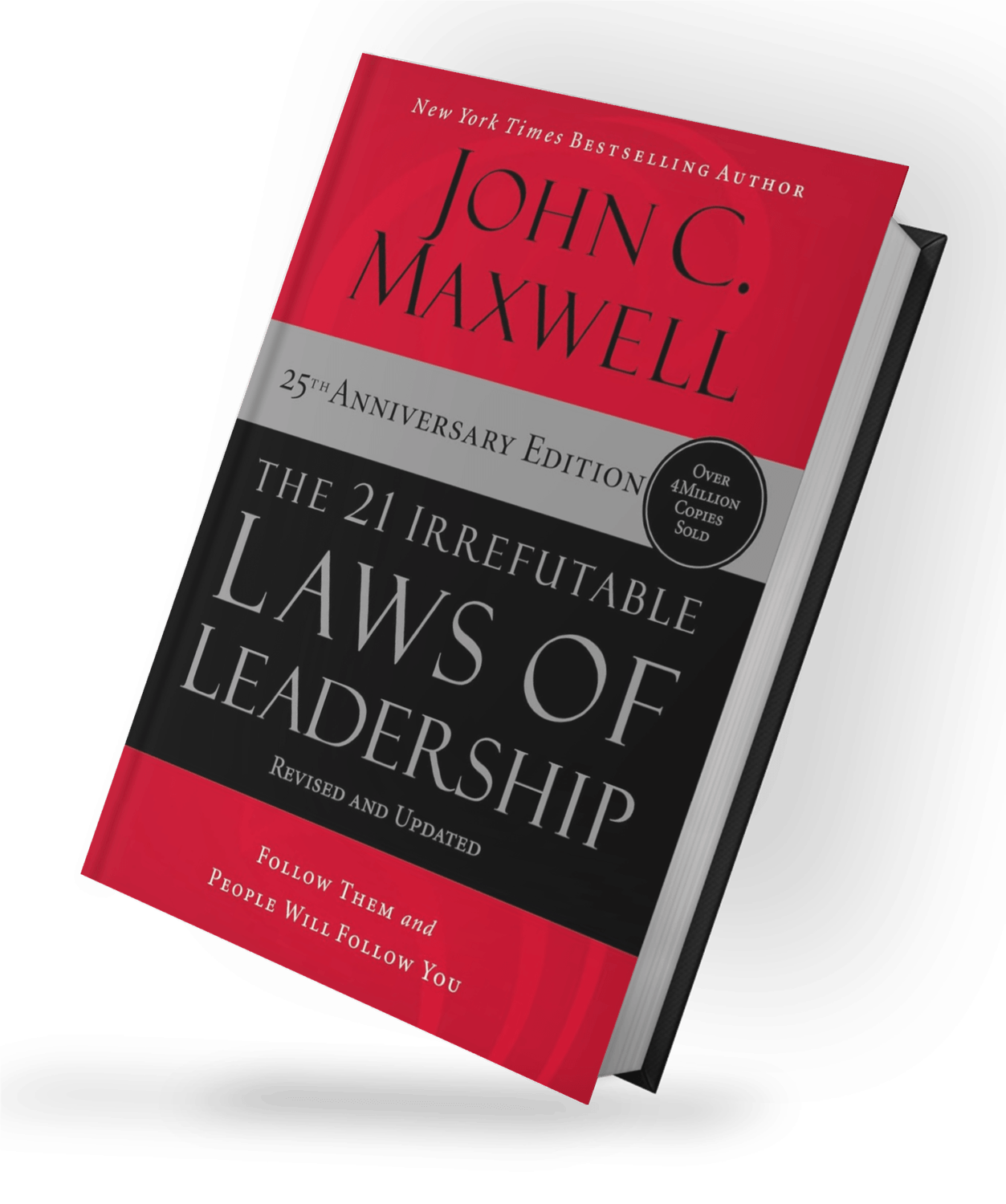
This is Law #6 of Maxwell's 21 Irrefutable Laws of Leadership, and I'd argue it's the law that quietly underwrites every other law in the book, because none of the other 20 work without it. If you haven't read the full framework yet, start with my complete 21 Irrefutable Laws of Leadership summary, which walks through all 21 laws chapter by chapter. This post goes deeper into Law #6 alone, because trust deserves more than a quick pass.
Let's dig in!
What Is the Law of Solid Ground?
Maxwell states it plainly: trust is the foundation of leadership.
Every other law in this framework, influence, connection, empowerment, momentum, assumes trust is already present. Take trust away, and none of the rest work. You can't influence people who don't trust you. You can't connect meaningfully with people who suspect your motives. You can't empower people to act on your behalf if they doubt your character. Trust isn't one ingredient among many in effective leadership. It's the ground everything else stands on, which is exactly why Maxwell named it the way he did.
As Maxwell puts it:
"Character makes trust possible. And trust makes leadership possible."
That's a short sentence carrying a lot of weight. Character comes first. Trust is what character produces over time. And leadership, real leadership, the kind built on genuine influence rather than positional compliance, is only possible once that trust exists.
Why Trust Is a Leader's Most Valuable Asset
Maxwell is direct about this: the trust of your followers is your most valuable asset as a leader. Not your strategy. Not your resources. Not your credentials. Trust.
Here's why that ranking makes sense once you sit with it. A brilliant strategy executed by a leader nobody trusts will still struggle, because people will hesitate, second-guess, protect themselves, and withhold full effort. A mediocre strategy executed by a deeply trusted leader often outperforms it, because people commit fully, communicate honestly, and give the benefit of the doubt when things get hard. Trust doesn't just make leadership more pleasant. It makes leadership functionally possible in the first place.
And trust, unlike many other leadership assets, can't be manufactured quickly. Maxwell's framework is consistent on this point across multiple laws: real trust is built slowly, through repeated demonstrations of character, and it can be destroyed in a single moment of dishonesty or broken commitment.
How Trust Is Actually Built
If trust is the foundation, it's worth understanding precisely what pours that foundation. A few components consistently show up.
1. Consistency between words and actions. People don't trust what you say. They trust what you do, especially when what you do lines up, reliably, with what you said you'd do. A single instance of your actions contradicting your words does more damage than a dozen well-crafted speeches can repair.
2. Transparency and open communication. Trust erodes in silence and ambiguity. Leaders who communicate honestly, even when the news is difficult, build more trust than leaders who manage information carefully to avoid discomfort.
3. Admitting mistakes and taking responsibility. This might be the single fastest way to either build or destroy trust, depending on how you handle it. Own your mistakes quickly and completely, and people learn they can trust your account of things, good or bad. Deflecting, minimizing, or hiding a mistake teaches people the opposite.
4. Keeping promises and commitments. Small commitments matter as much as big ones, arguably more, because they happen constantly and are easy to let slide. A leader who is reliably on time, follows through on minor promises, and does what they said they'd do earns trust in a hundred small increments that add up to something substantial.
5. Demonstrating competence. Trust isn't only about character. It's also about capability. People need to believe you're actually good at the work, not just well-intentioned, in order to fully trust your leadership.
How Fast Trust Breaks, and Why That Matters
Here's the part of this law that deserves special attention: trust is hard to gain and easy to lose, and once it's lost, it may not be recoverable.
This asymmetry is worth sitting with. Trust typically builds slowly, through many small, consistent demonstrations of character over an extended period of time. But it can be shattered by a single significant breach: a lie discovered, a promise broken without explanation, a mistake covered up rather than owned. And unlike most things in leadership, trust doesn't necessarily reset back to zero and rebuild at the same pace it took the first time. Sometimes it never fully returns to where it was.
Maxwell's specific warning centers on what happens after a mistake: if you make a mistake and don't acknowledge it, you will breed mistrust. Notice that the mistake itself often isn't what does the most lasting damage. It's the failure to own it honestly. People generally extend grace to leaders who make honest mistakes and admit them plainly. They extend far less grace to leaders who try to hide, minimize, or spin those same mistakes, because the concealment itself becomes the deeper breach of trust.
This is why leaders who understand this law tend to over-communicate during difficult moments rather than under-communicate. Silence and vagueness in the wake of a mistake almost always read as something being hidden, even when that's not the leader's intent.
A Practical Trust Inventory
Since trust is foundational but invisible day-to-day, it's worth periodically checking where you actually stand. A few honest questions:
Do your actions consistently match what you say, or do people notice gaps?
Even small, unintentional gaps compound over time.
When something goes wrong, is your first instinct to explain it honestly, or to manage how it's perceived?
The instinct itself tells you something important about your current trust habits.
Do people bring you bad news quickly, or do they seem to delay and soften it?
Delayed or filtered bad news is often a sign that trust, particularly trust in how you'll react, has been compromised somewhere along the way.
When you commit to something small, a follow-up, a deadline, a promise to check in, do you actually follow through, even when it's inconvenient?
Small broken commitments are often where trust quietly erodes long before anyone names the problem directly.
If you made a real mistake tomorrow, what would your instinct be: to own it immediately, or to control the narrative first?
Be honest with yourself here. This instinct is often the clearest predictor of how trustworthy you actually are under pressure.
Rebuilding Trust After It's Been Damaged
Trust that's been broken isn't automatically unrecoverable, though Maxwell is honest that recovery isn't guaranteed. A few principles matter here:
Own the breach completely, without qualification or excuse. Partial ownership reads as continued dishonesty, even if that's not the intent.
Expect the rebuilding process to take real time, proportional to the extent of the damage. Trying to rush trust back into place, through grand gestures or repeated reassurance, usually backfires. Trust is rebuilt the same slow way it was originally built: through repeated, consistent demonstration.
Change the underlying behavior, not just the messaging. People eventually stop listening to apologies that aren't followed by different actions. The proof has to show up in what you actually do differently going forward.
Accept that some relationships may not fully recover and lead well anyway. Not every trust breach is repairable to its original level. Maxwell's framework doesn't promise a guaranteed second chance; it simply insists that honest ownership is always the right starting point, whatever the outcome.
Reflection Questions
Is there a mistake you've been reluctant to fully own with your team, your family, or someone you lead?
What would your team say, honestly and privately, if asked whether they trust you completely?
Where have you noticed a gap between what you say and what you actually do, even a small one?
Think of a leader you deeply trust. What specific, repeated behaviors earned that trust over time? Which of those behaviors could you practice more intentionally yourself?
How This Law Connects to the Rest of Maxwell's Framework
The Law of Solid Ground is the quiet foundation underneath nearly every law that follows it. The Law of Respect (Law #7) depends on people trusting your character enough to follow you as someone stronger than themselves. The Law of Connection (Law #10) depends on trust to make emotional openness feel safe. The Law of Empowerment (Law #12) depends on trust flowing in both directions: a leader trusting others enough to hand over real authority, and others trusting the leader enough to accept it without fear. Even the Law of Buy-In (Law #14), the idea that people follow the leader before they follow the vision, is really just trust applied to belief in a direction rather than belief in a single promise.
If you haven't already, I'd encourage you to read the full book summary post on The 21 Irrefutable Laws of Leadership, where I walk through all 21 laws in depth, with stories, quotes, and reflection questions for each one. The Law of Solid Ground is the reminder that none of it works without a foundation underneath it.
Your Next Step
Here's the encouragement I want to leave you with: trust isn't built in dramatic moments nearly as often as it's built in ordinary ones, the small commitment kept, the honest update delivered, the mistake owned quickly and completely. That's genuinely good news, because it means you don't need a grand gesture to start strengthening your foundation. You need consistency, starting today.
So don't wait for a crisis to test your trustworthiness. Pick one small commitment you can keep this week, without fail, and let that be the first brick in the foundation. Then come back to the full book summary post and keep building, one law at a time.
Character makes trust possible. Trust makes leadership possible. Start building the ground you'll stand on.
Enjoyed this breakdown? Subscribe to the Learning to Lead Newsletter for more book summaries, leadership frameworks, and practical encouragement delivered weekly.
More Books By John C. Maxwell
If The 21 Irrefutable Laws of Leadership resonated with you, here's where to go next in Maxwell's extensive body of work:
How to Get a Return on Failure (His Most Recent): Maxwell's newest book reframes failure not as a dead end but as an investment. He lays out actionable principles, including "See Failure as an Investment in Your Future" and "Practice the Cycle of Improvement," for turning losses into gains rather than letting setbacks define you.
High Road Leadership: A response to our divided world, this book exposes the low and middle roads people default to when interacting with others and teaches what it actually looks like to value people, take accountability, and do the right thing for the right reasons.
Thinking for a Change: Maxwell breaks down eleven specific types of thinking skills, from big-picture thinking to shared thinking, that separate leaders who consistently make good decisions from those who don't.
Great Leaders Ask Great Questions: A case for curiosity as a core leadership skill, exploring why the best leaders lead with questions rather than answers, and how the right question at the right time can unlock a team's best thinking.
The 15 Invaluable Laws of Growth: A companion to this book's law-based structure, focused entirely on personal growth, the mindset, environment, and daily practices that determine whether you ever reach your full potential.
The 16 Undeniable Laws of Communication: Another entry in Maxwell's laws series, this one zeroing in on what makes a message actually land, because influence collapses fast when a leader can't communicate clearly and connect while doing it.
Leadership Gold: Written after Maxwell promised himself he wouldn't publish it until he turned sixty, this book distills forty years of leading into twenty-six "gold nuggets," each with application exercises designed to feel like a one-on-one mentorship session.
The 17 Indisputable Laws of Teamwork: A natural companion to this book, shifting the lens from individual leadership to what makes a team of leaders actually function together at a high level.
Developing the Leader Within You: One of Maxwell's earliest and most foundational works, focused on the internal shifts required before you can lead others well.
Winning with People: Explores the relational side of leadership, including the specific people skills that determine whether your influence grows or stalls.
The 5 Levels of Leadership: Maxwell's framework for understanding leadership as a progression, from position, to permission, to production, to people development, to the pinnacle of leadership defined by legacy.
Leadershift: A more recent work examining the mindset shifts today's leaders need to stay effective in a constantly changing world.
Everyone Communicates, Few Connect: A deep dive specifically into the Law of Connection, exploring what it actually takes to reach people on an emotional level, not just an informational one.
Each of these builds on the same foundation Maxwell laid in The 21 Irrefutable Laws of Leadership: leadership is influence, influence is earned, and it's a lifelong process of daily growth. Read them in whatever order serves you best right now; each one will sharpen a different piece of the leader you're becoming.
Enjoyed this breakdown? Subscribe to the Learning to Lead Newsletter for more book summaries, leadership frameworks, and practical encouragement delivered weekly.

Join over 4,000 Growth-Minded Leaders reading The Learning To Lead Newsletter each week!
Latest Blog Post
Join over 4,000 Fellow Leaders reading The Learning To Lead Newsletter each week!
©2025 Learning To Lead | Helping Good Leaders Become Great Leaders