
The Law of Buy-In by John Maxwell
The Law of Buy-In: Why People Buy Into the Leader, Then the Vision
Have you ever presented what you were certain was a brilliant idea, only to watch it fall flat, not because the idea was weak, but because the room simply wasn't ready to follow you yet?
That gap between a good idea and a followed idea is exactly what John C. Maxwell's fourteenth law is built to explain.
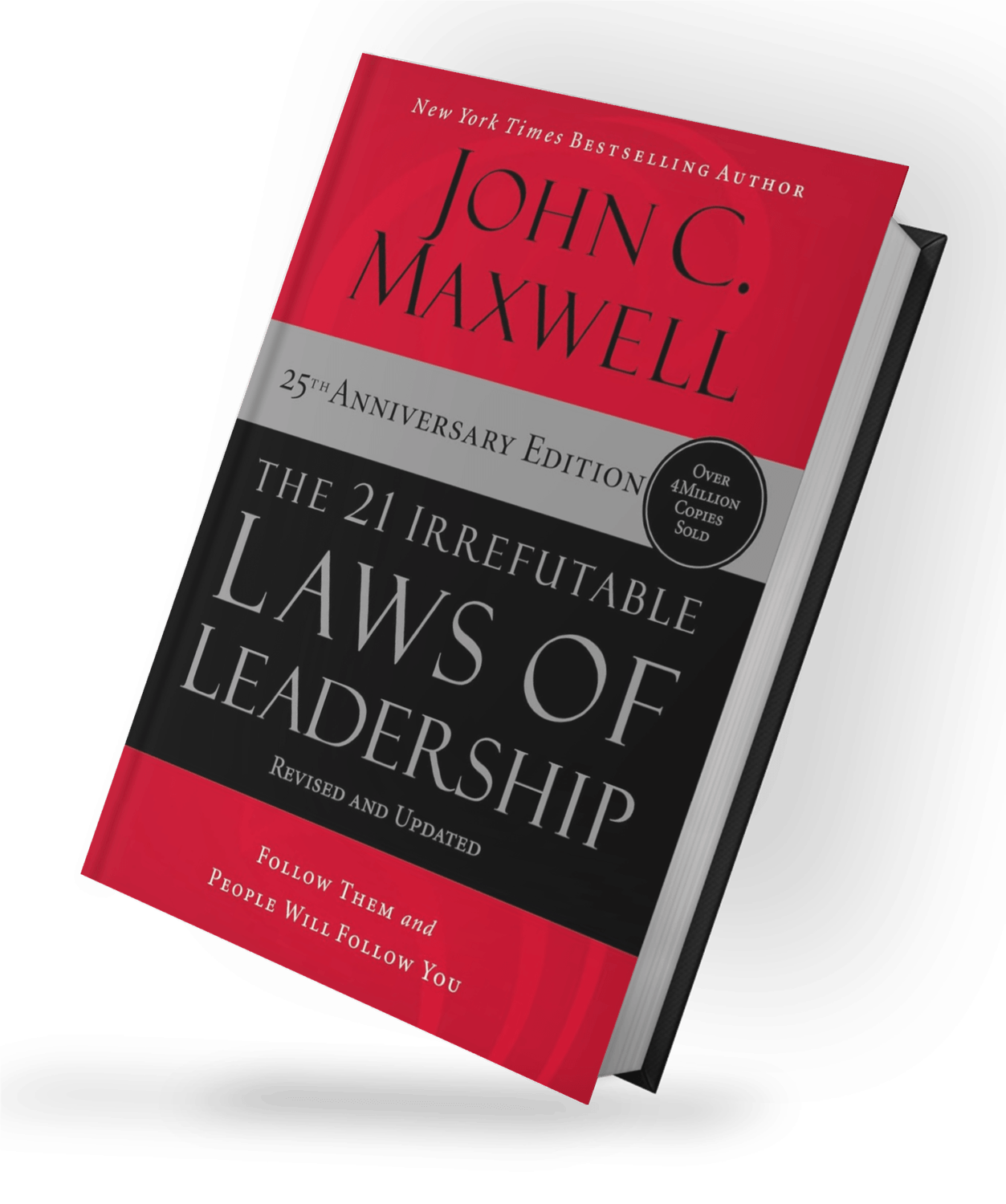
This is Law #14 of Maxwell's 21 Irrefutable Laws of Leadership, and I think it's one of the most order-reversing laws in the entire book, because it corrects an assumption almost everyone makes about how leadership actually works. If you haven't read the full framework yet, start with my complete 21 Irrefutable Laws of Leadership summary, which walks through all 21 laws chapter by chapter. This post goes deeper on Law #14 alone, because the sequence this law describes changes how you should think about every pitch, proposal, or vision you ever try to sell.
Let's get into it.
What Is the Law of Buy-In?
Maxwell states it in a way that reverses the usual assumption: people buy into the leader, then the vision.
Most of us default to believing the opposite. We assume that if we just craft a compelling enough vision, articulate it clearly enough, and back it with strong enough data, people will naturally get on board.
Maxwell's claim is that this gets the sequence backward. Vision doesn't come first. The leader comes first. People decide whether they trust and believe in you as a leader, and only after that decision do they genuinely evaluate and typically adopt the vision you're proposing.
This has a significant practical implication: if you're struggling to get buy-in for your plan, the real problem often isn't the plan. It might be that you haven't yet built enough credibility as a leader for people to trust whatever you're proposing, however sound it may be on paper.
The Story Maxwell Uses to Illustrate It: Mahatma Gandhi
Maxwell's chosen example for this law is one of history's clearest demonstrations of leader-first buy-in. Mahatma Gandhi led India's independence movement using a strategy that, on paper, should have been an extraordinarily difficult sell: nonviolent resistance against a powerful colonial government with military force at its disposal.
Convincing people that the most effective weapon against oppression was the deliberate absence of violence was, by any conventional measure, a hard idea to accept. It ran counter to instinct, to the historical precedent of how independence movements had typically succeeded elsewhere, and to the immediate emotional pull toward retaliation in the face of real injustice. And yet millions of people followed Gandhi's approach with remarkable discipline and commitment.
Why? Maxwell's answer is direct:
Because they believed in him as a leader, and that belief allowed them to adopt a vision and plan they might otherwise have rejected as impractical or even naive.
People weren't first persuaded by the argument for nonviolence in the abstract. They were first persuaded by Gandhi himself, his demonstrated character, his personal sacrifice, his consistency between what he asked of others and what he asked of himself, and it was that trust in him as a leader that made them willing to adopt a vision that would have been a much harder sell coming from someone they didn't already believe in.
Why This Sequence Makes Sense
Once you sit with this law, the logic behind it becomes clearer, even though it runs against the instinct to lead with the pitch.
Vision requires trust to evaluate fairly. A genuinely bold or unconventional vision is, almost by definition, going to sound uncertain or risky on first hearing. People need some basis for extending trust to that uncertainty, and if they don't yet trust the person presenting it, they'll evaluate the vision at face value, with all its apparent risk fully exposed, rather than through the lens of confidence in the person proposing it.
Following a leader is fundamentally a relational decision, not just an intellectual one. People aren't simply evaluating a plan's logical merits in isolation. They're deciding whether to place their effort, reputation, and sometimes their safety, behind another person's judgment. That's a decision rooted in trust and relationship first, and reasoning about the plan's specifics second.
Credibility compounds, and it has to be built before it's needed. This connects directly to the Law of Solid Ground and the Law of Process. A leader doesn't build the kind of trust required for genuine buy-in in the moment of the pitch itself. That trust has to already exist, built through a track record of demonstrated character and competence over time, before the ask ever arrives.
Why Leading With the Vision Often Backfires
It's worth being specific about what goes wrong when a leader tries to skip straight to selling the vision without first earning genuine buy-in.
The vision gets evaluated in isolation, stripped of any benefit of the doubt. Without trust in the leader, people scrutinize every weak point in the plan far more critically, because they have no accumulated confidence to offset the uncertainty inherent in any new direction.
Compliance replaces commitment. People may still nominally go along with a vision presented by someone they don't yet trust, particularly if there's positional authority involved, but that compliance tends to be shallow, easily abandoned the moment the plan hits real resistance or difficulty.
Objections multiply. When people haven't bought into the leader first, they tend to surface every possible objection to the vision itself, because the vision is the only thing available to push back against. When trust in the leader is already established, people are far more likely to extend patience through the plan's rough edges, because their confidence rests primarily in the person leading it, not solely in the plan's flawless execution.
What This Law Doesn't Mean
It's worth clarifying a common misreading of this law, because Maxwell isn't arguing that vision doesn't matter, or that a compelling vision is unnecessary once trust exists. He's specifically addressing sequence, not importance. A genuinely weak or poorly conceived vision, even from a deeply trusted leader, will eventually fail on its own merits. Trust in the leader buys patience and initial buy-in; it doesn't indefinitely substitute for a vision that actually works.
This law also isn't an argument for manipulation, building personal charisma or likability purely as a tool to push through a vision that couldn't stand on its own. Maxwell's broader framework, particularly the Laws of Character earlier in the book, the Law of Influence, the Law of Solid Ground, and the Law of Respect, makes clear that the trust this law depends on has to be genuinely earned through real character and competence. Buy-in built on manufactured charisma without substance tends to collapse the first time it's seriously tested.
How to Build the Kind of Trust This Law Requires
If genuine buy-in depends on people trusting you as a leader before they'll fully evaluate your vision, the practical implication is clear: invest in building that trust well before you need to make the ask.
Establish a track record before you need people to trust a new direction. Consistent, demonstrated competence and integrity in smaller, earlier decisions build the credibility that larger, riskier proposals will eventually draw on.
Connect individually with the people whose buy-in you'll eventually need. This directly echoes the Law of Connection. People extend trust more readily to leaders who have already invested in getting to know them personally, not just to leaders who show up with a compelling slide deck.
Be transparent and honest, especially when it's inconvenient. Trust compounds fastest through demonstrated honesty in difficult moments, not through consistently good news.
Model the sacrifice or commitment you're eventually going to ask for. Gandhi's personal discipline and sacrifice weren't separate from his ability to gain buy-in; they were central to it. People trust leaders who visibly live out what they're asking others to adopt.
When you do present the vision, lead with why they should trust the direction because of who's proposing it, not just what the proposal contains. This isn't about self-promotion. It's about being honest that buy-in is relational and giving people the relational context: your track record, your consistency, your demonstrated care for their interests, alongside the substance of the plan itself.
Reflection Questions
Have you been trying to sell a vision to people who haven't yet genuinely bought into you as a leader?
What would it take to build enough trust that people follow your direction even before they fully understand or agree with every detail of the destination?
Think of a time a vision of yours failed to gain traction. In hindsight, was the problem really the vision, or was it a lack of established trust in you as the person proposing it?
Who are the specific people whose buy-in you'll eventually need for something important, and what could you do today to start building genuine trust with them, well before you need to ask?
How This Law Connects to the Rest of Maxwell's Framework
The Law of Buy-In depends almost entirely on the Law of Solid Ground (Law #6) and the Law of Connection (Law #10). Trust is the raw material this law requires, and connection is how that trust gets built individually, person by person, long before any vision is ever presented. It also echoes the Law of E.F. Hutton (Law #5), since the "real leader" in a room, the one people actually listen to, is precisely the person whose vision will get genuine buy-in, regardless of title. And it sets up the Law of Victory (Law #15) directly, since a team's willingness to commit fully to pursuing victory together depends on having already bought into the leader's request to pursue it.
If you haven't already, I'd encourage you to read the full book summary post on The 21 Irrefutable Laws of Leadership, where I walk through all 21 laws in depth, with stories, quotes, and reflection questions for each one. The Law of Buy-In is a reminder that credibility isn't something you build in the pitch. It's something you bring to it.
Your Next Step
Here's the encouragement I want to leave you with: if a vision of yours has struggled to gain traction, don't immediately assume the plan itself is the problem. Ask, honestly, whether you've built enough trust as a leader for people to extend that plan the benefit of the doubt it likely needs.
So don't wait until your next big proposal to start building that trust. Pick one relationship where buy-in will eventually matter, and invest in it deliberately this week, no agenda beyond genuine connection and consistency. Then come back to the full book summary post on The 21 Irrefutable Laws of Leadership, and keep building, one law at a time.
People don't follow visions. They follow leaders they trust, who happen to have a vision. Build the trust first
Enjoyed this breakdown? Subscribe to the Learning to Lead Newsletter for more book summaries, leadership frameworks, and practical encouragement delivered weekly.
More Books By John C. Maxwell
If The 21 Irrefutable Laws of Leadership resonated with you, here's where to go next in Maxwell's extensive body of work:
How to Get a Return on Failure (His Most Recent): Maxwell's newest book reframes failure not as a dead end but as an investment. He lays out actionable principles, including "See Failure as an Investment in Your Future" and "Practice the Cycle of Improvement," for turning losses into gains rather than letting setbacks define you.
High Road Leadership: A response to our divided world, this book exposes the low and middle roads people default to when interacting with others and teaches what it actually looks like to value people, take accountability, and do the right thing for the right reasons.
Thinking for a Change: Maxwell breaks down eleven specific types of thinking skills, from big-picture thinking to shared thinking, that separate leaders who consistently make good decisions from those who don't.
Great Leaders Ask Great Questions: A case for curiosity as a core leadership skill, exploring why the best leaders lead with questions rather than answers, and how the right question at the right time can unlock a team's best thinking.
The 15 Invaluable Laws of Growth: A companion to this book's law-based structure, focused entirely on personal growth, the mindset, environment, and daily practices that determine whether you ever reach your full potential.
The 16 Undeniable Laws of Communication: Another entry in Maxwell's laws series, this one zeroing in on what makes a message actually land, because influence collapses fast when a leader can't communicate clearly and connect while doing it.
Leadership Gold: Written after Maxwell promised himself he wouldn't publish it until he turned sixty, this book distills forty years of leading into twenty-six "gold nuggets," each with application exercises designed to feel like a one-on-one mentorship session.
The 17 Indisputable Laws of Teamwork: A natural companion to this book, shifting the lens from individual leadership to what makes a team of leaders actually function together at a high level.
Developing the Leader Within You: One of Maxwell's earliest and most foundational works, focused on the internal shifts required before you can lead others well.
Winning with People: Explores the relational side of leadership, including the specific people skills that determine whether your influence grows or stalls.
The 5 Levels of Leadership: Maxwell's framework for understanding leadership as a progression, from position, to permission, to production, to people development, to the pinnacle of leadership defined by legacy.
Leadershift: A more recent work examining the mindset shifts today's leaders need to stay effective in a constantly changing world.
Everyone Communicates, Few Connect: A deep dive specifically into the Law of Connection, exploring what it actually takes to reach people on an emotional level, not just an informational one.
Each of these builds on the same foundation Maxwell laid in The 21 Irrefutable Laws of Leadership: leadership is influence, influence is earned, and it's a lifelong process of daily growth. Read them in whatever order serves you best right now; each one will sharpen a different piece of the leader you're becoming.
Enjoyed this breakdown? Subscribe to the Learning to Lead Newsletter for more book summaries, leadership frameworks, and practical encouragement delivered weekly.

Join over 4,000 Growth-Minded Leaders reading The Learning To Lead Newsletter each week!
Latest Blog Post
Join over 4,000 Fellow Leaders reading The Learning To Lead Newsletter each week!
©2025 Learning To Lead | Helping Good Leaders Become Great Leaders