
The Law of Connection by John C. Maxwell
The Law of Connection: Why Leaders Touch a Heart Before They Ask for a Hand
Have you ever been asked to give your full effort to someone you didn't feel truly knew you, or cared to?
Most people have, and most people have also felt the difference when a leader genuinely connects with them first. That difference is exactly what John C. Maxwell's tenth law is built around.
This is Law #10 of Maxwell's 21 Irrefutable Laws of Leadership, and I'd argue it's one of the most emotionally resonant laws in the entire framework, because it names something most of us intuitively know but rarely make a deliberate leadership priority.
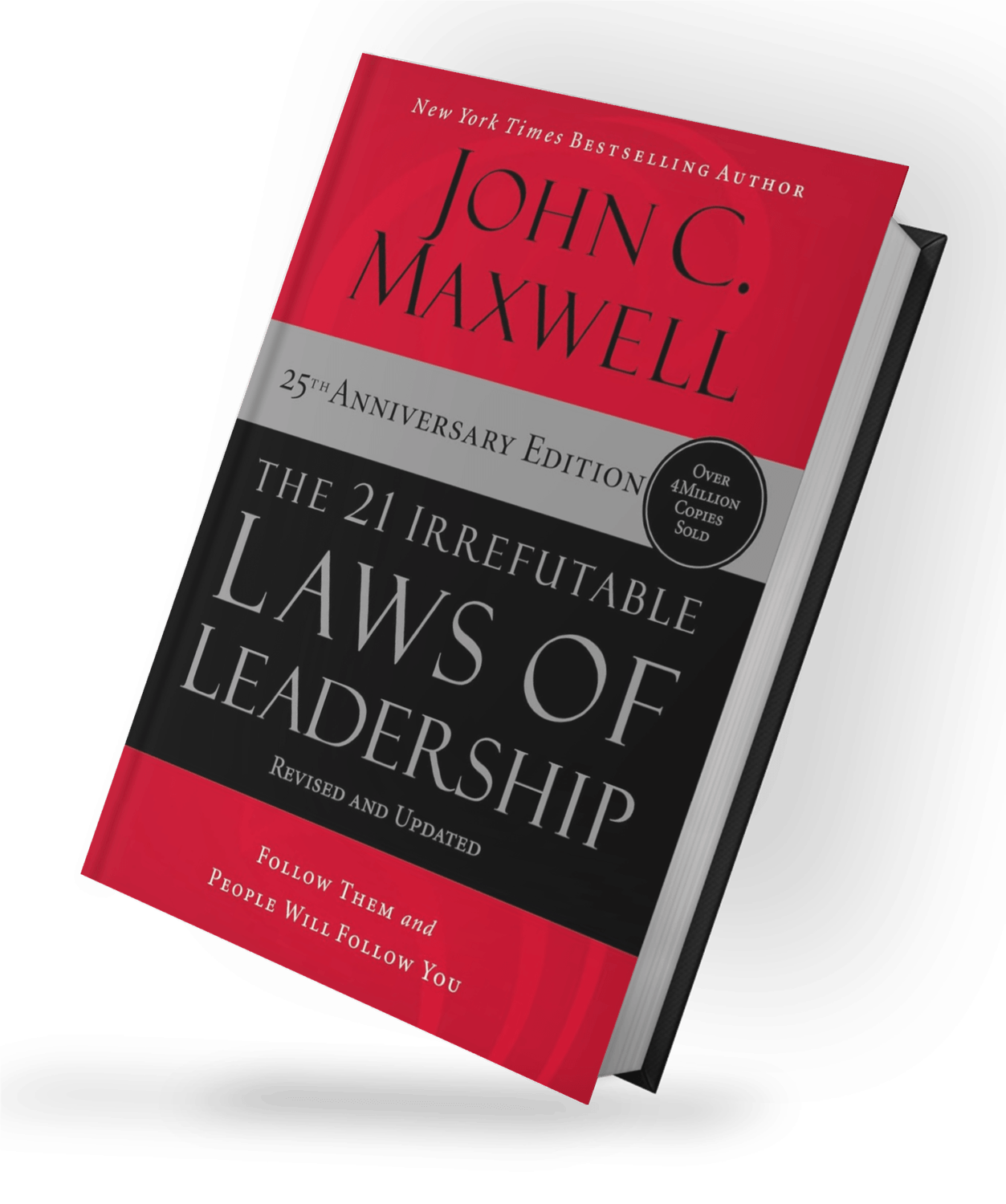
If you haven't read the full framework yet, start with my complete 21 Irrefutable Laws of Leadership summary, which walks through all 21 laws chapter by chapter. This post goes deeper into Law #10 alone, because connection deserves more than a passing mention.
Let's get into it.
What Is the Law of Connection?
Maxwell states it memorably: leaders touch a heart before they ask for a hand.
Before you can effectively lead people, direct their effort, ask for their sacrifice, or expect their full commitment, you have to first connect with them on an emotional level. Not manipulate. Not performing warmth strategically to extract better performance. Genuinely connect in a way that lets people know you see them, care about them, and value them as individuals, not just as resources deployed toward your goals.
This emotional connection creates the trust, respect, and willingness to follow that everything else in leadership depends on. Skip this step, and you can still get compliance from people. You'll rarely get their best effort, their honest feedback, or their genuine loyalty.
Individuals, Not an Audience
One of the most important nuances Maxwell brings to this law is a reminder that's easy to forget once you're leading any group larger than a handful of people: even when you're facing a room full of people, remember that they are individuals.
It's tempting, especially as an organization grows, to start thinking of your team as an aggregate, "the department," "the staff," "the room." But no one experiences being led as part of an aggregate. Every person in that room is having an individual experience of whether they feel seen, valued, and connected to, or whether they feel like one interchangeable unit in a larger mass.
Leaders who genuinely internalize this distinction find ways to connect with people individually, even at scale, rather than assuming a well-delivered speech to the group counts as connection with everyone in it.
This is a discipline, not a personality trait. Naturally extroverted leaders don't automatically do this well, and naturally introverted leaders aren't automatically excluded from doing it well either. It's a deliberate choice to treat connection as an individual act, repeated many times, rather than a collective one performed once.
The Stories Maxwell Uses to Illustrate It
Maxwell draws on several powerful examples to show what this kind of connection actually looks like in practice, and each one is worth sitting with.
Herb Kelleher and Southwest Airlines
Herb Kelleher, the founder and longtime executive chairman of Southwest Airlines, built a reputation for genuinely connecting with his employees, not as a management tactic, but as a real practice. He made a habit of learning people's names, remembering details about their lives, and treating individual employees as people worth knowing, not just labor to manage.
The proof of how deeply that connection landed came on Boss's Day, when Southwest employees took out a full-page ad in USA Today to thank him publicly. Their gratitude wasn't for a bonus, a policy change, or a strategic decision. They specifically thanked him for remembering all of their names, for listening, and for "being a friend, not just a boss." That's an extraordinary level of loyalty, and it wasn't built through a leadership technique. It was built through years of genuine, individual connection.
Robert E. Lee at the Campfires
Maxwell also points to Robert E. Lee's habit of spending time around the campfires with his soldiers on the nights before major battles. This wasn't a formality or a scheduled morale event. It was Lee choosing to be physically present with the individuals he was about to ask everything of, sharing space with them in the ordinary, human moments before the extraordinary demand of combat.
General Norman Schwarzkopf's 4,000 Handshakes
General Norman Schwarzkopf described in his own autobiography that during one Christmas in the Persian Gulf War, he "must have shaken 4,000 hands." Think about what that actually represents: a senior military leader, with an enormous amount of legitimate demands on his time, choosing to spend hours making individual physical contact and connection with as many of his soldiers as he possibly could, one at a time.
What all three of these leaders share is the same underlying instinct: they didn't assume their formal position was enough.
They deliberately invested time and energy in individual connections because they understood that connection, not command, earns a follower's full support.
Why Connection Has to Come Before the Ask
Maxwell's ordering in this law is deliberate, and it's worth understanding why the sequence matters. Touch a heart, then ask for a hand. Not the other way around.
Leaders who ask for effort, sacrifice, or loyalty before they've genuinely connected with people are, in effect, asking people to extend trust on credit, before there's any real relationship to justify it. Sometimes people will comply anyway, out of obligation or fear, but that compliance tends to be shallow and short-lived. It rarely survives the first real hardship.
Leaders who connect first are making a different kind of investment. They're building the relational foundation before they ever need to draw on it. And when the moment comes to ask for real effort, a difficult project, a personal sacrifice, an uncomfortable change, that request lands very differently, because it's coming from someone who has already demonstrated they see and value the person being asked, not just the output they can produce.
This is also why connection can't be rushed or manufactured in the moment a leader actually needs something. Trying to build a genuine connection at the exact moment you need someone's buy-in almost always reads as transactional, because it is. Real connection has to be built well before it's needed, as a consistent practice, not a tactic deployed under pressure.
What Connection Actually Requires
Genuine connection isn't complicated in concept, though it does require consistent effort. A few core practices show up across Maxwell's examples and broader teaching on this law:
Showing genuine interest in people's lives and well-being. Not a scripted check-in, but real curiosity about who someone is outside of their function on your team.
Listening actively and empathetically. Connection dies quickly when people sense they're being heard only until it's your turn to talk. Genuine listening, the kind that changes how you respond, is a core building block of connection.
Sharing your own stories and experiences. Connection is rarely one-directional. Leaders who are willing to be appropriately open about their own experiences invite the same openness from the people they lead.
Demonstrating care through actions, not just words. Kelleher didn't just say he cared about his employees. He remembered their names. Lee didn't just say he cared about his troops. He sat at their campfires. Connection is proven through consistent behavior, not stated in a mission statement.
Celebrating successes and showing up during challenges. Genuine connection shows up in both directions: present for the wins and present for the hard moments too, not just the convenient ones.
Building Emotional Intelligence to Strengthen Connection
Maxwell's teaching on this law points toward emotional intelligence as a practical skill worth developing deliberately, not just an innate trait some leaders happen to have. A few specific habits help here:
Practice active listening as a discipline, not just an instinct. This means genuinely focusing on understanding, rather than mentally preparing your response while the other person is still talking.
Be authentic and appropriately vulnerable. Connection deepens when people sense a leader is being genuinely themselves, not managing an image.
Spend real time getting to know team members personally, not just professionally. This doesn't require prying into private matters, just genuine curiosity about who someone is beyond their job function.
Look for opportunities to serve and support people, not just direct them. This connects directly to the Law of Value Adding and to Maxwell's broader teaching on servant leadership: connection deepens naturally when people experience you as someone invested in their success, not just your own.
Reflection Questions
When was the last time you connected with someone on your team as a person first, before you needed something from them as an employee?
Who on your team might currently be waiting for you to "touch a heart" before they'll fully give you their "hand"?
Think about how you lead a group versus how you lead an individual. Are you treating your team as a collection of individuals, or as an audience?
Which of Kelleher's, Lee's, or Schwarzkopf's specific practices, remembering names, being physically present, individual acknowledgment, could you realistically build into your own leadership rhythm this month?
How This Law Connects to the Rest of Maxwell's Framework
The Law of Connection depends heavily on the Law of Solid Ground (Law #6), since genuine emotional connection requires the safety that trust provides. It also sets up the Law of Buy-In (Law #14) directly: people buy into the leader before they buy into the vision, and connection is precisely how that buy-in to the leader gets built in the first place. And it echoes the Law of Value Adding, part of Maxwell's broader teaching on servant leadership, since connection is, at its core, a form of genuinely valuing the people you lead.
If you haven't already, I'd encourage you to read the full book summary post on The 21 Irrefutable Laws of Leadership. I walk through all 21 laws in depth, with stories, quotes, and reflection questions for each one. The Law of Connection is a reminder that people don't follow strategies. They follow leaders who've taken the time to know them.
Your Next Step
Here's the encouragement I want to leave you with: connection isn't a soft skill layered on top of "real" leadership. According to Maxwell, it's the very thing that makes every other leadership act possible. You can have the clearest vision, the strongest strategy, and the most compelling case for change, and still fail to move people if you haven't first connected with them as individuals.
So don't wait for the next big ask to start building connections. Pick one person on your team you haven't genuinely connected with in a while, and go have a real conversation this week, no agenda, just presence. Then come back to the full book summary post on The 21 Irrefutable Laws of Leadership and keep building, one law at a time.
Touch a heart first. The hand will follow.
Enjoyed this breakdown? Subscribe to the Learning to Lead Newsletter for more book summaries, leadership frameworks, and practical encouragement delivered weekly.
More Books By John C. Maxwell
If The 21 Irrefutable Laws of Leadership resonated with you, here's where to go next in Maxwell's extensive body of work:
How to Get a Return on Failure (His Most Recent): Maxwell's newest book reframes failure not as a dead end but as an investment. He lays out actionable principles, including "See Failure as an Investment in Your Future" and "Practice the Cycle of Improvement," for turning losses into gains rather than letting setbacks define you.
High Road Leadership: A response to our divided world, this book exposes the low and middle roads people default to when interacting with others and teaches what it actually looks like to value people, take accountability, and do the right thing for the right reasons.
Thinking for a Change: Maxwell breaks down eleven specific types of thinking skills, from big-picture thinking to shared thinking, that separate leaders who consistently make good decisions from those who don't.
Great Leaders Ask Great Questions: A case for curiosity as a core leadership skill, exploring why the best leaders lead with questions rather than answers, and how the right question at the right time can unlock a team's best thinking.
The 15 Invaluable Laws of Growth: A companion to this book's law-based structure, focused entirely on personal growth, the mindset, environment, and daily practices that determine whether you ever reach your full potential.
The 16 Undeniable Laws of Communication: Another entry in Maxwell's laws series, this one zeroing in on what makes a message actually land, because influence collapses fast when a leader can't communicate clearly and connect while doing it.
Leadership Gold: Written after Maxwell promised himself he wouldn't publish it until he turned sixty, this book distills forty years of leading into twenty-six "gold nuggets," each with application exercises designed to feel like a one-on-one mentorship session.
The 17 Indisputable Laws of Teamwork: A natural companion to this book, shifting the lens from individual leadership to what makes a team of leaders actually function together at a high level.
Developing the Leader Within You: One of Maxwell's earliest and most foundational works, focused on the internal shifts required before you can lead others well.
Winning with People: Explores the relational side of leadership, including the specific people skills that determine whether your influence grows or stalls.
The 5 Levels of Leadership: Maxwell's framework for understanding leadership as a progression, from position, to permission, to production, to people development, to the pinnacle of leadership defined by legacy.
Leadershift: A more recent work examining the mindset shifts today's leaders need to stay effective in a constantly changing world.
Everyone Communicates, Few Connect: A deep dive specifically into the Law of Connection, exploring what it actually takes to reach people on an emotional level, not just an informational one.
Each of these builds on the same foundation Maxwell laid in The 21 Irrefutable Laws of Leadership: leadership is influence, influence is earned, and it's a lifelong process of daily growth. Read them in whatever order serves you best right now; each one will sharpen a different piece of the leader you're becoming.
Enjoyed this breakdown? Subscribe to the Learning to Lead Newsletter for more book summaries, leadership frameworks, and practical encouragement delivered weekly.

Join over 4,000 Growth-Minded Leaders reading The Learning To Lead Newsletter each week!
Latest Blog Post
Join over 4,000 Fellow Leaders reading The Learning To Lead Newsletter each week!
©2025 Learning To Lead | Helping Good Leaders Become Great Leaders