
The Law of the Lid by John C. Maxwell
The Law of the Lid: Why Your Leadership Ability Is Capping Everything Else
Have you ever worked incredibly hard, done everything "right," and still watched your results stall out at a level that just didn't match your effort? If so, you've felt the Law of the Lid firsthand, whether you had a name for it or not.
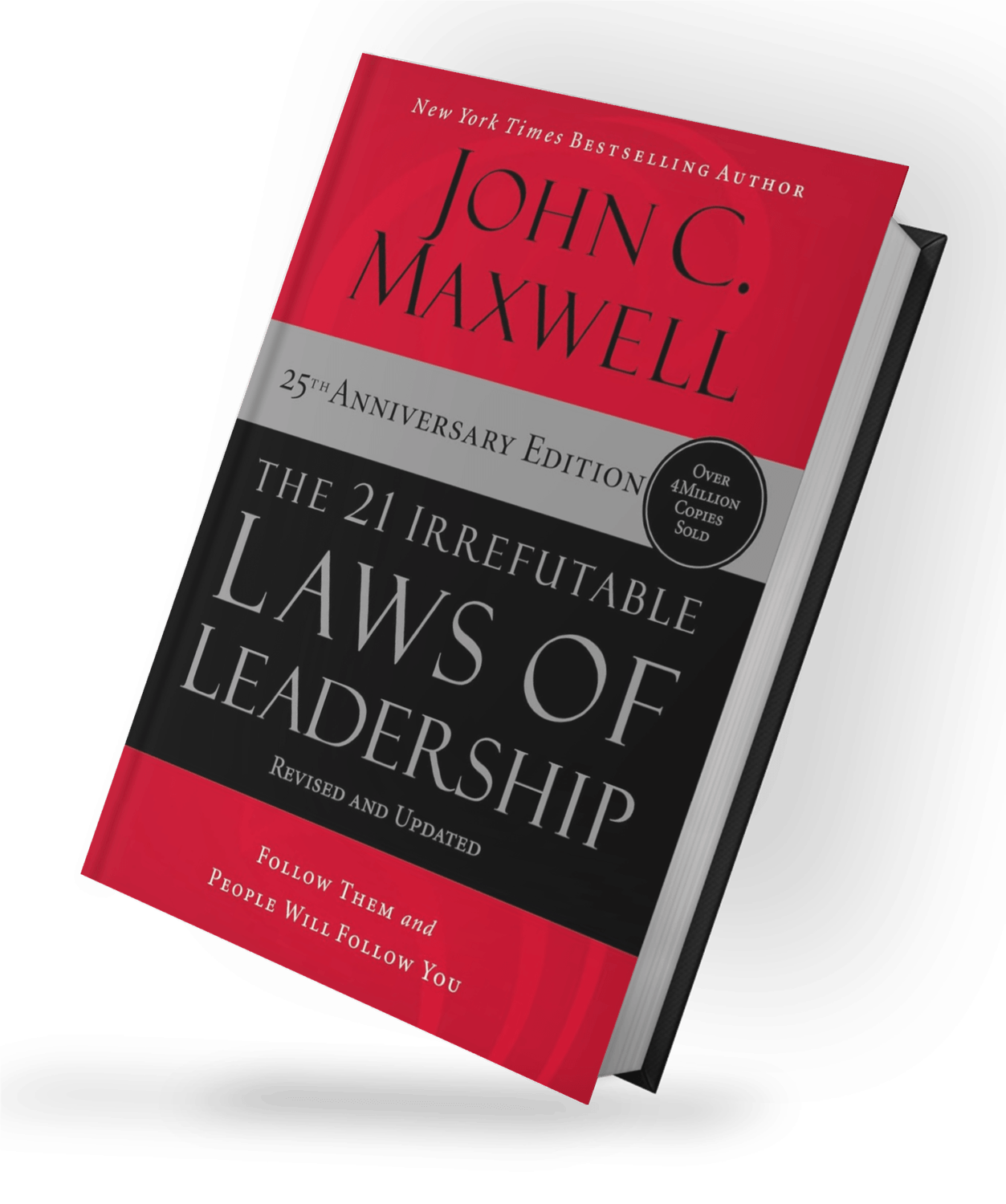
This is the first of John C. Maxwell's 21 Irrefutable Laws of Leadership, and I'd argue it's the most important one to understand early, because it explains why talent, hustle, and good intentions alone never seem to be enough. If you haven't read the full framework yet, start with my complete 21 Irrefutable Laws of Leadership summary, which walks through all 21 laws chapter by chapter. This post is a deeper dive into Law #1 alone, because I think it deserves more room than a single section can give it.
Let's get into it.
What Is the Law of the Lid?
Maxwell states it simply: leadership ability determines a person's level of effectiveness. Or, as he puts it elsewhere, "personal and organizational effectiveness is proportionate to the strength of leadership."
Picture your potential as water, and your leadership ability as a lid sitting on top of a container. It doesn't matter how much water you pour in. Once it hits the lid, it stops rising. You can add more talent, more hours, more resources, more intelligence, and the water still won't rise past that lid, because the lid, not the water, is what's limiting the outcome.
That's the uncomfortable truth at the center of this law: your leadership ability isn't just one input among many. It's the ceiling on everything else. A "10" in vision, work ethic, and intelligence, paired with a "3" in leadership ability, will only ever produce results in the range of a 3. Raise the leadership ability, and every other strength you bring to the table gets to rise along with it.
The Story Maxwell Uses to Illustrate It: McDonald's Brothers vs. Ray Kroc
Maxwell's go-to example for this law is one of the most famous business stories in American history, and it's worth sitting with the details, because most people only know half of it.
Dick and Maurice McDonald weren't just decent restaurant owners. They were genuine innovators. In the 1940s, as American culture became increasingly car-dependent, the brothers rethought the entire restaurant model from the ground up.
They stripped their menu down, streamlined their kitchen into something resembling an assembly line, and figured out how to serve food to customers fast, cheap, and consistently. Their single hamburger stand in San Bernardino, California became so famous for its efficiency that restaurateurs from across the country traveled there just to study how they did it.
By any measure of talent, vision, and operational genius, the McDonald brothers were exceptional. And yet, when they tried to franchise their concept and scale it into something bigger, they failed. Their early franchising attempts were inconsistent, poorly managed, and never captured the magic of the original location. They had hit their lid.
Enter Ray Kroc, a milkshake-machine salesman who saw the McDonald brothers' operation and immediately recognized what it could become if it were led differently. Kroc didn't reinvent their food or their process.
He brought something the brothers didn't have: the leadership ability to build systems, develop other leaders, negotiate real estate, enforce standards across locations, and cast a vision big enough to make thousands of franchisees believe they were part of something larger than a hamburger stand.
The brothers eventually sold their rights to Kroc entirely. Today, McDonald's is a global institution built on their original innovation, but scaled by someone else's leadership lid, which sat considerably higher than theirs.
Here's the point Maxwell wants you to sit with: the McDonald brothers weren't lacking in talent, dedication, or vision. They were lacking in leadership ability, and that lack capped everything else they had going for them.
A Second Example: Steve Wozniak and Steve Jobs
The McDonald's story isn't the only illustration of this law, and I think it's worth adding a second one, because it shows the Law of the Lid isn't confined to any one industry or era.
Steve Wozniak was the technical genius behind the earliest Apple computers, the guy who could actually build the machine. But it was Steve Jobs, not Wozniak, whose leadership ability turned that engineering brilliance into a company capable of changing how the entire world interacts with technology.
Wozniak's technical lid was extraordinarily high. His leadership lid, by his own admission over the years, was not what drove Apple's rise into a global company. It took a leader to translate genius into an organization.
This isn't a knock on either Wozniak or the McDonald brothers. It's simply proof of the law in action: brilliance in your craft and leadership ability are two different skill sets, and one does not guarantee the other.
Why This Law Matters More Than It First Appears
It's tempting to read the Law of the Lid, nod along, and move on to the next chapter. I'd encourage you not to, because this law has a few implications that are easy to miss on a first read.
1. It explains stalled growth that has nothing to do with effort.
If you've ever poured everything you have into a business, a team, or a project and watched it plateau anyway, the Law of the Lid offers an answer that isn't "you didn't work hard enough." Sometimes the honest answer is: your leadership ability capped what your effort could produce. That's a hard thing to hear, but it's also a far more useful diagnosis than blaming the market, the team, or bad luck, because leadership ability, unlike luck, is something you can actually develop.
2. It reframes what you should be investing in.
Most people default to investing in the thing they're already good at. If you're a gifted salesperson, you sharpen your sales skills. If you're a gifted engineer, you sharpen your technical skills. Maxwell's challenge is that if leadership is genuinely your lid, more investment in your existing strength won't raise your results. Only raising the lid will.
3. It explains why some organizations need to bring in outside leadership.
The McDonald brothers didn't fail because they refused to grow. They failed because they tried to scale using the only lid they had. Sometimes the most strategic move a founder or leader can make is recognizing their own lid honestly and building a team, or bringing in a partner, whose leadership ability is higher in the specific area the organization needs to grow.
4. It's not a life sentence.
This is the part I want to make sure lands clearly, because the Law of the Lid can sound discouraging if you only focus on the ceiling. Maxwell's entire body of work rests on a foundational belief: leadership can be learned. The lid isn't fixed. It's raised through the exact same process every other skill is built through: intentional practice, honest feedback, mentorship, and time. You are not stuck at your current lid. You're only stuck there if you stop working on it.
How to Know If Leadership Ability Is Actually Your Lid
Before you assume leadership is your limiting factor, it's worth doing an honest inventory. Ask yourself a few questions:
Are you seeing talented people join your team and then struggle to stay motivated or perform at their best? That's often a leadership lid issue, not a talent issue.
Do you have a great product, service, or skill set, but growth has plateaued despite real effort? Ask whether the constraint is your market, or your ability to lead people and systems at the next level.
Are you the reason decisions get bottlenecked, delegation feels risky, or your best people eventually leave? Those are classic signs that your leadership ability, not your resources or your vision, is the actual ceiling.
When you imagine your organization or team growing 10x, does your own leadership ability feel like it could stretch to meet it, or does the thought make you uneasy? That gut check is often more honest than any KPI.
If several of these hit close to home, you're not failing. You've just identified exactly where to focus.
How to Raise Your Leadership Lid
Maxwell doesn't leave you with just a diagnosis. Here's a practical starting point for raising your own lid, drawn from principles woven throughout his broader body of work:
Get honest about where your lid currently sits. You can't raise what you won't acknowledge. Ask a mentor, a peer, or someone who reports to you for honest feedback about your leadership, not your talent or your work ethic, specifically your leadership.
Invest in leadership development deliberately, not accidentally. Read the books, attend the training, find a coach or a mentor. Leadership ability grows the same way any other skill does: through repetition and deliberate practice, not by osmosis.
Lead in small rooms before you lead in big ones. You don't build a higher lid by skipping straight to leading an organization of a thousand people. You build it by leading well in whatever room you're in right now, one project, one team, one relationship at a time.
Surround yourself with people whose lid is higher than yours in the areas you're weakest. This is where Maxwell's Law of the Inner Circle (Law #11) starts to connect with the Law of the Lid. You don't have to raise every part of your leadership ceiling alone. Build a team that fills the gaps.
Study leaders, not just their outcomes. Don't just read the success story. Study how the leader made decisions, developed people, and navigated the moments where their lid was tested.
Reflection Questions
Where in your life or leadership have you hit a ceiling that more effort, more talent, or more resources couldn't break through?
Honestly assess: is your leadership ability currently your organization's lid? What evidence supports that?
What's one specific, concrete action you could take this month to genuinely raise your leadership lid, not just your skill in your existing craft?
Who do you know whose leadership lid is higher than yours in an area where you're weak? What would it look like to learn directly from them?
How This Law Connects to the Rest of Maxwell's Framework
The Law of the Lid isn't meant to stand alone, and Maxwell places it first for a reason: it sets the stakes for everything that follows. Once you accept that your leadership ability is the ceiling on your potential, the natural next question becomes, "So how do I actually build it?" That's exactly what the rest of the 21 laws are designed to answer, from the Law of Influence, which reframes what leadership actually is, to the Law of Process, which reminds you this growth happens daily, not overnight, to the Law of Legacy, which asks what you're doing to raise the lid for the leaders who come after you.
If you haven't already, I'd encourage you to read the full book summary here: The 21 Irrefutable Laws of Leadership, where I walk through all 21 laws in depth, with stories, quotes, and reflection questions for each one. The Law of the Lid is the starting point. The other 20 laws are how you actually raise it.
Your Next Step
Here's the encouragement I want to leave you with: identifying your lid isn't a discouraging exercise; it's a liberating one. It means the plateau you've been fighting against isn't permanent, and it isn't a mystery. It's a specific, nameable, and learnable skill gap.
So don't just file this away as an interesting idea. Pick one honest answer from the reflection questions above and act on it this week. Tell someone you trust what you're working on. Then come back to the full book summary here: The 21 Irrefutable Laws of Leadership, and keep building, one law at a time.
Your lid isn't fixed. It's just waiting on you to start raising it.
Enjoyed this breakdown? Subscribe to the Learning to Lead Newsletter for more book summaries, leadership frameworks, and practical encouragement delivered weekly.
More Books By John C. Maxwell
If The 21 Irrefutable Laws of Leadership resonated with you, here's where to go next in Maxwell's extensive body of work:
How to Get a Return on Failure (His Most Recent): Maxwell's newest book reframes failure not as a dead end but as an investment. He lays out actionable principles, including "See Failure as an Investment in Your Future" and "Practice the Cycle of Improvement," for turning losses into gains rather than letting setbacks define you.
High Road Leadership: A response to our divided world, this book exposes the low and middle roads people default to when interacting with others and teaches what it actually looks like to value people, take accountability, and do the right thing for the right reasons.
Thinking for a Change: Maxwell breaks down eleven specific types of thinking skills, from big-picture thinking to shared thinking, that separate leaders who consistently make good decisions from those who don't.
Great Leaders Ask Great Questions: A case for curiosity as a core leadership skill, exploring why the best leaders lead with questions rather than answers, and how the right question at the right time can unlock a team's best thinking.
The 15 Invaluable Laws of Growth: A companion to this book's law-based structure, focused entirely on personal growth, the mindset, environment, and daily practices that determine whether you ever reach your full potential.
The 16 Undeniable Laws of Communication: Another entry in Maxwell's laws series, this one zeroing in on what makes a message actually land, because influence collapses fast when a leader can't communicate clearly and connect while doing it.
Leadership Gold: Written after Maxwell promised himself he wouldn't publish it until he turned sixty, this book distills forty years of leading into twenty-six "gold nuggets," each with application exercises designed to feel like a one-on-one mentorship session.
The 17 Indisputable Laws of Teamwork: A natural companion to this book, shifting the lens from individual leadership to what makes a team of leaders actually function together at a high level.
Developing the Leader Within You: One of Maxwell's earliest and most foundational works, focused on the internal shifts required before you can lead others well.
Winning with People: Explores the relational side of leadership, including the specific people skills that determine whether your influence grows or stalls.
The 5 Levels of Leadership: Maxwell's framework for understanding leadership as a progression, from position, to permission, to production, to people development, to the pinnacle of leadership defined by legacy.
Leadershift: A more recent work examining the mindset shifts today's leaders need to stay effective in a constantly changing world.
Everyone Communicates, Few Connect: A deep dive specifically into the Law of Connection, exploring what it actually takes to reach people on an emotional level, not just an informational one.
Each of these builds on the same foundation Maxwell laid in The 21 Irrefutable Laws of Leadership: leadership is influence, influence is earned, and it's a lifelong process of daily growth. Read them in whatever order serves you best right now; each one will sharpen a different piece of the leader you're becoming.
Enjoyed this breakdown? Subscribe to the Learning to Lead Newsletter for more book summaries, leadership frameworks, and practical encouragement delivered weekly.

Join over 4,000 Growth-Minded Leaders reading The Learning To Lead Newsletter each week!
Latest Blog Post
Join over 4,000 Fellow Leaders reading The Learning To Lead Newsletter each week!
©2025 Learning To Lead | Helping Good Leaders Become Great Leaders