
The Law of the Inner Circle by John C. Maxwell
The Law of the Inner Circle: Why Your Potential Is Determined by Those Closest to You
Have you ever noticed that no matter how talented or driven you are personally, your actual results seem to track more closely with the strength of the small group of people around you?
That's not a coincidence, and it's exactly what John C. Maxwell's eleventh law is designed to explain.
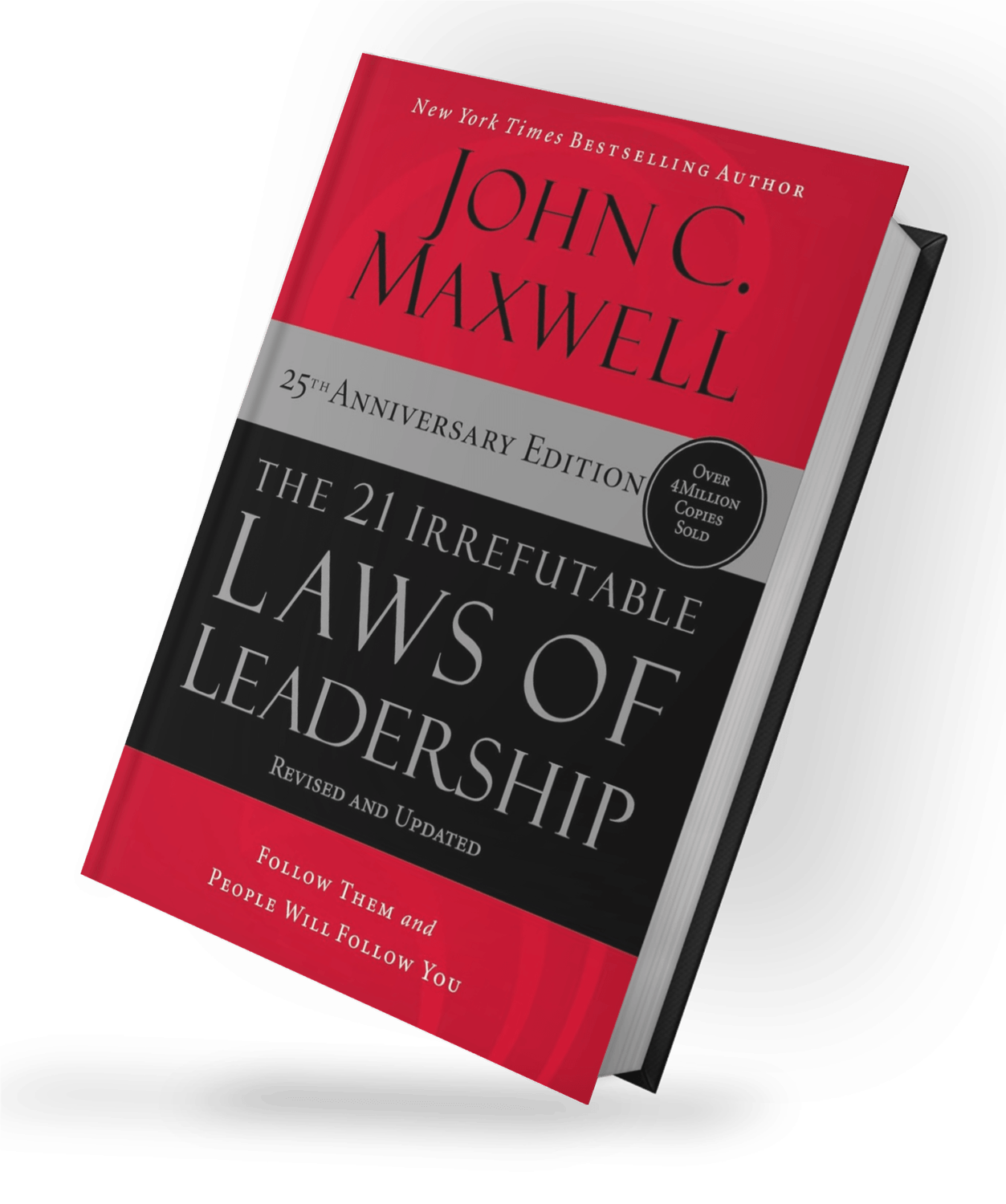
This is Law #11 of Maxwell's 21 Irrefutable Laws of Leadership, and I think it's one of the most practically actionable laws in the entire book, because unlike some of the more abstract principles, this one gives you a clear, concrete lever to pull. If you haven't read the full framework yet, start with my complete 21 Irrefutable Laws of Leadership summary, which walks through all 21 laws chapter by chapter. This post goes deeper into Law #11 alone, because your inner circle deserves a closer look than a single paragraph can give it.
Let's take a deeper look!
What Is the Law of the Inner Circle?
Maxwell states it directly: a leader's potential is determined by those closest to them.
No leader, regardless of talent, vision, or personal drive, accomplishes anything significant entirely alone. The small group of people you trust most, rely on most heavily, and spend the most time with, your inner circle, sets a real, measurable ceiling on what you're able to achieve. This is true whether that inner circle is intentionally curated or has simply formed by default, through proximity and history rather than deliberate choice.
Here's the uncomfortable implication worth sitting with: your inner circle isn't just a support system. It's a limiting factor, just as leadership ability itself is in the Law of the Lid.
A brilliant leader surrounded by a weak, misaligned, or negative inner circle will underperform relative to their potential. A more modestly gifted leader, surrounded by a strong, aligned, complementary inner circle, will often exceed expectations because the circle's strength amplifies the leader's capacity rather than capping it.
What Actually Makes an Inner Circle Strong
Maxwell's framework identifies specific characteristics that distinguish a genuinely strong inner circle from a merely comfortable one. It's worth examining each, because comfort and strength are not the same thing, and plenty of leaders confuse the two.
Complementary skills and strengths. A strong inner circle isn't a group of people who are good at the same things the leader is already good at. It's a group whose strengths fill in exactly where the leader's own abilities are weakest, echoing the Law of the Lid, where Maxwell notes that no one is skilled at all 21 laws, and the solution is to surround yourself with people who are.
Shared values and vision. Complementary skill alone isn't enough. The people closest to you also need to be genuinely aligned with where you're trying to go and why. Skilled people pulling in a different direction don't strengthen your potential; they fragment it.
High levels of trust and loyalty. This connects directly to the Law of Solid Ground. An inner circle without deep trust can't function as a real inner circle, because the leader will hold back, verify constantly, and never fully delegate, undermining the entire purpose of having a close circle in the first place.
The ability to challenge and provide honest feedback. This is where many inner circles quietly fail. It's easy to surround yourself with people who agree with you and make you feel good. It's much harder, and far more valuable, to build a circle willing to push back, name blind spots, and tell you the truth even when it's unwelcome.
Strong leadership abilities of their own. Maxwell's framework consistently pushes leaders to surround themselves with other leaders, not just capable followers. A circle of strong leaders in their own right multiplies your organization's overall capacity in a way that a circle of skilled but non-leading executors never can.
The Investment Principle: Where to Put Your Energy
One of the most practical and, frankly, countercultural pieces of advice in this law is Maxwell's guidance on where a leader should actually direct their energy. Don't devote your time to trying to convince or inspire people who have a negative attitude. Instead, invest your energy in those who already share your vision and can genuinely lighten your load.
This runs against a very natural leadership instinct. Most leaders, especially conscientious ones, feel a pull toward the struggling team member, the resistant voice, the person who seems perpetually unconvinced, because it feels responsible, even noble, to try to bring that person along. Maxwell isn't arguing that you should abandon people or write anyone off entirely as a matter of general leadership practice. He's specifically addressing where your inner circle, your closest and most trusted relationships, should be built. And his answer is clear: populate your inner circle with individuals who boost morale and lighten your load, not people who require constant convincing just to stay engaged.
This distinction matters because your inner circle isn't the same thing as your entire team. You can, and often should, continue investing broadly in everyone you lead. But the small circle of people closest to you, the ones shaping your thinking, carrying real delegated responsibility, and influencing your decisions, needs to be reserved for those who are already aligned and genuinely additive, not for those you're still hoping to win over.
Why This Law Is Genuinely a Ceiling, Not Just an Asset
It's worth being precise about the framing here, because Maxwell isn't simply saying "a good team helps." He's making a stronger claim: your potential is determined by, not just assisted by, your inner circle. That's a meaningful distinction.
Think about what this means practically. If your inner circle is weak in a particular area, that weakness doesn't just create friction. It becomes a hard limit on what you, as a leader, can actually accomplish in that domain, no matter how much personal effort or talent you bring. If no one in your closest circle has strong financial judgment, your organization's financial decision-making has a ceiling, regardless of your own vision or work ethic elsewhere. If no one in your inner circle is willing to challenge your thinking honestly, your decision-making has a ceiling, no matter how intelligent you personally are.
This reframes inner-circle selection from a nice-to-have to one of the highest-leverage decisions a leader makes. Who you let into that closest circle isn't just a matter of comfort or loyalty. It's a direct determinant of what you're capable of achieving.
How to Evaluate and Build a Stronger Inner Circle
If your current inner circle is formed mostly by default, through tenure, proximity, or history, rather than deliberate design, here's a practical way to start evaluating and strengthening it.
Step one: map your actual inner circle honestly. Who genuinely shapes your thinking, receives your trust, and carries real delegated authority? This list is often smaller, and sometimes different, than who you'd initially assume.
Step two: evaluate each person against the five characteristics above. Where does each person genuinely complement your weaknesses, share your vision, earn your trust, tell you the truth, and demonstrate their own leadership ability? Be honest about where the circle falls short, rather than defaulting to loyalty or history as the primary qualifier.
Step three: identify the specific gaps. If your leadership ability is weak in a particular area, per the Law of the Lid, does your inner circle currently include someone genuinely strong there? If not, that's a concrete gap to address, not a hypothetical one.
Step four: be honest about anyone who's currently occupying a seat in your inner circle without earning it. This is often the hardest step, because it can mean acknowledging that a long-standing relationship, built on history or loyalty rather than genuine complementary strength or honest feedback, may not belong in your closest circle, even if it remains a valued relationship in other ways.
Step five: invest deliberately in developing the leadership abilities of the people already in your circle. A strong inner circle isn't static. Maxwell's broader framework, particularly the Law of Reproduction, emphasizes that leaders should actively develop the leadership capacity of the people closest to them, rather than merely benefiting from the capacity they already have.
Reflection Questions
Who currently makes up your inner circle, and are they genuinely lifting your capacity or quietly limiting it?
Is there someone in your inner circle right now who occupies that position out of history or loyalty, rather than genuine complementary strength or honest feedback?
Where is your own leadership ability weakest, and does your inner circle currently include someone strong in exactly that area?
Have you been investing disproportionate energy trying to convince or win over someone with a persistently negative attitude, energy that might be better spent developing someone already aligned with your vision?
How This Law Connects to the Rest of Maxwell's Framework
The Law of the Inner Circle is, in many ways, the practical application of the Law of the Lid. If leadership ability caps your potential, and no leader is strong in all 21 laws, then your inner circle is literally how you raise that ceiling: by surrounding yourself with people whose strengths cover your gaps. It connects directly to the Law of Magnetism (Law #9), since the caliber of people drawn to you shapes the raw material available for this circle in the first place. And it sets up both the Law of Empowerment (Law #12) and the Law of Reproduction (Law #13), since a strong inner circle only reaches its full potential when the leader is willing to genuinely empower and develop the leaders within it.
If you haven't already, I'd encourage you to read the full book summary post on The 21 Irrefutable Laws of Leadership. I walk through all 21 laws in depth, with stories, quotes, and reflection questions for each one. The Law of the Inner Circle is a reminder that people don't follow strategies. They follow leaders who've taken the time to know them.
Your Next Step
Here's the encouragement I want to leave you with: your potential isn't just a function of your own talent and effort. It's a function of who you've chosen, or defaulted to, letting those closest to you. That's genuinely good news, because it means one of the highest-leverage things you can do for your future isn't necessarily to work harder yourself. It's to be more intentional about who occupies your inner circle.
So don't just read this and move on. Map your actual inner circle this week, honestly, and identify one specific gap worth addressing. Then come back to the full book summary post on The 21 Irrefutable Laws of Leadership and keep building, one law at a time.
You weren't meant to raise your ceiling alone. Choose your circle carefully!
Enjoyed this breakdown? Subscribe to the Learning to Lead Newsletter for more book summaries, leadership frameworks, and practical encouragement delivered weekly.
More Books By John C. Maxwell
If The 21 Irrefutable Laws of Leadership resonated with you, here's where to go next in Maxwell's extensive body of work:
How to Get a Return on Failure (His Most Recent): Maxwell's newest book reframes failure not as a dead end but as an investment. He lays out actionable principles, including "See Failure as an Investment in Your Future" and "Practice the Cycle of Improvement," for turning losses into gains rather than letting setbacks define you.
High Road Leadership: A response to our divided world, this book exposes the low and middle roads people default to when interacting with others and teaches what it actually looks like to value people, take accountability, and do the right thing for the right reasons.
Thinking for a Change: Maxwell breaks down eleven specific types of thinking skills, from big-picture thinking to shared thinking, that separate leaders who consistently make good decisions from those who don't.
Great Leaders Ask Great Questions: A case for curiosity as a core leadership skill, exploring why the best leaders lead with questions rather than answers, and how the right question at the right time can unlock a team's best thinking.
The 15 Invaluable Laws of Growth: A companion to this book's law-based structure, focused entirely on personal growth, the mindset, environment, and daily practices that determine whether you ever reach your full potential.
The 16 Undeniable Laws of Communication: Another entry in Maxwell's laws series, this one zeroing in on what makes a message actually land, because influence collapses fast when a leader can't communicate clearly and connect while doing it.
Leadership Gold: Written after Maxwell promised himself he wouldn't publish it until he turned sixty, this book distills forty years of leading into twenty-six "gold nuggets," each with application exercises designed to feel like a one-on-one mentorship session.
The 17 Indisputable Laws of Teamwork: A natural companion to this book, shifting the lens from individual leadership to what makes a team of leaders actually function together at a high level.
Developing the Leader Within You: One of Maxwell's earliest and most foundational works, focused on the internal shifts required before you can lead others well.
Winning with People: Explores the relational side of leadership, including the specific people skills that determine whether your influence grows or stalls.
The 5 Levels of Leadership: Maxwell's framework for understanding leadership as a progression, from position, to permission, to production, to people development, to the pinnacle of leadership defined by legacy.
Leadershift: A more recent work examining the mindset shifts today's leaders need to stay effective in a constantly changing world.
Everyone Communicates, Few Connect: A deep dive specifically into the Law of Connection, exploring what it actually takes to reach people on an emotional level, not just an informational one.
Each of these builds on the same foundation Maxwell laid in The 21 Irrefutable Laws of Leadership: leadership is influence, influence is earned, and it's a lifelong process of daily growth. Read them in whatever order serves you best right now; each one will sharpen a different piece of the leader you're becoming.
Enjoyed this breakdown? Subscribe to the Learning to Lead Newsletter for more book summaries, leadership frameworks, and practical encouragement delivered weekly.

Join over 4,000 Growth-Minded Leaders reading The Learning To Lead Newsletter each week!
Latest Blog Post
Join over 4,000 Fellow Leaders reading The Learning To Lead Newsletter each week!
©2025 Learning To Lead | Helping Good Leaders Become Great Leaders