
The Law of Big Mo by John C. Maxwell
The Law of the Big Mo: Why Momentum Is a Leader's Best Friend
Have you ever noticed that a mediocre leader with real momentum often looks more impressive than a talented leader without it?
That uncomfortable observation is exactly what John C. Maxwell's sixteenth law is built to explain, and once you understand why it's true, it changes how you think about your job as a leader.
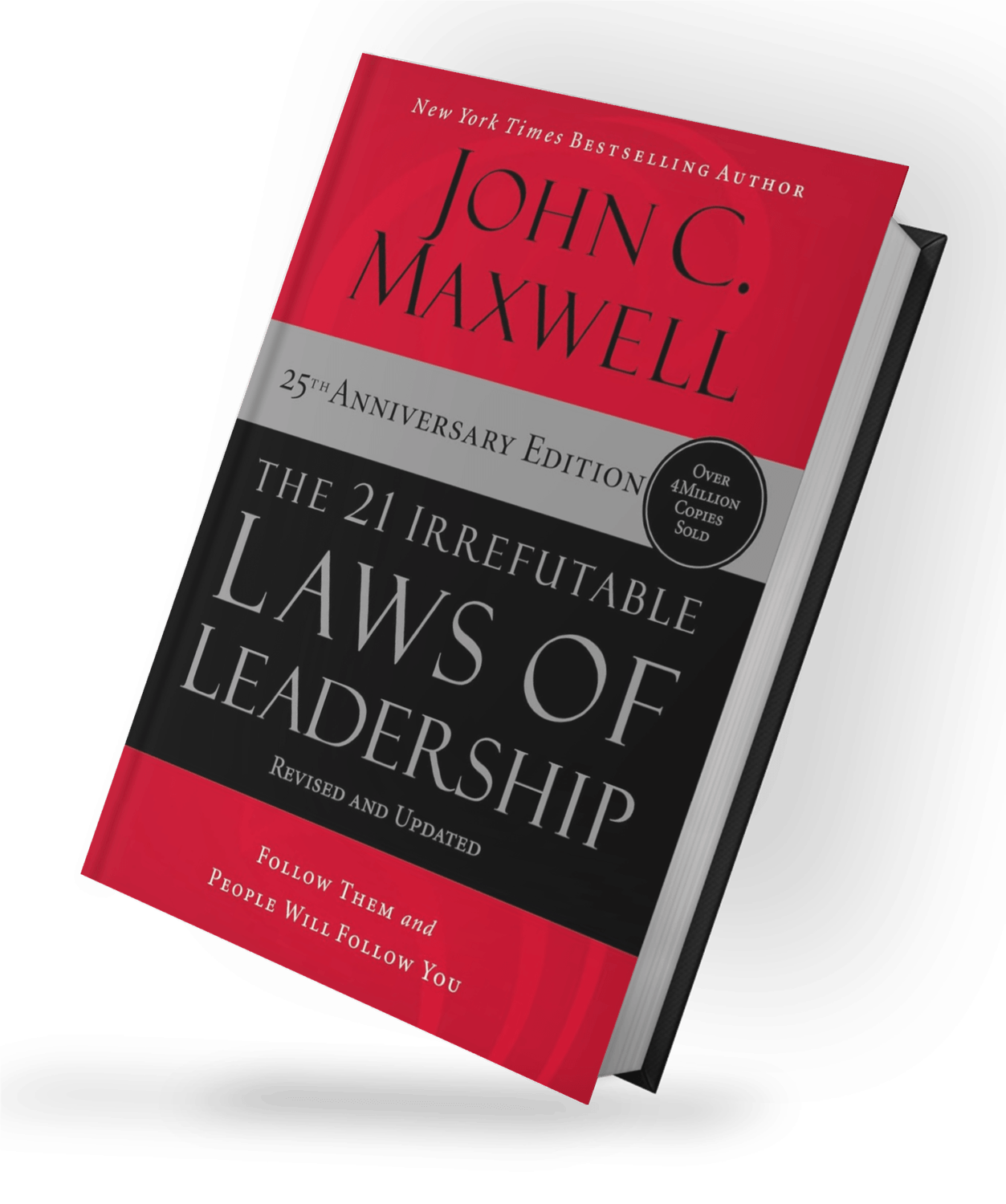
This is Law #16 of Maxwell's 21 Irrefutable Laws of Leadership, and I think it's one of the most underappreciated laws in the entire book, because momentum tends to get treated as a byproduct of good leadership rather than something a leader actively has to generate.
If you haven't read the full framework yet, start with my complete 21 Irrefutable Laws of Leadership summary, which walks through all 21 laws chapter by chapter. This post goes deeper on Law #16 alone, because momentum deserves to be understood as a skill, not just a lucky streak.
Let's get into it.
What Is the Law of the Big Mo?
Maxwell states it simply: momentum is a leader's best friend.
The core physics here is straightforward, and it applies to organizations just as much as it applies to objects: you have to be in motion before momentum can build. Once real momentum does start, it becomes significantly easier to overcome challenges and obstacles that would otherwise stop a team cold. A leader's job, in this law's framing, isn't just to have a good plan. It's to actively generate motion, because motion, sustained long enough, becomes momentum, and momentum changes what's possible.
Maxwell is direct that a leader must generate this momentum. It doesn't appear spontaneously just because a team is working hard or the strategy is sound. Someone has to get the first push moving, and that responsibility, more often than not, falls on the leader.
The Perception Shift Momentum Creates
Here's the part of this law that I think is genuinely counterintuitive and worth sitting with directly, because it explains a pattern most people have witnessed without fully naming it. Maxwell observes: when leaders have momentum on their side, people think they're geniuses. They look past shortcomings... Momentum changes people's perspective of leaders.
Think about what this actually means. The same leader, with the same skill set and the same flaws, will be perceived very differently depending on whether their team currently has momentum. With momentum, minor mistakes get overlooked, confidence in the leader's judgment rises, and people extend far more of the benefit of the doubt during difficult decisions. Without momentum, even a genuinely talented leader's shortcomings become magnified, second-guessed, and scrutinized far more harshly.
This isn't a comment on fairness. It's simply an accurate description of how people perceive leadership in practice, and it carries a significant implication:
A leader's effectiveness, as perceived by the people they lead, is partly a function of momentum itself, not solely a function of the leader's underlying ability.
This is exactly why Maxwell calls momentum a leader's "best friend." It doesn't just make the work easier. It changes how the leader is seen while doing that work.
Why Momentum Makes Everything Else Easier
Beyond the perception shift, momentum has real, practical effects on a team's ability to actually execute and overcome obstacles. It's worth understanding these mechanisms specifically, because they explain why experienced leaders prioritize generating momentum even before they've solved every underlying problem.
Momentum reduces the psychological weight of obstacles. A team already in motion, already experiencing some traction and success, tends to interpret a new obstacle as a temporary setback to push through. A team without momentum tends to interpret the same obstacle as confirmation that the effort isn't working, and that difference in interpretation has real consequences for whether people keep pushing or start disengaging.
Momentum makes recruitment and buy-in easier. People, understandably, want to join efforts that appear to be succeeding. A team with visible momentum attracts more willing participants, more enthusiastic collaborators, and more goodwill from stakeholders than a team that appears stalled, even if the underlying substance of the two efforts is similar.
Momentum compounds, which means small wins matter disproportionately. Because momentum builds on itself once it starts, an early, even relatively minor, win can generate disproportionate returns down the line, not because that individual win was so significant on its own, but because of what it triggers in terms of confidence, energy, and continued motion.
Momentum lowers the threshold for the next difficult decision. Teams with momentum tend to trust their leader's judgment more readily during a tough call, because the accumulated track record of recent success buys real credibility. Teams without momentum tend to scrutinize and resist difficult decisions far more, because there's less accumulated trust to draw on.
Why Momentum Is Hard to Start, and Hard to Stop
Maxwell's framing carries an important nuance: momentum is difficult in both directions. It's genuinely hard to generate initially, which is why leaders can't simply wait for it to appear on its own. But once it does start, Maxwell notes, it's hard to stop, which cuts both ways depending on the direction of the momentum.
Positive momentum, once established, tends to be self-sustaining for a while. This is exactly why it's worth the disproportionate effort required to get it started in the first place. A leader who successfully generates early momentum often finds that the team's own motion begins to carry forward obstacles that would have previously required the leader's direct, exhausting intervention.
Negative momentum is equally hard to stop once it takes hold. A team that's begun to lose confidence, disengage, or interpret setbacks as evidence of failure doesn't easily reverse that pattern, even once the underlying problem has been genuinely fixed. This is why leaders often have to work harder to rebuild momentum after a stall than they would have needed to generate it the first time, and it's a strong argument for prioritizing early momentum generation before a team ever has the chance to drift into a negative pattern.
How Leaders Actually Generate Momentum
Since momentum doesn't appear on its own, it's worth understanding what actually creates it in practice. A few consistent approaches emerge in how experienced leaders build this.
Start with a genuinely winnable early objective. Momentum needs an initial spark, and that spark is far more reliably generated by a smaller, achievable win than by immediately attempting the hardest, most ambitious goal first. Leaders who understand this law often sequence their early efforts specifically to generate a first visible success, even a modest one, rather than starting with the most difficult challenge simply because it's the most important.
Make progress visible, not just real. Momentum depends partly on people's perception of forward motion, not just on its underlying reality. Leaders who communicate progress clearly, celebrate specific wins, and name concrete forward movement help a team actually feel the momentum that's building, which reinforces and accelerates it.
Protect momentum once it starts, rather than taking it for granted. Because negative momentum is so difficult to reverse, leaders who understand this law are careful not to squander early positive motion through unnecessary setbacks, poor communication, or unaddressed problems that quietly erode confidence even while surface-level progress continues.
Personally model the energy momentum requires. Momentum in a team often stems from the energy the leader visibly brings to the effort. A leader who appears tired, uncertain, or disengaged has a much harder time generating momentum than one who brings genuine, sustained energy to the work, because that energy is itself contagious throughout the team.
The Danger of Confusing Momentum With Substance
It's worth naming a real risk here, because momentum's ability to make leaders "look like geniuses" cuts both ways. A leader can ride momentum for a period of time while genuine underlying problems go unaddressed, precisely because momentum causes people to overlook shortcomings that would otherwise draw scrutiny. This isn't an argument against pursuing momentum; it's a caution against mistaking the perception momentum creates for a substitute for actually solid leadership underneath it.
The most effective use of this law combines genuine momentum generation with honest, ongoing attention to the substance beneath it, using the goodwill and energy that momentum creates as a foundation for continued improvement, rather than as cover to avoid addressing real weaknesses simply because no one is currently scrutinizing them closely.
Reflection Questions
Where does your team currently have real momentum, and where has momentum clearly stalled?
What's one small, genuinely winnable objective you could pursue this week purely to generate momentum, rather than jumping straight to the hardest goal on your list?
Think of a time your team had strong momentum. How did people's perception of your leadership shift during that period, compared to a slower stretch?
Is there a current shortfall in your leadership or your plan that momentum might currently be masking? What would it look like to address it honestly rather than letting positive perception paper over it?
How This Law Connects to the Rest of Maxwell's Framework
The Law of the Big Mo builds directly on the Law of Victory (Law #15), since sustained collective effort toward a defined outcome is exactly what generates the kind of momentum this law describes. It also connects to the Law of Buy-In (Law #14), since a team that has genuinely bought into their leader is far more likely to interpret early progress as real momentum rather than dismissing it as luck. And it sets up the Law of Priorities (Law #17) directly, since knowing where to focus limited time and energy is essential for identifying the specific, winnable early objectives that actually generate momentum in the first place.
If you haven't already, I'd encourage you to read the full book summary post on The 21 Irrefutable Laws of Leadership, where I walk through all 21 laws in depth, with stories, quotes, and reflection questions for each one. The Law of the Big Mo is a reminder that motion, sustained deliberately, becomes one of a leader's most powerful assets.
Your Next Step
Here's the encouragement I want to leave you with: momentum isn't something that simply happens to fortunate leaders. It's something you, as a leader, are responsible for actively generating, and the effort required to start it is almost always worth the disproportionate returns it produces once it takes hold.
So don't wait for momentum to appear on its own. Pick one small, genuinely winnable objective this week, pursue it deliberately, and make the resulting progress visible to your team. Then come back to the full book summary post on The 21 Irrefutable Laws of Leadership and keep building, one law at a time.
Momentum is a leader's best friend, but only if you're the one who gets it moving. Start today.
Enjoyed this breakdown? Subscribe to the Learning to Lead Newsletter for more book summaries, leadership frameworks, and practical encouragement delivered weekly.
More Books By John C. Maxwell
If The 21 Irrefutable Laws of Leadership resonated with you, here's where to go next in Maxwell's extensive body of work:
How to Get a Return on Failure (His Most Recent): Maxwell's newest book reframes failure not as a dead end but as an investment. He lays out actionable principles, including "See Failure as an Investment in Your Future" and "Practice the Cycle of Improvement," for turning losses into gains rather than letting setbacks define you.
High Road Leadership: A response to our divided world, this book exposes the low and middle roads people default to when interacting with others and teaches what it actually looks like to value people, take accountability, and do the right thing for the right reasons.
Thinking for a Change: Maxwell breaks down eleven specific types of thinking skills, from big-picture thinking to shared thinking, that separate leaders who consistently make good decisions from those who don't.
Great Leaders Ask Great Questions: A case for curiosity as a core leadership skill, exploring why the best leaders lead with questions rather than answers, and how the right question at the right time can unlock a team's best thinking.
The 15 Invaluable Laws of Growth: A companion to this book's law-based structure, focused entirely on personal growth, the mindset, environment, and daily practices that determine whether you ever reach your full potential.
The 16 Undeniable Laws of Communication: Another entry in Maxwell's laws series, this one zeroing in on what makes a message actually land, because influence collapses fast when a leader can't communicate clearly and connect while doing it.
Leadership Gold: Written after Maxwell promised himself he wouldn't publish it until he turned sixty, this book distills forty years of leading into twenty-six "gold nuggets," each with application exercises designed to feel like a one-on-one mentorship session.
The 17 Indisputable Laws of Teamwork: A natural companion to this book, shifting the lens from individual leadership to what makes a team of leaders actually function together at a high level.
Developing the Leader Within You: One of Maxwell's earliest and most foundational works, focused on the internal shifts required before you can lead others well.
Winning with People: Explores the relational side of leadership, including the specific people skills that determine whether your influence grows or stalls.
The 5 Levels of Leadership: Maxwell's framework for understanding leadership as a progression, from position, to permission, to production, to people development, to the pinnacle of leadership defined by legacy.
Leadershift: A more recent work examining the mindset shifts today's leaders need to stay effective in a constantly changing world.
Everyone Communicates, Few Connect: A deep dive specifically into the Law of Connection, exploring what it actually takes to reach people on an emotional level, not just an informational one.
Each of these builds on the same foundation Maxwell laid in The 21 Irrefutable Laws of Leadership: leadership is influence, influence is earned, and it's a lifelong process of daily growth. Read them in whatever order serves you best right now; each one will sharpen a different piece of the leader you're becoming.
Enjoyed this breakdown? Subscribe to the Learning to Lead Newsletter for more book summaries, leadership frameworks, and practical encouragement delivered weekly.

Join over 4,000 Growth-Minded Leaders reading The Learning To Lead Newsletter each week!
Latest Blog Post
Join over 4,000 Fellow Leaders reading The Learning To Lead Newsletter each week!
©2025 Learning To Lead | Helping Good Leaders Become Great Leaders