
The Law of Victory by John Maxwell
The Law of Victory: Why Leaders Find a Way for the Team to Win
Have you ever led a team, or been part of one, where "good effort" quietly became an acceptable substitute for actually winning? John C. Maxwell's fifteenth law exists specifically to challenge that substitution, because there's a real difference between leaders who work hard and leaders who refuse to accept anything less than victory.
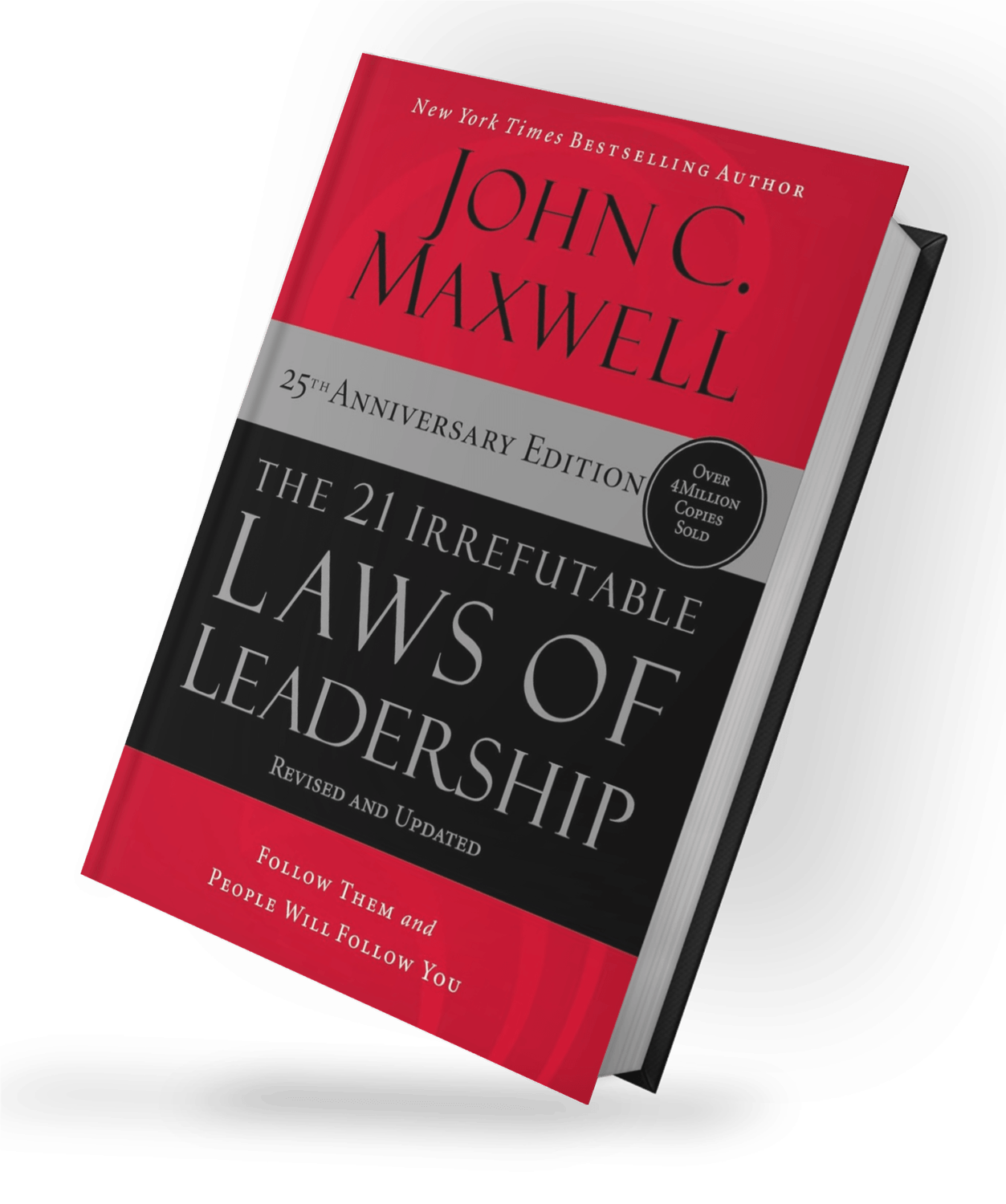
This is Law #15 of Maxwell's 21 Irrefutable Laws of Leadership, and I think it's one of the more demanding laws in the book, not because it's complicated, but because it asks something uncompromising of leaders in a culture that often celebrates effort over outcome. If you haven't read the full framework yet, start with my complete 21 Irrefutable Laws of Leadership summary, which walks through all 21 laws chapter by chapter. This post goes deeper on Law #15 alone, because victory, as Maxwell defines it, deserves a closer look.
Let's take a deeper look!
What Is the Law of Victory?
Maxwell states it directly: leaders find a way for the team to win.
This law is built on a simple but demanding premise: real leaders don't settle for defeat, and they don't quietly redefine failure as an acceptable outcome once things get hard. They seek victory at all costs, refuse to give up, and are never genuinely content with losing, regardless of how difficult the circumstances become.
But there's a crucial second half to this law that's easy to miss if you only focus on the leader's personal resolve:
Victory is almost always a team endeavor, not a solo one.
A leader dedicated to winning still has to recognize that the win depends on the collective performance of the people around them, not just their own individual determination. That distinction matters enormously for how this law actually gets applied.
The Story Maxwell Uses to Illustrate It: Winston Churchill
Maxwell's chosen example for this law is one of the clearest demonstrations in modern history of a leader's refusal to accept anything short of victory, even when accepting less would have been far more comfortable in the short term.
Winston Churchill spoke out publicly against the threat of the Nazis as early as 1932, years before most of England's leadership was willing to take that danger seriously. At the time, England's leadership pursued a reconciliatory path, hoping to avoid confrontation rather than confront the threat directly. Churchill's warnings were, for years, politically inconvenient and largely unheeded.
When Churchill finally became Prime Minister in 1940, with England facing genuine existential danger, he didn't equivocate about the goal. He plainly stated his position against Nazism and made unmistakably clear that defeating Hitler was the only acceptable outcome, full stop. There was no version of this conflict, in Churchill's framing, that ended in negotiated compromise or partial success. Despite extraordinarily difficult odds, and years of hardship that followed, Churchill did not give up until the Allies achieved victory.
What makes this example so instructive isn't simply Churchill's personal resolve, though that resolve was real and significant. It's that Churchill understood, even while holding an uncompromising standard for the outcome, that winning was fundamentally a team endeavor. England's victory required a cohesive vision shared across the nation, a wide variety of skills deployed by many different people and institutions, and a leader who could exhort the entire collective effort toward the same defined outcome, not simply will the outcome into existence through personal determination alone.
Why "Accepting Nothing Less Than Victory" Isn't the Same as Stubbornness
It's worth being precise about what Maxwell is and isn't arguing here, because an uncompromising commitment to winning can easily be mistaken for, or actually devolve into, simple stubbornness or an unwillingness to adapt.
Genuine commitment to victory includes a willingness to change strategy. Churchill's refusal to accept anything less than defeating Hitler didn't mean he refused to adjust tactics, alliances, or approach as circumstances evolved throughout the war. The commitment was to the outcome, not to any single fixed method of achieving it. Leaders who confuse the two often dig in on a failing approach simply because changing course feels like it might signal weakness or a lowered standard.
Genuine commitment to victory requires honest assessment of what's actually happening. A leader who refuses to accept anything short of winning, but also refuses to honestly evaluate whether the current approach is working, isn't practicing the Law of Victory. They're practicing denial. Real commitment to the outcome demands clear eyes about present reality, not blind optimism divorced from what's actually unfolding.
Genuine commitment to victory doesn't mean winning at any cost, regardless of character. Maxwell's broader framework, built on the Laws of Character earlier in the book, makes clear that the kind of victory this law describes isn't victory obtained through compromised integrity. The refusal to give up applies within the bounds of the character and trust established by the earlier laws, not as a justification for abandoning them.
Why Victory Is a Team Endeavor, Not a Solo Achievement
This is arguably the most practically important part of this law, because it's easy for a determined leader to mistake their own resolve for the entire solution. Maxwell is explicit:
Even a leader who is dedicated to victory must realize that winning is usually a team endeavor.
This has real implications for where a leader should actually focus their energy. If victory depended purely on the leader's own effort and determination, the natural response would be to simply work harder, push more forcefully, and personally will the outcome into existence. But Maxwell's framework suggests something different:
Improving the team's play leads to victory, not just intensifying the leader's individual effort.
Achieving genuine victory, in Maxwell's description, requires three specific elements working together: a cohesive vision that the entire team genuinely shares and believes in, a variety of skills distributed across the team rather than concentrated entirely in the leader, and a dedicated leader exhorting the team to leave it all on the field, providing the resolve and encouragement that keeps the collective effort moving forward, especially through the hardest stretches.
Notice that the leader's role here isn't to personally produce the win through individual heroics. It's to cultivate the conditions, vision, skill, and sustained encouragement, that allow the team collectively to produce it. This connects directly back to earlier laws in Maxwell's framework: you can't build the kind of team capable of real victory without the Law of Buy-In, without genuine empowerment per the Law of Empowerment, and without the complementary strengths described in the Law of the Inner Circle.
What Refusing to Give Up Actually Looks Like in Practice
It's worth translating this law into something more concrete than a general principle. A few practical markers distinguish leaders who genuinely embody this law from those who merely talk about resilience.
They keep the outcome clearly defined, even through setbacks. Churchill never lost clarity about what victory actually meant, even during the war's darkest and most uncertain stretches. Leaders who embody this law resist the temptation to quietly redefine success downward when things get difficult.
They adjust approach without abandoning commitment. As noted above, genuine resolve includes tactical flexibility. The team's methods can and should evolve; the underlying commitment to the outcome doesn't.
They keep investing in the team's collective capability, not just their own effort. Since victory is a team endeavor, leaders who take this law seriously spend real energy strengthening the skills, cohesion, and shared vision of the people around them, understanding that this investment, not personal heroics, is what ultimately produces the win.
They provide sustained encouragement through the hardest stretches, not just at the outset. It's relatively easy to project confidence and resolve at the beginning of a difficult effort. The real test, and the real value a leader provides, comes in continuing to exhort and encourage the team through the middle of a struggle, when momentum has stalled and the outcome feels genuinely uncertain.
Reflection Questions
Where have you settled for "good enough" or "solid effort" instead of genuinely pursuing victory for your team?
What would it look like to improve your team's collective skill and cohesion, rather than simply working harder yourself to compensate for gaps?
Think of a moment you held firm on an outcome while adjusting your approach along the way. What did that combination of resolve and flexibility actually look like in practice?
Is there a current effort where you've quietly redefined what counts as success, lowering the bar rather than genuinely pursuing the original goal? What would it take to reclaim that original standard?
How This Law Connects to the Rest of Maxwell's Framework
The Law of Victory depends directly on The Law of Buy-In (Law #14), since a team's willingness to commit fully to pursuing victory together requires that they've already bought into the leader asking them to pursue it. It also builds on the The Law of the Inner Circle (Law #11) and The Law of Empowerment (Law #12), since the "variety of skills" Maxwell describes as necessary for victory only becomes available to a team whose leader has genuinely built and empowered a strong circle of people around them. And it sets up the Law of the Big Mo (Law #16) directly, since sustained collective effort toward victory is precisely what generates the momentum that law describes.
If you haven't already, I'd encourage you to read the full book summary post on The 21 Irrefutable Laws of Leadership. I walk through all 21 laws in depth, with stories, quotes, and reflection questions for each one.
The Law of Victory is a reminder that refusing to give up is only half the equation. Building a team capable of winning is the other half.
Your Next Step
Here's the encouragement I want to leave you with: the discipline this law asks for isn't stubbornness or personal heroics. It's an uncompromising commitment to a clearly defined outcome, paired with a genuine investment in the team whose collective effort will actually produce it.
So don't just resolve to try harder yourself this week. Pick one specific way to strengthen your team's collective capability, closing a skill gap, deepening shared vision, offering sustained encouragement through a hard stretch, and invest in it deliberately. Then come back to the full book summary post on The 21 Irrefutable Laws of Leadership and keep building, one law at a time.
Real leaders don't just refuse to lose. They build teams capable of winning. Start building yours.
Enjoyed this breakdown? Subscribe to the Learning to Lead Newsletter for more book summaries, leadership frameworks, and practical encouragement delivered weekly.
More Books By John C. Maxwell
If The 21 Irrefutable Laws of Leadership resonated with you, here's where to go next in Maxwell's extensive body of work:
How to Get a Return on Failure (His Most Recent): Maxwell's newest book reframes failure not as a dead end but as an investment. He lays out actionable principles, including "See Failure as an Investment in Your Future" and "Practice the Cycle of Improvement," for turning losses into gains rather than letting setbacks define you.
High Road Leadership: A response to our divided world, this book exposes the low and middle roads people default to when interacting with others and teaches what it actually looks like to value people, take accountability, and do the right thing for the right reasons.
Thinking for a Change: Maxwell breaks down eleven specific types of thinking skills, from big-picture thinking to shared thinking, that separate leaders who consistently make good decisions from those who don't.
Great Leaders Ask Great Questions: A case for curiosity as a core leadership skill, exploring why the best leaders lead with questions rather than answers, and how the right question at the right time can unlock a team's best thinking.
The 15 Invaluable Laws of Growth: A companion to this book's law-based structure, focused entirely on personal growth, the mindset, environment, and daily practices that determine whether you ever reach your full potential.
The 16 Undeniable Laws of Communication: Another entry in Maxwell's laws series, this one zeroing in on what makes a message actually land, because influence collapses fast when a leader can't communicate clearly and connect while doing it.
Leadership Gold: Written after Maxwell promised himself he wouldn't publish it until he turned sixty, this book distills forty years of leading into twenty-six "gold nuggets," each with application exercises designed to feel like a one-on-one mentorship session.
The 17 Indisputable Laws of Teamwork: A natural companion to this book, shifting the lens from individual leadership to what makes a team of leaders actually function together at a high level.
Developing the Leader Within You: One of Maxwell's earliest and most foundational works, focused on the internal shifts required before you can lead others well.
Winning with People: Explores the relational side of leadership, including the specific people skills that determine whether your influence grows or stalls.
The 5 Levels of Leadership: Maxwell's framework for understanding leadership as a progression, from position, to permission, to production, to people development, to the pinnacle of leadership defined by legacy.
Leadershift: A more recent work examining the mindset shifts today's leaders need to stay effective in a constantly changing world.
Everyone Communicates, Few Connect: A deep dive specifically into the Law of Connection, exploring what it actually takes to reach people on an emotional level, not just an informational one.
Each of these builds on the same foundation Maxwell laid in The 21 Irrefutable Laws of Leadership: leadership is influence, influence is earned, and it's a lifelong process of daily growth. Read them in whatever order serves you best right now; each one will sharpen a different piece of the leader you're becoming.
Enjoyed this breakdown? Subscribe to the Learning to Lead Newsletter for more book summaries, leadership frameworks, and practical encouragement delivered weekly.

Join over 4,000 Growth-Minded Leaders reading The Learning To Lead Newsletter each week!
Latest Blog Post
Join over 4,000 Fellow Leaders reading The Learning To Lead Newsletter each week!
©2025 Learning To Lead | Helping Good Leaders Become Great Leaders