
The Law of Reproduction by John Maxwell
The Law of Reproduction: Why It Takes a Leader to Raise Up a Leader
Have you ever noticed that the most respected leaders you know almost always name a mentor when asked how they got started?
That's not a coincidence, and it's exactly the pattern John C. Maxwell's thirteenth law is built to explain.
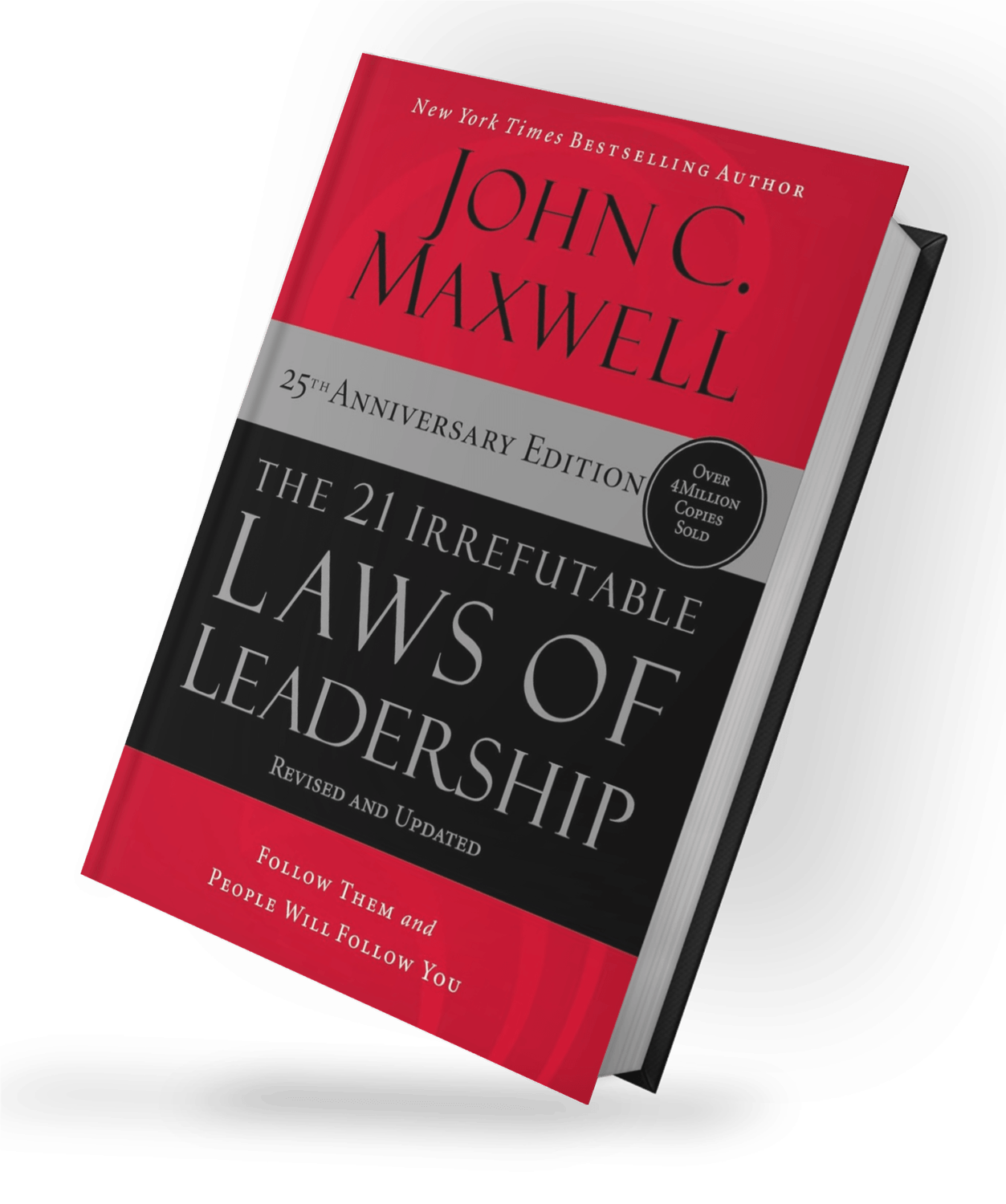
This is Law #13 of Maxwell's 21 Irrefutable Laws of Leadership, and I'd argue it's one of the most quietly demanding laws in the book, because it asks leaders to invest in something whose payoff they may never fully see or personally benefit from. If you haven't read the full framework yet, start with my complete 21 Irrefutable Laws of Leadership summary, which walks through all 21 laws chapter by chapter. This post goes deeper into Law #13 alone, because developing other leaders deserves more than a passing mention.
Let's take a deeper look!
What Is the Law of Reproduction?
Maxwell states it plainly: it takes a leader to raise up a leader.
Some people, Maxwell acknowledges, are naturally gifted with leadership instincts from an early age. Others rise to the occasion in response to a specific crisis, discovering capabilities in themselves they didn't know existed. But those two paths, Maxwell is clear, account for a small minority of leaders.
The vast majority of leaders are inspired and mentored by other leaders.
Leadership, more often than not, is passed down rather than spontaneously generated.
This law also contains a sharp internal logic worth naming directly:
You can only give to others what you already possess.
You cannot mentor someone into a level of leadership ability you haven't developed yourself. This is why Maxwell insists that the best mentors for potential leaders are experienced leaders, not simply well-meaning people with good intentions.
Reproduction requires something real to reproduce.
Why "Reproduction" Is the Right Word
Maxwell's choice of the word "reproduction" for this law is deliberate, and it's worth sitting with the biological metaphor for a moment, because it clarifies something important. Reproduction doesn't create an exact copy. It passes on core traits, while the resulting individual still develops their own distinct identity.
The same is true here: a mentor doesn't produce a clone of themselves. They pass on core leadership capabilities, character, judgment, and ways of thinking about people and decisions, while the person they've mentored goes on to develop their own leadership style, strengths, and voice.
This matters because it removes a common misconception about mentorship: that developing another leader means molding them into a smaller version of yourself. Maxwell's framework, particularly when read alongside the Law of Magnetism, suggests something closer to this: you naturally attract and develop people who share your core values and work ethic, but the leadership ability you pass on to them becomes uniquely their own as they apply it.
The Warning Maxwell Includes: Leaders Who Hold Others Down
It would be easy to assume every leader wants to develop other leaders, given how clearly beneficial it is for an organization. Maxwell is honest that this isn't the case.
Many leaders don't see the value in developing other leaders, and some actively try to hold capable people back at lower ranks, whether consciously or not.
This connects directly to the insecurity Maxwell described in the Law of Empowerment (Law #12). A leader who feels threatened by the growth of those around them is unlikely to invest in developing new leaders, because doing so means intentionally creating more capable people in positions close to their own. Maxwell's warning here is direct and worth taking seriously:
Be careful, because the only way to limit or demote others is to lower yourself in the process.
That's a striking claim, and it's worth unpacking. Holding someone else down doesn't just harm them. It actively shrinks the leader doing the holding down, because an organization's overall strength is a direct function of the leadership capacity distributed throughout it. A leader who suppresses potential leaders around them is, in effect, capping their organization's ceiling and, by extension, their legacy and impact, purely to protect a sense of personal security that Maxwell's earlier laws already identify as the wrong foundation for leading.
Why Raising New Leaders Requires Careful Nurturing
Maxwell is careful to note that developing other leaders isn't simply a matter of good intentions applied broadly.
Developing new leaders is essential to your organization's full development; the more leaders your company has, the stronger it is, but that requires careful nurturing.
This word, "careful," is doing real work. Leadership development isn't a mass-production process where you can simply announce an initiative and expect leaders to emerge at scale. It requires the same kind of individual attention and investment that runs throughout Maxwell's framework, from the Law of Connection's insistence on knowing people individually to the Law of the Inner Circle's guidance on investing energy where it will genuinely compound.
Ross Perot's line, which Maxwell includes as a defining quote for this law, captures the necessary discipline precisely:
"Leaders don't flock. You have to find them one at a time."
This is a direct counterpoint to the instinct many organizations have toward scalable, programmatic leadership development, broad training modules, and generic leadership curricula applied uniformly across an entire workforce. Maxwell's framework suggests something slower and more personal: identifying specific individuals with real leadership potential and investing in them directly, one relationship at a time, just as you would with any other significant, high-value relationship.
What Mentorship Actually Requires
If reproduction depends on possessing something real to pass on and requires careful, individual nurturing rather than a scalable program, it's worth understanding what that actually looks like in practice.
Genuine investment of time, not just occasional advice. Mentorship that meaningfully develops leadership ability requires sustained attention over a real period of time, not a single conversation or piece of well-intentioned advice offered in passing.
Willingness to give real responsibility, not just guidance. This connects directly to the Law of Empowerment. Mentorship without genuine empowerment is closer to advice-giving than actual leadership development, because leadership ability is built through the experience of leading, not just through being told how.
Honest feedback, including uncomfortable feedback. Developing another leader requires telling them the truth about their blind spots and mistakes, not just encouraging them. This echoes the Law of Solid Ground: mentorship built on unearned praise doesn't actually build capability; it just builds false confidence.
Patience with a process that takes real time. This directly connects back to the Law of Process. You can't mentor someone into leadership ability overnight any more than you could develop your own leadership ability overnight. Reproduction, like all leadership growth, happens daily, not in a day.
A genuine desire to see the mentee eventually surpass you. This is perhaps the clearest test of whether a leader has truly internalized this law versus merely paying it lip service. Leaders who are genuinely secure, in the sense described by the Law of Empowerment, want the people they mentor to eventually exceed their own leadership ability, because that outcome represents the completest possible success of the mentoring relationship.
A Practical Self-Check on Reproduction
Since it's easy to believe you're developing other leaders without actually doing so, here are a few honest questions worth sitting with.
Who, specifically, are you currently mentoring into a leadership role, one person, by name, not a general commitment to "developing my team"?
Is there anyone whose growth you've quietly slowed or limited, even without fully intending to, because their rising capability made you uncomfortable?
When you think about the people you've invested in most heavily, are you giving them real authority and responsibility, or mostly advice and encouragement?
Do you currently possess the leadership ability you'd want to reproduce in someone else? If not, what does that suggest about where your own growth needs to happen first?
If you left your role tomorrow, is there someone specific who could step into real leadership because you deliberately prepared them, or would that development have to start from scratch?
Reflection Questions
Who are you currently mentoring into a leadership role, one person at a time, as Ross Perot's quote describes?
Is there any part of you that's been reluctant to develop someone specifically because their growth might feel threatening to your own position?
Think of your own most influential mentor. What specifically did they possess that they were able to pass on to you, and how did that shape your own leadership?
What would it look like to move from generic, programmatic leadership development toward the kind of careful, individual nurturing this law describes?
How This Law Connects to the Rest of Maxwell's Framework
The Law of Reproduction depends directly on the Law of Empowerment (Law #12), since genuine mentorship requires the same personal security that makes real empowerment possible. It also builds on the Law of the Inner Circle (Law #11), since the people closest to a leader are often the most natural candidates for this kind of deliberate development. And it sets up the Law of Explosive Growth (Law #20) and the Law of Legacy (Law #21) directly: an organization only multiplies its growth by developing leaders rather than just followers, and a leader's lasting value is ultimately measured by whether this exact law was practiced consistently enough to produce a strong succession.
If you haven't already, I'd encourage you to read the full book summary post on The 21 Irrefutable Laws of Leadership, where I walk through all 21 laws in depth, with stories, quotes, and reflection questions for each one. The Law of Reproduction is a reminder that leadership was never meant to end with you.
Your Next Step
Here's the encouragement I want to leave you with: developing another leader is one of the few leadership acts whose full value you may never personally see. It's a genuinely selfless investment, and that's exactly what makes it matter. Every leader you help develop extends your impact far beyond what you could accomplish on your own.
So don't wait for a formal program or initiative to start this. Pick one specific person, by name, whose leadership potential you've noticed, and invest deliberately in them this week: real responsibility, honest feedback, sustained attention. Then come back to the full book summary post on The 21 Irrefutable Laws of Leadership and keep building, one law at a time.
Leaders don't flock. Go find one, one at a time, and start developing them today.
Enjoyed this breakdown? Subscribe to the Learning to Lead Newsletter for more book summaries, leadership frameworks, and practical encouragement delivered weekly.
More Books By John C. Maxwell
If The 21 Irrefutable Laws of Leadership resonated with you, here's where to go next in Maxwell's extensive body of work:
How to Get a Return on Failure (His Most Recent): Maxwell's newest book reframes failure not as a dead end but as an investment. He lays out actionable principles, including "See Failure as an Investment in Your Future" and "Practice the Cycle of Improvement," for turning losses into gains rather than letting setbacks define you.
High Road Leadership: A response to our divided world, this book exposes the low and middle roads people default to when interacting with others and teaches what it actually looks like to value people, take accountability, and do the right thing for the right reasons.
Thinking for a Change: Maxwell breaks down eleven specific types of thinking skills, from big-picture thinking to shared thinking, that separate leaders who consistently make good decisions from those who don't.
Great Leaders Ask Great Questions: A case for curiosity as a core leadership skill, exploring why the best leaders lead with questions rather than answers, and how the right question at the right time can unlock a team's best thinking.
The 15 Invaluable Laws of Growth: A companion to this book's law-based structure, focused entirely on personal growth, the mindset, environment, and daily practices that determine whether you ever reach your full potential.
The 16 Undeniable Laws of Communication: Another entry in Maxwell's laws series, this one zeroing in on what makes a message actually land, because influence collapses fast when a leader can't communicate clearly and connect while doing it.
Leadership Gold: Written after Maxwell promised himself he wouldn't publish it until he turned sixty, this book distills forty years of leading into twenty-six "gold nuggets," each with application exercises designed to feel like a one-on-one mentorship session.
The 17 Indisputable Laws of Teamwork: A natural companion to this book, shifting the lens from individual leadership to what makes a team of leaders actually function together at a high level.
Developing the Leader Within You: One of Maxwell's earliest and most foundational works, focused on the internal shifts required before you can lead others well.
Winning with People: Explores the relational side of leadership, including the specific people skills that determine whether your influence grows or stalls.
The 5 Levels of Leadership: Maxwell's framework for understanding leadership as a progression, from position, to permission, to production, to people development, to the pinnacle of leadership defined by legacy.
Leadershift: A more recent work examining the mindset shifts today's leaders need to stay effective in a constantly changing world.
Everyone Communicates, Few Connect: A deep dive specifically into the Law of Connection, exploring what it actually takes to reach people on an emotional level, not just an informational one.
Each of these builds on the same foundation Maxwell laid in The 21 Irrefutable Laws of Leadership: leadership is influence, influence is earned, and it's a lifelong process of daily growth. Read them in whatever order serves you best right now; each one will sharpen a different piece of the leader you're becoming.
Enjoyed this breakdown? Subscribe to the Learning to Lead Newsletter for more book summaries, leadership frameworks, and practical encouragement delivered weekly.

Join over 4,000 Growth-Minded Leaders reading The Learning To Lead Newsletter each week!
Latest Blog Post
Join over 4,000 Fellow Leaders reading The Learning To Lead Newsletter each week!
©2025 Learning To Lead | Helping Good Leaders Become Great Leaders