
The Law of Empowerment by John Maxwell
The Law of Empowerment: Why Only Secure Leaders Give Power to Others
Have you ever handed someone real responsibility, only to find yourself quietly circling back, double-checking their work, or subtly reasserting control once they started to succeed?
If that instinct feels familiar, you've bumped into exactly the tension John C. Maxwell's twelfth law is built to expose.
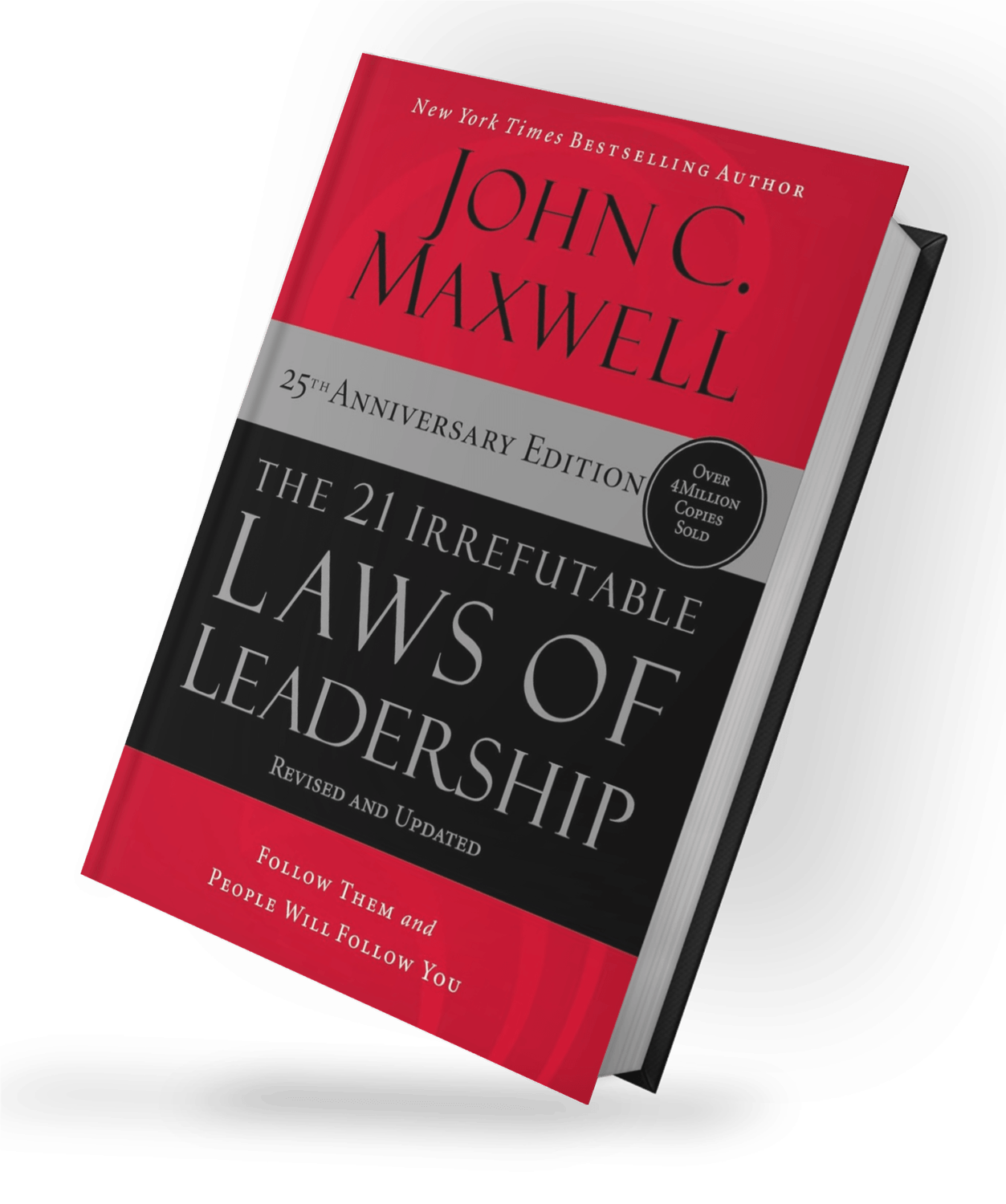
This is Law #12 of Maxwell's 21 Irrefutable Laws of Leadership, and I think it's one of the most personally revealing laws in the entire book, because it's less about strategy and more about a leader's own security, or lack of it. If you haven't read the full framework yet, start with my complete summary of the 21 Irrefutable Laws of Leadership, which walks through all 21 laws chapter by chapter. This post goes deeper into Law #12 alone, because empowerment is harder in practice than it sounds in principle.
Let's take a deeper look!
What Is the Law of Empowerment?
Maxwell states it directly: only secure leaders give power to others.
Empowerment here means something specific: genuinely sharing real power, responsibility, decision-making authority, and access to resources, not just delegating tasks while quietly retaining control over anything that actually matters. And Maxwell's central claim is that whether a leader is willing to do this comes down almost entirely to one internal factor: personal security.
Insecure leaders, even talented, visionary ones, struggle to genuinely empower others because doing so requires tolerating something deeply uncomfortable: the possibility that someone else might succeed in a way that makes the leader feel replaceable, outshone, or less essential. Secure leaders don't experience that same threat, or at least they've learned to move past it, and as a result, they're able to hand over real authority without needing to quietly undermine it later.
The Story Maxwell Uses to Illustrate It: Henry Ford
Maxwell's cautionary example for this law is a genuinely striking one because it comes from someone whose vision fundamentally reshaped modern life. Henry Ford had extraordinary vision. The car he manufactured and the manufacturing process he pioneered around it changed how people lived, worked, and moved through the world.
And yet, Maxwell notes, Ford was personally insecure enough that he couldn't stop himself from repeatedly undermining the other executives around him at the Ford Motor Company. His pattern was consistent: he would empower a subordinate with real responsibility, and then, often once that person began to succeed or gain influence, he would quietly cripple their authority, pulling back power he had previously granted.
This is worth sitting with because it illustrates an important point:
Empowerment isn't just about the initial decision to delegate authority. It's about whether a leader can sustain that empowerment once it starts producing real results.
Ford's pattern shows a leader who could, in theory, hand over power, but couldn't tolerate what happened when that power was actually used well. The threat wasn't underperformance. It was a success.
The Contrasting Story: Abraham Lincoln
Maxwell pairs Ford's cautionary example with a strikingly different case: Abraham Lincoln. Rather than surrounding himself with easily controlled subordinates, Lincoln deliberately named his political rivals and sharpest critics to his own cabinet, because he wanted the benefit of advice and leadership from people who were, by his own assessment, as strong or stronger than he was.
This extended to his military leadership as well. When Lincoln gave General George G. Meade command of the Army of the Potomac, he didn't hedge that authority with constant oversight or vague conditions. He wrote to Meade directly: "Your army is free to act as you may deem proper under the circumstances as they arise... All forces within the sphere of your operations will be held subject to your orders." That's genuine empowerment: clear, unambiguous, and trusting Meade with real authority rather than authority in name only.
Maxwell's summary point is worth holding onto:
When you empower others, you lift them up and, in the process, elevate yourself.
Lincoln's willingness to surround himself with strong, even threatening, personalities didn't diminish his own leadership. It strengthened the entire effort he was leading because his team's collective capability rose to meet the real authority he'd given them.
Why Insecurity Is the Real Obstacle to Empowerment
It's worth naming directly what makes empowerment so difficult for so many leaders, because it's rarely a lack of understanding of the concept. Most leaders can articulate why empowering others is good practice. The obstacle is almost always emotional, not intellectual.
Fear of becoming replaceable. If someone else can do part of your job well, or better, what does that mean about your own value? Insecure leaders experience this question as a threat. Secure leaders experience it as evidence that the organization is getting stronger.
Fear of losing control. Genuine empowerment means someone else will make decisions you might have made differently. That's uncomfortable for any leader, but insecure leaders often can't tolerate the discomfort long enough for those decisions to play out.
Fear of being outshone. This is the pattern Maxwell highlights directly in Ford's behavior. Watching someone you empowered succeed visibly, and perhaps receive recognition for it, can feel like a direct threat to an insecure leader's standing, even when that success is a direct result of the leader's decision to empower them.
Worries about job security. Maxwell notes this explicitly: concerns about one's own position often prevent leaders from empowering others, because a genuinely strong, developed successor can start to feel like a competitive threat rather than an organizational asset.
None of these fears are irrational in the sense that they don't make emotional sense. They're deeply human responses. But Maxwell's framework makes it clear that leaders who allow these fears to drive their behavior end up limiting their own organizations and often look a great deal like Henry Ford: visionary, but quietly self-sabotaging through an inability to let others genuinely succeed.
What Real Empowerment Actually Looks Like
Empowerment isn't the same as delegation, and it's worth being precise about the difference because many leaders believe they're empowering people when they're really just assigning tasks while retaining all meaningful authority.
Real empowerment includes genuine decision-making authority, not just execution of decisions already made elsewhere. Lincoln's letter to Meade is the clearest possible example: he wasn't asking Meade to execute a plan Lincoln had already designed. He was handing Meade the authority to design and execute his own plan.
Real empowerment includes access to necessary resources, not authority without the means to actually use it. Power granted without resources to act on it is authority in name only.
Real empowerment includes tolerance for approaches different from the leader's own. If empowerment only counts when the empowered person does things exactly the way the leader would have, it isn't really empowerment. It's supervised execution.
Real empowerment survives success, not just failure. This is the Ford test. It's relatively easy for most leaders to remain supportive of someone they've empowered when that person struggles. The harder, more revealing test is whether the leader remains supportive or starts quietly begins to pull back authority once that person begins to visibly succeed.
A Practical Self-Check for Leaders
Since insecurity is often invisible to the person experiencing it, here are a few honest questions worth asking yourself.
When someone you've empowered succeeds visibly, is your first instinct genuine pride, or a flicker of discomfort you'd rather not examine too closely?
Have you ever found yourself quietly reclaiming authority from someone once they started performing well in a role you gave them?
Do you find yourself needing to be involved in decisions you've technically delegated, even when things are going smoothly?
When you imagine someone on your team becoming more capable than you in a specific area, does that thought feel exciting or threatening?
Is there someone on your team right now who could handle significantly more real authority than you've currently given them, and if so, what's actually stopping you from handing it over?
If any of these land uncomfortably, that discomfort is worth sitting with rather than dismissing. Maxwell's framework suggests that recognizing your own insecurity honestly is the necessary first step toward becoming the kind of leader who can genuinely empower others.
Reflection Questions
Have you ever felt threatened by someone on your team growing more capable or influential than you expected?
What's one piece of real authority, not just a task, that you could hand off this month, and what specifically is holding you back from doing it?
Think about your own version of Ford's pattern: is there someone you empowered and then, consciously or not, pulled back from?
What would it look like to build your own version of Lincoln's cabinet, deliberately including people whose strength genuinely challenges your own?
How This Law Connects to the Rest of Maxwell's Framework
The Law of Empowerment depends heavily on the Law of Solid Ground (Law #6), since genuine empowerment requires trust flowing in both directions: the leader trusting the person they're empowering, and that person trusting the empowerment is real and won't be quietly withdrawn. It also builds directly on the Law of the Inner Circle (Law #11): the whole value of a strong inner circle depends on a leader's willingness to actually empower the people within it, rather than keeping them close while withholding real authority.
And it sets up the Law of Reproduction (Law #13) and the Law of Explosive Growth (Law #20), since developing other leaders and multiplying an organization's growth through them is only possible if those leaders are genuinely empowered along the way.
If you haven't already, I'd encourage you to read the full book summary post on The 21 Irrefutable Laws of Leadership, where I walk through all 21 laws in depth, with stories, quotes, and reflection questions for each one. The Law of Empowerment is a reminder that the biggest obstacle to developing others is rarely a lack of strategy. It's usually a lack of security.
Your Next Step
Here's the encouragement I want to leave you with: the discomfort you feel when someone else starts to succeed with the authority you've handed over isn't a sign that you made a mistake in empowering them. It's often a sign you're doing exactly the right thing, and it's simply testing your own security as a leader.
So don't wait until you feel completely secure to start empowering others; that feeling often follows the practice rather than preceding it. Pick one piece of real authority you've been holding onto, and hand it over fully this week, resources and all. Then come back to the full book summary post on The 21 Irrefutable Laws of Leadership and keep building, one law at a time.
When you empower others, you don't diminish yourself. You elevate everyone, including yourself.
Enjoyed this breakdown? Subscribe to the Learning to Lead Newsletter for more book summaries, leadership frameworks, and practical encouragement delivered weekly.
More Books By John C. Maxwell
If The 21 Irrefutable Laws of Leadership resonated with you, here's where to go next in Maxwell's extensive body of work:
How to Get a Return on Failure (His Most Recent): Maxwell's newest book reframes failure not as a dead end but as an investment. He lays out actionable principles, including "See Failure as an Investment in Your Future" and "Practice the Cycle of Improvement," for turning losses into gains rather than letting setbacks define you.
High Road Leadership: A response to our divided world, this book exposes the low and middle roads people default to when interacting with others and teaches what it actually looks like to value people, take accountability, and do the right thing for the right reasons.
Thinking for a Change: Maxwell breaks down eleven specific types of thinking skills, from big-picture thinking to shared thinking, that separate leaders who consistently make good decisions from those who don't.
Great Leaders Ask Great Questions: A case for curiosity as a core leadership skill, exploring why the best leaders lead with questions rather than answers, and how the right question at the right time can unlock a team's best thinking.
The 15 Invaluable Laws of Growth: A companion to this book's law-based structure, focused entirely on personal growth, the mindset, environment, and daily practices that determine whether you ever reach your full potential.
The 16 Undeniable Laws of Communication: Another entry in Maxwell's laws series, this one zeroing in on what makes a message actually land, because influence collapses fast when a leader can't communicate clearly and connect while doing it.
Leadership Gold: Written after Maxwell promised himself he wouldn't publish it until he turned sixty, this book distills forty years of leading into twenty-six "gold nuggets," each with application exercises designed to feel like a one-on-one mentorship session.
The 17 Indisputable Laws of Teamwork: A natural companion to this book, shifting the lens from individual leadership to what makes a team of leaders actually function together at a high level.
Developing the Leader Within You: One of Maxwell's earliest and most foundational works, focused on the internal shifts required before you can lead others well.
Winning with People: Explores the relational side of leadership, including the specific people skills that determine whether your influence grows or stalls.
The 5 Levels of Leadership: Maxwell's framework for understanding leadership as a progression, from position, to permission, to production, to people development, to the pinnacle of leadership defined by legacy.
Leadershift: A more recent work examining the mindset shifts today's leaders need to stay effective in a constantly changing world.
Everyone Communicates, Few Connect: A deep dive specifically into the Law of Connection, exploring what it actually takes to reach people on an emotional level, not just an informational one.
Each of these builds on the same foundation Maxwell laid in The 21 Irrefutable Laws of Leadership: leadership is influence, influence is earned, and it's a lifelong process of daily growth. Read them in whatever order serves you best right now; each one will sharpen a different piece of the leader you're becoming.
Enjoyed this breakdown? Subscribe to the Learning to Lead Newsletter for more book summaries, leadership frameworks, and practical encouragement delivered weekly.

Join over 4,000 Growth-Minded Leaders reading The Learning To Lead Newsletter each week!
Latest Blog Post
Join over 4,000 Fellow Leaders reading The Learning To Lead Newsletter each week!
©2025 Learning To Lead | Helping Good Leaders Become Great Leaders