
The Law of Sacrifice by John Maxwell
The Law of Sacrifice: Why a Leader Must Give Up to Go Up
Have you ever noticed that every meaningful advance in your leadership seemed to cost you something real, right before it paid off?
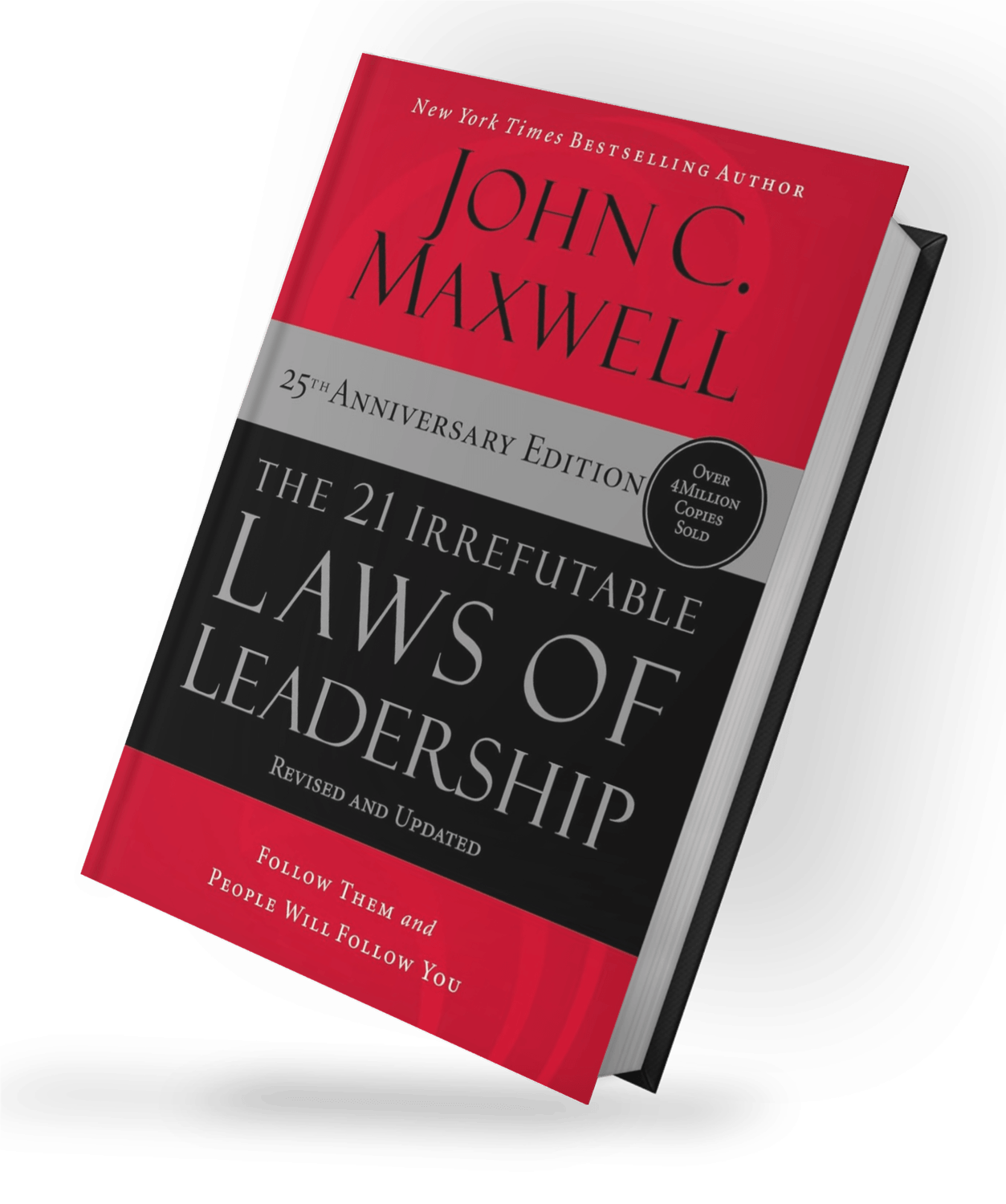
That's not a coincidence, and it's not just how difficult seasons happen to unfold. According to John C. Maxwell's eighteenth law, sacrifice isn't an occasional cost of leadership. It's a structural requirement.
This is Law #18 of Maxwell's 21 Irrefutable Laws of Leadership, and I think it's one of the most honest laws in the entire book, because Maxwell refuses to sell leadership as a purely upward, cost-free trajectory.
If you haven't read the full framework yet, start with my complete 21 Irrefutable Laws of Leadership summary, which walks through all 21 laws chapter by chapter. This post goes deeper on Law #18 alone, because sacrifice deserves an honest, unflinching look rather than a motivational gloss.
Let's take a deeper look!
What Is the Law of Sacrifice?
Maxwell states it plainly: a leader must give up to go up.
Every meaningful gain in leadership, Maxwell argues, costs the leader something real. Sometimes that cost is temporary: a deliberate step backward to move two steps forward later. Sometimes it's simply unglamorous: working long hours without immediate compensation, recognition, or thanks. And sometimes, as Maxwell is careful to note, the sacrifice required is considerably larger, personal, financial, or reputational, than most people are prepared for when they first step into leadership.
This law directly challenges a common, comfortable assumption: that leadership is primarily about gaining more authority, more influence, more resources, more recognition. Maxwell's framework insists that genuine leadership, especially at moments that actually matter, often requires giving something up first, often before there's any guarantee the sacrifice will pay off at all.
The Story Maxwell Uses to Illustrate It: Lee Iacocca and Chrysler
Maxwell's chosen example for this law is a genuinely dramatic demonstration of sacrifice under real pressure. When Lee Iacocca took over Chrysler, the company was in a steep decline, heading toward bankruptcy, with no obvious path back to stability through incremental adjustments. Iacocca faced a stark reality: conventional half-measures wouldn't be enough to save the company.
As a last resort, he made an extraordinarily risky and unpopular decision: he asked the federal government for a bailout. This was a move that opened both Iacocca personally and Chrysler as a company up to intense public attack and ridicule. It wasn't a decision made from a position of comfort or confidence in a guaranteed positive outcome. It was made because the alternative, allowing the company to collapse, was worse.
To demonstrate that he wasn't asking others to sacrifice while he remained insulated, Iacocca made a striking personal gesture: he reduced his own annual salary to one dollar. This wasn't a symbolic gesture disconnected from real consequence; it was a genuine, significant personal sacrifice made visible to everyone watching. He then asked Chrysler's executives to make real sacrifices of their own, extending the same standard he had just applied to himself.
Because of that shared, mutual sacrifice, not just Iacocca's alone, but a genuine collective willingness to give something up, Chrysler's executives and workforce turned the company around together. Maxwell's summary of the lesson is direct:
Getting where you're going will require sacrifice. Staying there requires even more sacrifice.
Why the Second Half of That Sentence Matters
It's worth sitting specifically with Maxwell's closing observation, because it's easy to assume sacrifice is primarily a cost paid on the way up, a one-time toll that, once paid, clears the way to smoother, less demanding leadership afterward. Maxwell explicitly rejects that assumption:
Staying there requires even more sacrifice.
This reframes sacrifice from a temporary hurdle into an ongoing feature of sustained leadership. Iacocca's initial sacrifice, the salary cut, the political risk, the personal exposure, got Chrysler through its immediate crisis. But maintaining the company's turnaround, sustaining the trust he'd built with employees, government, and the public, required continued sacrifice well beyond that initial dramatic gesture.
The pattern doesn't end once the crisis passes. If anything, Maxwell suggests, the ongoing demands of sustaining success at a higher level often require more consistent sacrifice than the initial breakthrough did.
This has real implications for leaders who might assume that reaching a certain level of success or stability means the sacrifices are largely behind them. Maxwell's framework suggests the opposite:
Leadership at every level asks something of you, and the sacrifices simply take a different shape rather than disappearing.
The Different Forms Sacrifice Actually Takes
It's worth being specific about the range of sacrifice this law describes, because it's easy to picture only the most dramatic version, Iacocca's public risk and salary cut, and assume the law doesn't apply unless the stakes are similarly extreme. Maxwell's framework covers a much broader range.
Time, given without immediate return. The most common and least dramatic form of sacrifice: working around the clock, showing up early, staying late, investing effort that isn't immediately compensated or publicly recognized. This is the baseline sacrifice nearly every leader makes, whether or not it ever gets named directly.
Comfort, given up for the sake of a harder but necessary decision. Sometimes sacrifice means choosing the difficult, unpopular path over the comfortable, well-received one, precisely because it's the right path, even when a more comfortable option is readily available.
Reputation is exposed to risk for the sake of the mission. Iacocca's decision to seek a federal bailout opened him to public ridicule. Leaders regularly face versions of this same trade-off: whether to protect their own reputation by avoiding a risky but necessary decision, or to accept reputational exposure in service of what the situation actually requires.
Personal or financial resources, given directly rather than merely requested of others. The salary cut is the clearest example here: sacrifice that a leader models personally, rather than only asking others to bear, carries a credibility that purely verbal encouragement never can.
Short-term progress, given up in service of a longer-term outcome. Sometimes sacrifice looks like a genuine step backward, slower growth, a paused initiative, a deliberately smaller near-term win, chosen specifically because it sets up a stronger position further down the road.
Why Sacrifice Modeled Personally Carries More Weight Than Sacrifice Merely Requested
There's an important distinction embedded in the Iacocca story worth drawing out directly. Iacocca didn't simply ask Chrysler's executives to sacrifice while remaining personally insulated from the cost himself. He cut his own salary first, and only then asked others to make their own sacrifices.
This ordering matters enormously and connects directly to The Law of Buy-In (Law #14). People are far more willing to accept genuine sacrifice when they can see that their leader has already made a comparable or greater sacrifice personally.
A leader who asks for sacrifice from others while remaining comfortable themselves undermines trust quickly, and often finds that requested sacrifices are met with resentment rather than genuine buy-in. A leader who visibly sacrifices first earns the credibility to reasonably ask the same of others, and tends to receive far more genuine, willing cooperation as a result.
A Practical Way to Think About Sacrifice as a Leader
Since sacrifice can sound abstract or purely inspirational until it's actually required, here's a more concrete way to approach it.
Get honest about what genuine progress in your current situation is likely to cost. Rather than hoping for a version of growth that requires no real trade-off, Maxwell's framework suggests directly identifying what you'll likely need to give up, time, comfort, a familiar approach, short-term results, in order to move meaningfully forward.
Model sacrifice before requesting it. If a difficult season is going to require real sacrifice from your team, examine what you're personally willing to give up first, before asking the same of others. This connects directly to the credibility the Iacocca story illustrates.
Distinguish between sacrifice made for the mission and sacrifice made from poor planning. Not every difficult, costly situation qualifies as the kind of meaningful sacrifice this law describes. Genuine sacrifice serves a clear, necessary purpose. Leaders should be careful not to romanticize unnecessary hardship that stems from avoidable mistakes as though it were a virtue in itself.
Expect the sacrifice required to continue, not end, once you reach a new level. As Maxwell's closing line makes clear, sustaining success requires its own ongoing sacrifice. Build that expectation into how you think about leadership at every stage, rather than assuming there will be a future point when the demands finally stop.
Reflection Questions
What have you been unwilling to sacrifice, time, comfort, reputation, short-term results, that's quietly holding your leadership or your team back?
Are you currently asking your team to sacrifice anything you haven't been willing to sacrifice yourself first?
Think of a past season where genuine sacrifice led to meaningful progress. What specifically did that sacrifice look like, and how did it change what became possible afterward?
Is there a current success or stability you've reached that requires ongoing sacrifice to sustain, and are you still making that sacrifice consistently, or has it quietly lapsed?
How This Law Connects to the Rest of Maxwell's Framework
The Law of Sacrifice depends directly on The Law of Buy-In (Law #14), since a leader's willingness to sacrifice personally is often what earns the credibility needed to ask others to make genuine sacrifices. It also builds on The Law of Solid Ground (Law #6), since visible, consistent sacrifice is one of the clearest demonstrations of the character on which trust is built. And it connects forward to the Law of Timing (Law #19), since knowing when a particular sacrifice is genuinely necessary, rather than premature or unnecessary, requires the same situational awareness that law describes.
If you haven't already, I'd encourage you to read the full book summary post on The 21 Irrefutable Laws of Leadership. I walk through all 21 laws in depth, with stories, quotes, and reflection questions for each one. The Law of Sacrifice is a reminder that leadership was never meant to be cost-free, and pretending otherwise only makes the actual cost harder to bear when it arrives.
Your Next Step
Here's the encouragement I want to leave you with: if a current season of your leadership feels like it's asking something real of you, that's not necessarily a sign that something has gone wrong. According to Maxwell's framework, it may simply be the sacrifice required to go up, or the ongoing sacrifice required to stay there.
So don't wait for a crisis dramatic enough to force the question. Get honest this week about what genuine progress is likely to cost you, and whether you're willing to pay it, personally, before asking the same of anyone else. Then come back to the full book summary post on The 21 Irrefutable Laws of Leadership and keep building, one law at a time.
You don't rise in leadership by holding on to everything. You rise by knowing what's worth giving up.
Enjoyed this breakdown? Subscribe to the Learning to Lead Newsletter for more book summaries, leadership frameworks, and practical encouragement delivered weekly.
More Books By John C. Maxwell
If The 21 Irrefutable Laws of Leadership resonated with you, here's where to go next in Maxwell's extensive body of work:
How to Get a Return on Failure (His Most Recent): Maxwell's newest book reframes failure not as a dead end but as an investment. He lays out actionable principles, including "See Failure as an Investment in Your Future" and "Practice the Cycle of Improvement," for turning losses into gains rather than letting setbacks define you.
High Road Leadership: A response to our divided world, this book exposes the low and middle roads people default to when interacting with others and teaches what it actually looks like to value people, take accountability, and do the right thing for the right reasons.
Thinking for a Change: Maxwell breaks down eleven specific types of thinking skills, from big-picture thinking to shared thinking, that separate leaders who consistently make good decisions from those who don't.
Great Leaders Ask Great Questions: A case for curiosity as a core leadership skill, exploring why the best leaders lead with questions rather than answers, and how the right question at the right time can unlock a team's best thinking.
The 15 Invaluable Laws of Growth: A companion to this book's law-based structure, focused entirely on personal growth, the mindset, environment, and daily practices that determine whether you ever reach your full potential.
The 16 Undeniable Laws of Communication: Another entry in Maxwell's laws series, this one zeroing in on what makes a message actually land, because influence collapses fast when a leader can't communicate clearly and connect while doing it.
Leadership Gold: Written after Maxwell promised himself he wouldn't publish it until he turned sixty, this book distills forty years of leading into twenty-six "gold nuggets," each with application exercises designed to feel like a one-on-one mentorship session.
The 17 Indisputable Laws of Teamwork: A natural companion to this book, shifting the lens from individual leadership to what makes a team of leaders actually function together at a high level.
Developing the Leader Within You: One of Maxwell's earliest and most foundational works, focused on the internal shifts required before you can lead others well.
Winning with People: Explores the relational side of leadership, including the specific people skills that determine whether your influence grows or stalls.
The 5 Levels of Leadership: Maxwell's framework for understanding leadership as a progression, from position, to permission, to production, to people development, to the pinnacle of leadership defined by legacy.
Leadershift: A more recent work examining the mindset shifts today's leaders need to stay effective in a constantly changing world.
Everyone Communicates, Few Connect: A deep dive specifically into the Law of Connection, exploring what it actually takes to reach people on an emotional level, not just an informational one.
Each of these builds on the same foundation Maxwell laid in The 21 Irrefutable Laws of Leadership: leadership is influence, influence is earned, and it's a lifelong process of daily growth. Read them in whatever order serves you best right now; each one will sharpen a different piece of the leader you're becoming.
Enjoyed this breakdown? Subscribe to the Learning to Lead Newsletter for more book summaries, leadership frameworks, and practical encouragement delivered weekly.

Join over 4,000 Growth-Minded Leaders reading The Learning To Lead Newsletter each week!
Latest Blog Post
Join over 4,000 Fellow Leaders reading The Learning To Lead Newsletter each week!
©2025 Learning To Lead | Helping Good Leaders Become Great Leaders