
The Law of Priorities by John C. Maxwell
The Law of Priorities: Why Activity Is Not the Same as Accomplishment
Have you ever ended a genuinely exhausting week and, when asked what you actually accomplished, struggled to name anything that truly mattered?
That gap between being busy and being productive is exactly what John C. Maxwell's seventeenth law is designed to close.
This is Law #17 of Maxwell's 21 Irrefutable Laws of Leadership, and I'd argue it's one of the most quietly essential laws in the book, because it doesn't ask leaders to work harder. It asks them to work differently, on fewer things, chosen far more deliberately.
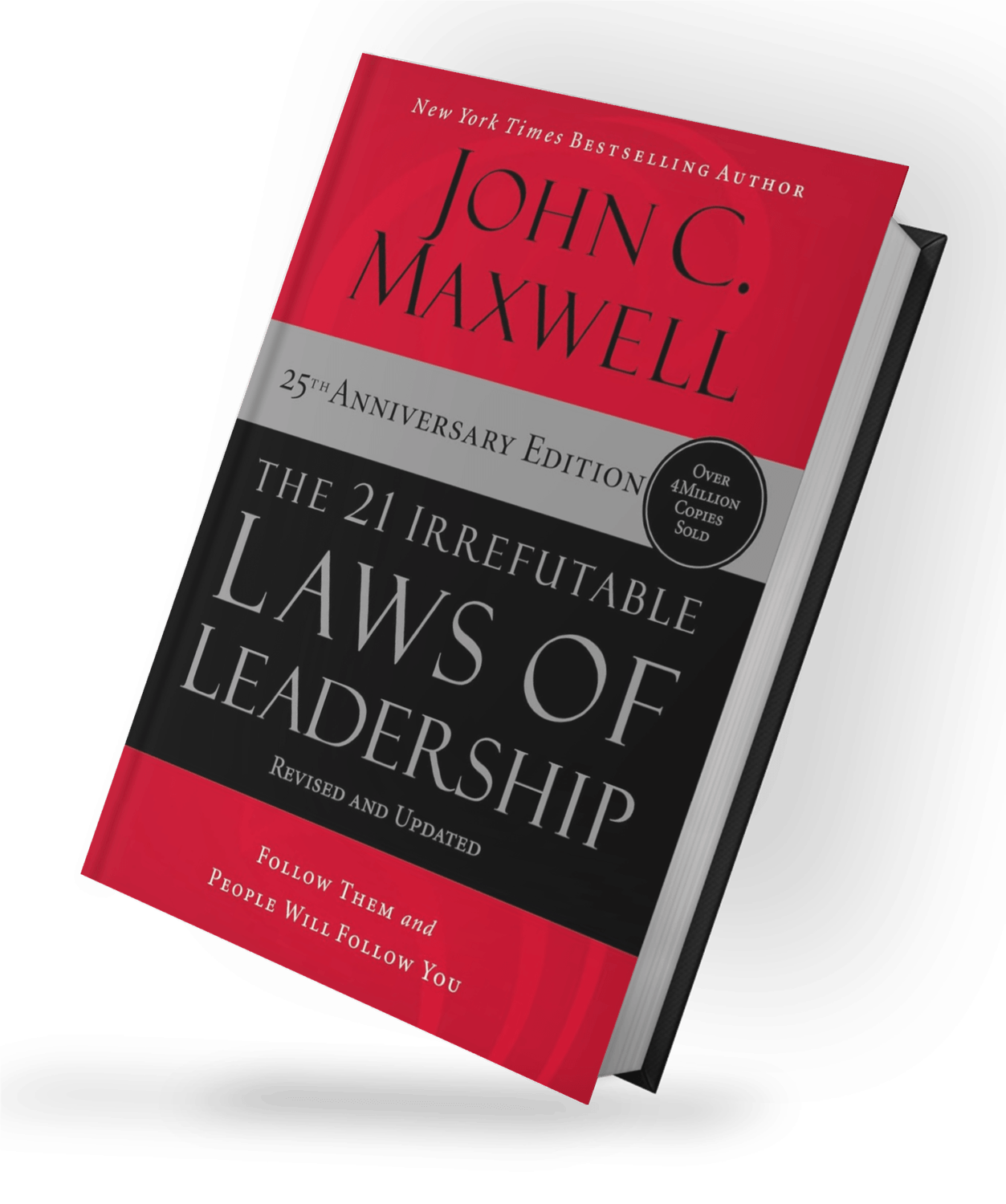
If you haven't read the full framework yet, start with my complete 21 Irrefutable Laws of Leadership summary, which walks through all 21 laws chapter by chapter. This post goes deeper on Law #17 alone, because prioritization deserves more than a bullet point.
Let's dig in.
What Is the Law of Priorities?
Maxwell states it directly:
Leaders understand that activity is not necessarily accomplishment.
It's entirely possible to be constantly busy, moving from task to task, meeting to meeting, fire to fire, and still fail to move the organization meaningfully forward. Busyness feels productive. It generates the sensation of contribution. But Maxwell's point is that feeling productive and actually being productive are two different things, and leaders who don't distinguish between them tend to spend enormous energy without producing commensurate results.
This law connects directly back to The Law of Navigation (Law #4). Once you've charted a genuine course for your team, the Law of Priorities determines whether your daily activities actually move the ship along that course or merely keep everyone occupied without meaningful progress toward the destination.
The Starting Point: An Honest Audit of Your Obligations
Maxwell's framework begins with a specific discipline before any prioritization can happen effectively:
First, analyze your obligations.
This isn't a casual glance at your calendar. It's a genuine, honest inventory of everything currently claiming your time and energy, without immediately judging or reorganizing it yet.
From that honest inventory, Maxwell asks leaders to work through a few specific questions:
1. Identify those areas where your strengths are greatest, and, as much as possible, delegate the rest.
This connects directly to The Law of the Lid and The Law of Empowerment. Your time is disproportionately valuable when applied to what you're genuinely strong at, and disproportionately wasted when spent on tasks someone else on your team could handle competently, freeing you to focus where your contribution actually matters most.
2. Understand where your greatest passions reside, because they provide your motivation.
This is a practical, not merely sentimental, consideration. Sustained effort over the long term requires genuine motivation, and Maxwell recognizes that leaders who consistently prioritize work disconnected from what actually energizes them tend to burn out or lose the drive that effective leadership requires.
Why Being Active Doesn't Mean You're Accomplishing the Right Things
Maxwell is blunt about this distinction, and it's worth sitting with directly:
Being active doesn't necessarily mean you are accomplishing the right things, so setting priorities is crucial.
This is where the Law of Priorities becomes genuinely challenging to apply, because activity feels virtuous. There's a real cultural pull, especially among conscientious, hardworking leaders, toward equating a full calendar and a long to-do list with genuine contribution. But a full calendar says nothing about whether the items on it were the right items to fill it with in the first place.
A leader can be the busiest person in the organization and still contribute the least to what actually matters if their busyness is scattered across low-leverage tasks rather than concentrated on genuine priorities.
This is precisely why Maxwell insists that setting priorities isn't a nice-to-have organizational exercise. It's the mechanism that actually converts raw activity into real accomplishment.
The Three-Question Framework for Prioritization
Maxwell offers a specific, practical framework for determining what actually deserves a leader's limited time and energy. To prioritize effectively, he suggests asking three distinct questions:
What do I absolutely must do? This identifies the non-negotiable obligations, the responsibilities that genuinely cannot be delegated or deferred without real consequence. Not everything that feels urgent belongs in this category; the discipline here is being honest about what's truly essential versus what merely feels essential in the moment.
What activity generates the largest gain? This shifts the question from obligation to leverage. Among everything on your plate, which specific activities produce disproportionately large results relative to the time invested?
This is where the 80/20 principle implicitly shows up in Maxwell's thinking: a small number of activities typically generate a disproportionate share of meaningful outcomes, and identifying those specific activities is central to effective prioritization.
What brings the greatest reward? This third question broadens the lens beyond pure output to include what genuinely matters: the mission, the people involved, and the long-term direction the leader has charted. Not every high-leverage activity is equally valuable in a deeper sense, and this question asks leaders to weigh genuine significance alongside raw efficiency.
Maxwell's guidance from these three questions is clear:
To maximize your effort, focus on the most productive areas: the intersection of what's truly necessary, what generates the greatest leverage, and what carries the most genuine significance.
Making Each Action Accomplish More Than One Goal
One of the more practically elegant pieces of Maxwell's teaching on this law is the idea that ideally, each action you execute will satisfy more than one priority.
This is worth unpacking because it reframes prioritization not just as choosing between competing demands but as actively seeking actions that serve multiple important goals simultaneously.
A single well-chosen activity, a specific meeting, a particular project, or a deliberate investment in a relationship can often advance more than one priority at once if selected thoughtfully. A leader who mentors a promising team member while also delegating a genuinely important project, for example, is simultaneously advancing their own priority list, developing future leadership capacity, per The Law of Reproduction, and building a stronger inner circle, per The Law of the Inner Circle, all through a single deliberate action.
This principle rewards leaders who think carefully about the design of their activities, not just their selection. Rather than treating each item on a to-do list as an isolated task competing for limited time, effective leaders look for the specific actions that quietly accomplish several important things at once.
Why Prioritization Requires Ongoing Discipline, Not a One-Time Decision
It's worth being clear that The Law of Priorities isn't a single planning exercise completed once and then simply executed indefinitely. Priorities shift as circumstances change, as The Law of Navigation reminds us that the charted course itself needs regular review.
A leader's honest obligations, areas of greatest strength, and highest-leverage activities today may look meaningfully different six months from now, particularly as an organization grows or its circumstances evolve.
This means the three-question framework above isn't a one-time filter. It's a discipline worth revisiting regularly, ideally on a set rhythm rather than only when things start to feel chaotic or overwhelming. Leaders who wait until they're already buried in unproductive activity to reassess their priorities have a much harder time regaining clarity than those who build regular prioritization review into their routine from the start.
A Practical Way to Apply This Law
If you want to put this law into practice rather than simply nodding along with the principle, here's a structured approach worth trying.
Step one: conduct an honest audit of activities. For a genuine week or two, track where your time actually goes, not where you assume it goes. Most leaders are surprised by the gap between their perceived priorities and their actual time allocation.
Step two: run each significant activity through Maxwell's three questions. Is this something I absolutely must do myself? Does this generate outsized gain relative to the time it costs? Does this carry genuine significance beyond mere output?
Step three: identify what you should delegate, and to whom. Anything that isn't in your area of greatest strength and doesn't require your direct involvement is a candidate for delegation, which connects directly back to The Law of Empowerment
Step four: look for actions that serve multiple priorities simultaneously. Before adding a new commitment, ask whether it could be designed or combined in a way that advances more than one genuine priority at once, rather than treating it as an isolated task.
Step five: build a regular rhythm of revisiting this process. Don't treat this as a one-time cleanup. Set a recurring, deliberate check-in, weekly or monthly, to reassess whether your current activity still matches your actual priorities.
Reflection Questions
Where has "being busy" quietly substituted for "being productive" in your recent weeks?
Running your current obligations through Maxwell's three questions, what absolutely must you do, what generates the largest gain, and what carries the greatest genuine reward, what actually rises to the top?
What's one activity you could delegate entirely, because it doesn't require your specific strengths, freeing your time for higher-leverage work?
Is there a single action you could take that would advance more than one of your genuine priorities at once, rather than treating each goal as requiring a separate, isolated effort?
How This Law Connects to the Rest of Maxwell's Framework
The Law of Priorities depends directly on The Law of Navigation (Law #4), since you can't meaningfully prioritize activity until you've genuinely charted where you're trying to go. It also builds on The Law of the Lid (Law #1) and The Law of Empowerment (Law #12), since effective prioritization requires honestly recognizing your greatest strengths and being willing to delegate everything else to a genuinely empowered team. And it sets up The Law of the Big Mo (Law #16) in reverse: the specific, high-leverage activities this law helps you identify are often exactly the kind of small, winnable objectives that generate the initial momentum a team needs.
If you haven't already, I'd encourage you to read the full book summary post on The 21 Irrefutable Laws of Leadership, where I walk through all 21 laws in depth, with stories, quotes, and reflection questions for each one. The Law of Priorities is a reminder that a full calendar and genuine progress are not automatically the same thing. You empower and develop the leaders within it.
Your Next Step
Here's the encouragement I want to leave you with: your potential isn't just a function of your own talent and effort. It's a function of who you've chosen, or defaulted to, letting those closest to you.
That's genuinely good news, because it means one of the highest-leverage things you can do for your future isn't necessarily to work harder yourself. It's to be more intentional about who occupies your inner circle.
So don't just nod along and return to your existing calendar unchanged. Pick one week, track your actual time honestly, and run what you find through Maxwell's three questions. Then come back to the full book summary post on The 21 Irrefutable Laws of Leadership and keep building, one law at a time.
Activity feels like progress. Only priorities guarantee it. Choose yours deliberately.
Enjoyed this breakdown? Subscribe to the Learning to Lead Newsletter for more book summaries, leadership frameworks, and practical encouragement delivered weekly.
More Books By John C. Maxwell
If The 21 Irrefutable Laws of Leadership resonated with you, here's where to go next in Maxwell's extensive body of work:
How to Get a Return on Failure (His Most Recent): Maxwell's newest book reframes failure not as a dead end but as an investment. He lays out actionable principles, including "See Failure as an Investment in Your Future" and "Practice the Cycle of Improvement," for turning losses into gains rather than letting setbacks define you.
High Road Leadership: A response to our divided world, this book exposes the low and middle roads people default to when interacting with others and teaches what it actually looks like to value people, take accountability, and do the right thing for the right reasons.
Thinking for a Change: Maxwell breaks down eleven specific types of thinking skills, from big-picture thinking to shared thinking, that separate leaders who consistently make good decisions from those who don't.
Great Leaders Ask Great Questions: A case for curiosity as a core leadership skill, exploring why the best leaders lead with questions rather than answers, and how the right question at the right time can unlock a team's best thinking.
The 15 Invaluable Laws of Growth: A companion to this book's law-based structure, focused entirely on personal growth, the mindset, environment, and daily practices that determine whether you ever reach your full potential.
The 16 Undeniable Laws of Communication: Another entry in Maxwell's laws series, this one zeroing in on what makes a message actually land, because influence collapses fast when a leader can't communicate clearly and connect while doing it.
Leadership Gold: Written after Maxwell promised himself he wouldn't publish it until he turned sixty, this book distills forty years of leading into twenty-six "gold nuggets," each with application exercises designed to feel like a one-on-one mentorship session.
The 17 Indisputable Laws of Teamwork: A natural companion to this book, shifting the lens from individual leadership to what makes a team of leaders actually function together at a high level.
Developing the Leader Within You: One of Maxwell's earliest and most foundational works, focused on the internal shifts required before you can lead others well.
Winning with People: Explores the relational side of leadership, including the specific people skills that determine whether your influence grows or stalls.
The 5 Levels of Leadership: Maxwell's framework for understanding leadership as a progression, from position, to permission, to production, to people development, to the pinnacle of leadership defined by legacy.
Leadershift: A more recent work examining the mindset shifts today's leaders need to stay effective in a constantly changing world.
Everyone Communicates, Few Connect: A deep dive specifically into the Law of Connection, exploring what it actually takes to reach people on an emotional level, not just an informational one.
Each of these builds on the same foundation Maxwell laid in The 21 Irrefutable Laws of Leadership: leadership is influence, influence is earned, and it's a lifelong process of daily growth. Read them in whatever order serves you best right now; each one will sharpen a different piece of the leader you're becoming.
Enjoyed this breakdown? Subscribe to the Learning to Lead Newsletter for more book summaries, leadership frameworks, and practical encouragement delivered weekly.

Join over 4,000 Growth-Minded Leaders reading The Learning To Lead Newsletter each week!
Latest Blog Post
Join over 4,000 Fellow Leaders reading The Learning To Lead Newsletter each week!
©2025 Learning To Lead | Helping Good Leaders Become Great Leaders